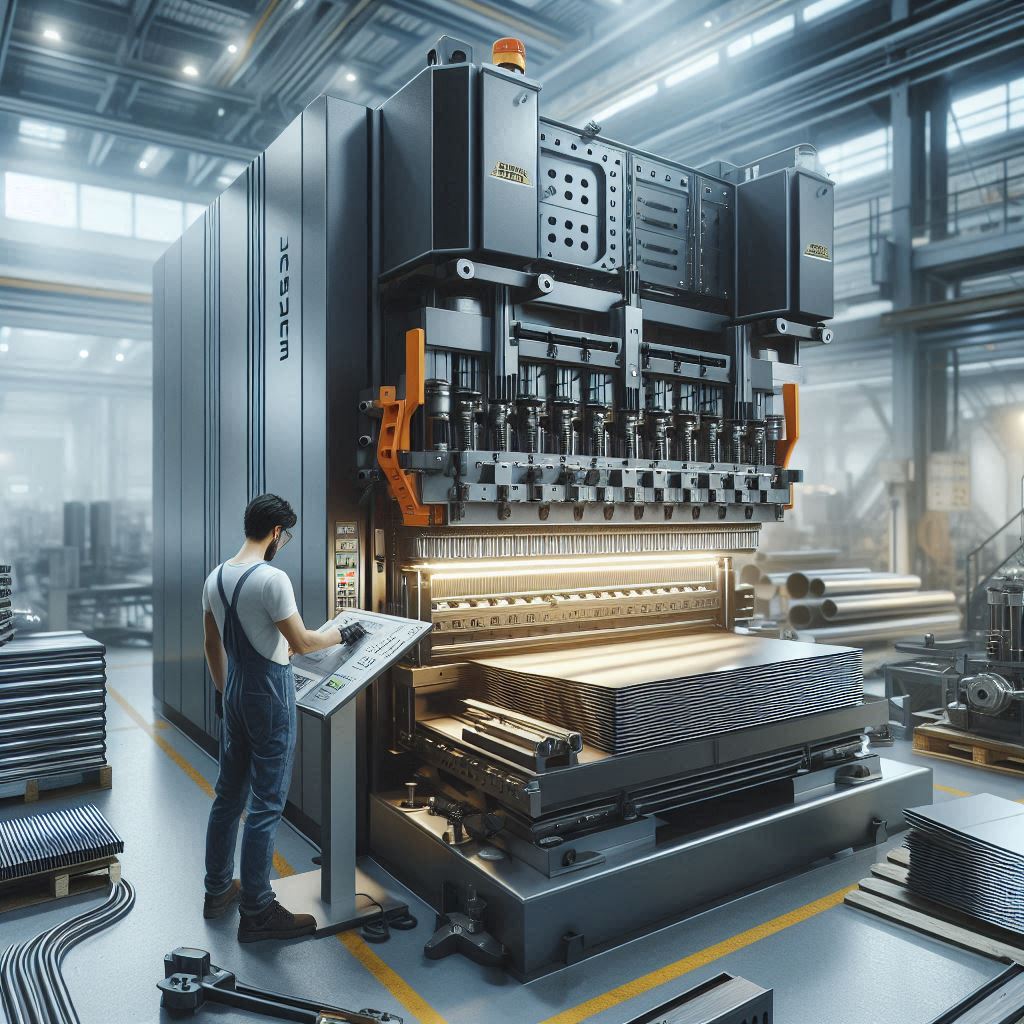

Hydraulic plate bending machines operate on the principle of applying controlled hydraulic pressure to bend and shape metal plates into curved, cylindrical, or conical forms. The machine consists of multiple rollers, typically in a three-roll or four-roll configuration, where the metal plate is gradually passed through to achieve the desired curvature. The hydraulic system powers the movement of the rollers, providing precise force distribution for uniform bending. By adjusting parameters such as roller position, pressure, and bending speed, operators can achieve highly accurate and repeatable results. Advanced CNC-controlled hydraulic plate bending machines further enhance efficiency by automating the bending process, minimizing material wastage, and reducing manual labor. This makes them essential for shipbuilding, automotive, construction, and heavy fabrication industries.
How Hydraulic Plate Bending Machines Enhance Metal Fabrication
Hydraulic Plate Bending Machine enhances metal fabrication by providing precision, efficiency, and versatility in shaping metal sheets. Their hydraulic-powered rollers apply consistent pressure, ensuring uniform bending without material deformation. Unlike mechanical alternatives, these machines allow for greater control over bending angles and thickness variations, making them ideal for heavy-duty industrial applications. With CNC automation, they streamline the bending process, reducing manual labor and improving productivity. Additionally, pre-bending capabilities minimize flat ends, reducing material wastage and ensuring high-quality finished products. Used in shipbuilding, automotive, construction, and metalworking industries, hydraulic plate bending machines improve production speed, accuracy, and cost-effectiveness, making them an essential tool for modern metal fabrication workshops.
Hydraulic vs. Mechanical Plate Bending Machines: A Comparison
When comparing hydraulic vs. mechanical plate bending machine, the key differences lie in power, precision, and versatility. Hydraulic plate bending machines use fluid pressure to generate force, providing consistent bending, higher capacity, and the ability to handle thicker plates. They offer smooth and precise control, making them ideal for complex bends and heavy-duty applications in industries like shipbuilding, construction, and automotive manufacturing. In contrast, mechanical plate bending machines rely on gears and mechanical force, which makes them faster for thin and medium-thickness materials but limits their flexibility for larger or more intricate bends. While mechanical machines are cost-effective and require less maintenance, hydraulic models offer greater precision, automation capabilities (such as CNC control), and adaptability for modern metal fabrication needs.




