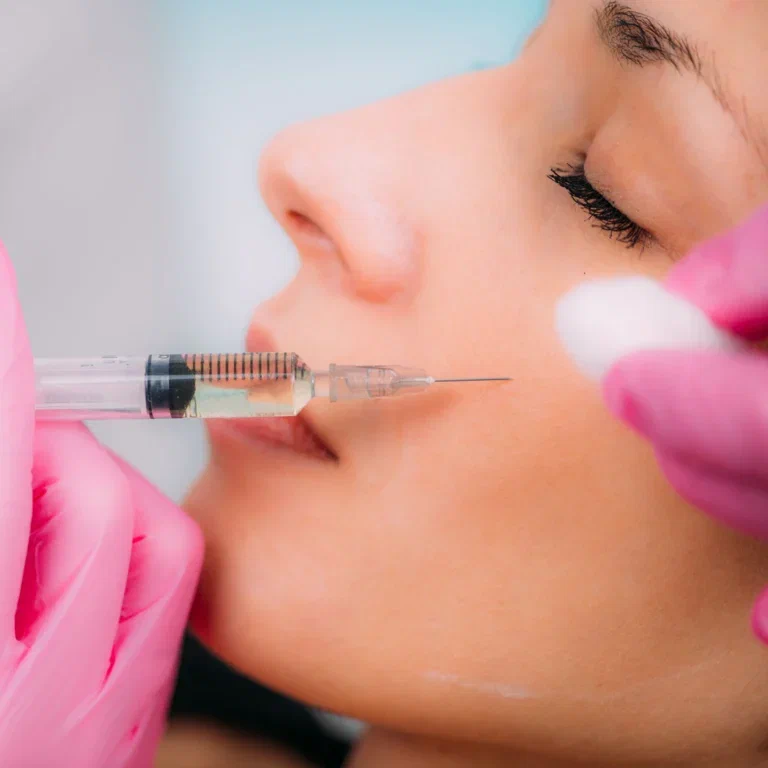

Loss of cheek volume is one of the earliest and most noticeable signs of facial aging, yet many patients fear that cheek fillers will make the face look puffy or artificial. This hesitation is understandable. Dermal fillers in Dubai are commonly used for cheek volume restoration, but results depend heavily on anatomical assessment and injection depth rather than filler quantity. From a clinical standpoint, cheek fillers are less about adding fullness and more about restoring structural support. This article explains how cheek volume restoration truly works, what patients experience during treatment, and how natural lift and contour are achieved without heaviness or distortion.
Why does cheek volume loss affect the entire face
Cheek fat pads play a central role in facial balance. When they descend or shrink, multiple aging signs appear simultaneously.
In clinical observation, cheek volume loss contributes to:
- Flattened midface appearance
- Deepened nasolabial folds
- Under-eye hollowing
- Downturned mouth corners
- Loss of facial projection
Restoring cheek support often improves surrounding areas indirectly, reducing the need for multiple treatments.
How cheek fillers restore structure, not just fullness
Patients often assume cheek fillers simply add roundness, but clinically, their primary role is structural reinforcement.
Cheek fillers are placed deep, often near the bone, to:
- Recreate youthful facial projection
- Support overlying soft tissues
- Improve light reflection across the face
- Reduce sagging in the lower face
This approach avoids the “overfilled cheek” look associated with superficial placement.
Which filler properties matter most for cheek enhancement?
Not all fillers behave the same in the cheek area. Product selection is based on strength, lift capacity, and tissue integration.
Clinically preferred cheek fillers typically have:
- High G’ for structural support
- Strong lifting capability
- Slow migration profile
- Predictable integration over time
Softer fillers may flatten quickly in this area and fail to provide lasting support.
How much filler is usually needed for cheek volume restoration?
Patients often expect large volumes, but effective cheek restoration is achieved conservatively.
Based on clinical outcomes:
- 0.5–1 ml per side is common for subtle restoration
- Volume is adjusted based on bone structure and fat loss
- Overcorrection increases heaviness and unnatural contours
- Symmetry is refined gradually rather than in one session
Patients frequently report improved facial balance even with modest volumes.
What patients feel during cheek filler injections
Cheek injections are generally more comfortable than lip or under-eye treatments due to deeper placement.
Patients typically describe:
- Mild pressure rather than sharp pain
- A pushing sensation near the cheekbone
- Minimal discomfort after lidocaine activation
- Temporary tenderness when touching the area
Post-treatment pain is usually mild and resolves within 24 hours.
Swelling and downtime after cheek fillers
Cheek fillers involve deeper tissue layers, which affects recovery expectations.
Typical recovery pattern:
- Mild swelling for 1–3 days
- Minimal bruising compared to superficial areas
- Slight firmness for several days
- Final contour visible after 10–14 days
Most patients resume work and social activities the same or next day.
Can cheek fillers make the face look wide or bulky?
This is a common fear and usually results from incorrect placement rather than the treatment itself.
Clinically, unnatural width occurs when:
- Filler is placed too laterally
- Excess volume is injected
- Superficial placement causes spreading
- Facial proportions are ignored
Proper medial placement along natural contours maintains a slim, lifted appearance.
Cheek filler placement strategies and outcomes
| Placement Area | Clinical Purpose | Visual Effect |
|---|---|---|
| Medial cheek | Restore projection | Natural lift |
| Zygomatic arch | Structural support | Defined cheekbones |
| Submalar zone | Soft transition | Youthful contour |
| Deep periosteal plane | Long-term support | Stable results |
Patient experiences with cheek volume restoration
“I didn’t realize how much my cheeks affected my whole face. The change was subtle, but I looked fresher and less tired.”
— Lina, 38
“I was worried about looking puffy. Instead, my face looked lifted without anyone noticing I had fillers.”
— Khalid, 45
How long do cheek filler results last?
Cheek fillers tend to last longer than fillers in high-mobility areas due to deeper placement.
Clinically observed duration:
- Average longevity: 12–18 months
- Slower breakdown with periosteal placement
- Gradual fading rather than sudden loss
- Maintenance sessions often require less product
Structural support often persists even as filler volume decreases.
Who should avoid or delay cheek filler treatment?
Cheek fillers may not be suitable in all situations and require careful patient selection.
Treatment should be delayed in cases of:
- Active skin infections
- Uncontrolled autoimmune conditions
- Severe facial swelling disorders
- Unrealistic expectations regarding facial shape
Clinical assessment ensures both safety and aesthetic harmony.
FAQs
Do cheek fillers lift sagging skin?
They provide structural support that can improve mild sagging but are not a replacement for surgical lifting.
Will cheek fillers affect facial expressions?
When placed correctly, they do not restrict movement or expression.
Can cheek fillers reduce under-eye hollows?
Indirect improvement is common due to restored midface support.
Are cheek fillers reversible?
Hyaluronic acid cheek fillers can be dissolved if necessary.
When should results be evaluated?
Final results should be assessed after two weeks once swelling subsides.
Why patients choose experienced clinical care
Patients seeking dermal fillers in Dubai for cheek volume restoration benefit most from anatomy-led planning, conservative dosing, and deep structural placement. At Tajmeels Clinic, cheek enhancement focuses on restoring facial support and balance rather than adding visible bulk.