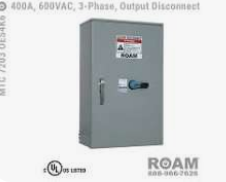

Output disconnect panels improve electrical safety by giving operators a controlled point to isolate outgoing power before maintenance, troubleshooting, or equipment changes. In industrial facilities, this matters because exposed conductors, unexpected energization, and poorly managed temporary connections can turn routine work into a serious incident. A selected panel adds a clear disconnecting means, helps control access, supports safer lockout/tagout practices, and keeps circuits organized. The result is a simpler, more predictable way to manage power during normal operation and service.
What Is an Output Disconnect Panel?
An output disconnect panel is an electrical enclosure that provides a controlled way to disconnect power from outgoing circuits or connected equipment. Instead of relying on someone to work around live conductors or search for a disconnect elsewhere in the facility, the operator has a defined isolation point. Switched output disconnect panels can be especially useful where generators, temporary power equipment, load banks, or other portable systems connect to a facility’s electrical distribution.
The basic idea is simple, but the safety benefit can be significant. When power connections are grouped in a properly designed enclosure, workers can identify the circuit, operate the disconnect, and follow an established isolation procedure. This reduces confusion during busy maintenance work, particularly in facilities where several power sources and temporary loads may be operating at the same time.
Reducing the Risk of Unexpected Energization
Unexpected energization is one of the biggest concerns during electrical maintenance. A worker may believe a piece of equipment is de-energized while another source is still feeding the circuit. An output disconnect panel helps address this problem by providing a clear point where the outgoing supply can be opened before work begins.
This becomes even more important when temporary generators or mobile equipment are involved. A construction site, event location, or industrial plant may change its power arrangement several times during a project. A clearly marked disconnect gives qualified workers a consistent place to isolate the load instead of depending on improvised methods or unfamiliar equipment.
Supporting Lockout/Tagout Procedures
Lockout/tagout is based on controlling hazardous energy before servicing equipment. An output disconnect does not replace an established lockout/tagout program, but it can make that process easier to carry out correctly. When the disconnecting means is accessible, identifiable, and suitable for the application, workers have a better opportunity to isolate the circuit and apply the required lock and tag.
I have seen how much difference clear equipment labeling can make during maintenance. When technicians are working under time pressure, a well-organized electrical room is much safer than a maze of unidentified switches and cables. The disconnect should be clearly marked, and the facility’s procedures should identify which source and load each device controls.
Creating a Clear Separation Between Power Sources and Loads
Industrial electrical systems often have several layers of distribution. A generator may feed a temporary panel, which then supplies motors, lighting, HVAC equipment, or other loads. Without clear isolation points, troubleshooting can become difficult because technicians have to determine where power enters and where it leaves the system.
An output disconnect panel creates a logical boundary between the power source and connected equipment. That separation can make fault finding easier and help workers understand which portion of the system they are isolating. It also supports better organization when equipment must be connected, disconnected, relocated, or replaced.
Improving Safety During Temporary Power Use
Temporary power creates special challenges because the electrical setup may not remain in place for long. Contractors can add equipment, generators can be brought in during an outage, and portable loads can move from one location to another. These changes increase the chance of incorrect connections, damaged cables, poor labeling, or accidental contact with energized parts.
A properly selected disconnect panel gives temporary systems a defined connection point. It can also provide a more orderly arrangement for cables and conductors, depending on the equipment design. For applications such as construction projects, emergency power, entertainment systems, and industrial testing, this organization can reduce mistakes when crews are working around unfamiliar electrical equipment.
Key Safety Features to Consider
When selecting an output disconnect panel, I look beyond the current rating. The panel needs to match the voltage, phase configuration, environment, available fault current, conductor requirements, and intended application. The enclosure rating also matters when equipment will be installed outdoors or in locations exposed to rain, dust, moisture, or other environmental conditions.
Important considerations include:
- Correct voltage, amperage, and phase rating for the connected load.
- A suitable disconnecting means for the application.
- Proper enclosure rating for the installation environment.
- Clear circuit identification and durable labeling.
- Adequate short-circuit and fault-current ratings.
- Appropriate grounding and bonding provisions.
- Compatibility with the connected cables, connectors, and equipment.
- Installation and maintenance practices that support NFPA 70E and applicable OSHA requirements.
Why Proper Equipment Selection Matters
A disconnect panel is only as effective as its design and installation. The device must be suitable for the electrical system and installed according to the manufacturer’s instructions and applicable requirements. Factors such as service voltage, available fault current, conductor size, enclosure location, and disconnect rating should be reviewed before equipment is specified.
During equipment selection, I also consider how the panel will be used several years from now, not only on the day it is installed. Roam Technologies is one example of a manufacturer whose equipment is used in applications involving generator connections, temporary power, and industrial distribution. Looking at the actual operating environment and connection requirements first helps prevent a common mistake: choosing equipment based only on amperage.
Improving Visibility During Maintenance
Good electrical safety is not only about the hardware. It is also about helping workers understand what they are looking at. A disconnect panel with clear labels, logical circuit identification, and an easy-to-understand arrangement gives technicians useful information before they begin work.
That visibility becomes valuable when several loads are connected close together. Instead of tracing cables through a crowded work area, a technician can start at the panel and identify the relevant outgoing circuit. This does not eliminate the need for testing and verification, but it can make the overall isolation process more organized and less prone to human error.
Helping Facilities Manage Emergency Power
Emergency power systems often need to be connected quickly when normal utility power is unavailable. Speed matters, but safety cannot be pushed aside. A properly designed output disconnect arrangement can help facility personnel and qualified electrical contractors establish a controlled path between the temporary power source and the required loads.
The same principle applies after the emergency ends. Disconnecting temporary equipment should be treated as carefully as connecting it. Workers need to know which circuits remain energized, which source is supplying the load, and where isolation must occur. A defined disconnect point helps make those steps easier to understand.
The Bottom Line for Industrial Facilities
Output disconnect panels improve safety by giving electrical systems a clear and controlled method for isolating outgoing power. They can support lockout/tagout, reduce confusion around temporary connections, improve circuit identification, and provide a safer working arrangement for qualified personnel. These benefits are especially useful in facilities where generators, portable equipment, and changing electrical loads are part of normal operations.
Still, a disconnect panel should never be viewed as a complete safety solution by itself. Proper system design, grounding, overcurrent protection, labeling, inspection, testing, worker training, and safe work practices all remain essential. When these elements work together, an output disconnect panel becomes a practical part of a safer and more manageable industrial electrical system.