
Dark spots rarely appear for just one reason. Sun exposure, acne breakouts, hormonal changes, inflammation, and skin injuries can all stimulate excess melanin, leaving behind areas that look darker than the surrounding skin. For some people, those marks gradually fade. For others, they can linger for months or become recurring concerns.
This is where a targeted skincare routine can make a difference. iS Clinical brightening serum formulas are designed to improve the appearance of uneven skin tone using ingredients such as alpha-arbutin, kojic acid, and vitamin C. The right formula can support a more even-looking complexion, but results depend on the cause and depth of the pigmentation, consistency of use, and daily sun protection.
For anyone looking for clinical skincare in Reston, VA, understanding what a serum can realistically do is just as important as choosing the product itself.
What Causes Hyperpigmentation and Dark Spots?
Hyperpigmentation occurs when the skin produces or retains more melanin than usual in a particular area. Melanin is the pigment responsible for skin, hair, and eye color. When its production increases following inflammation, hormonal changes, or UV and visible-light exposure, the result can be darker patches or individual spots.
One common example is post-inflammatory hyperpigmentation (PIH). A pimple may disappear, but the inflammation that accompanied it can leave a brown or grayish mark behind. Cuts, burns, irritation, and some skin conditions can cause similar changes.
Melasma is another form of pigmentation that often appears as larger, symmetrical patches, particularly on the cheeks, forehead, nose, and upper lip. Hormonal factors and sun exposure can contribute to it, and treatment can be more complicated than treating an isolated acne mark.
That distinction matters because not every dark spot should be treated in exactly the same way.
How Do Clinical Serums Help With Dark Spots?
A serum doesn’t simply “erase” pigmentation. Instead, certain ingredients can help improve the appearance of discoloration by supporting more even-looking skin tone and addressing processes involved in pigmentation.
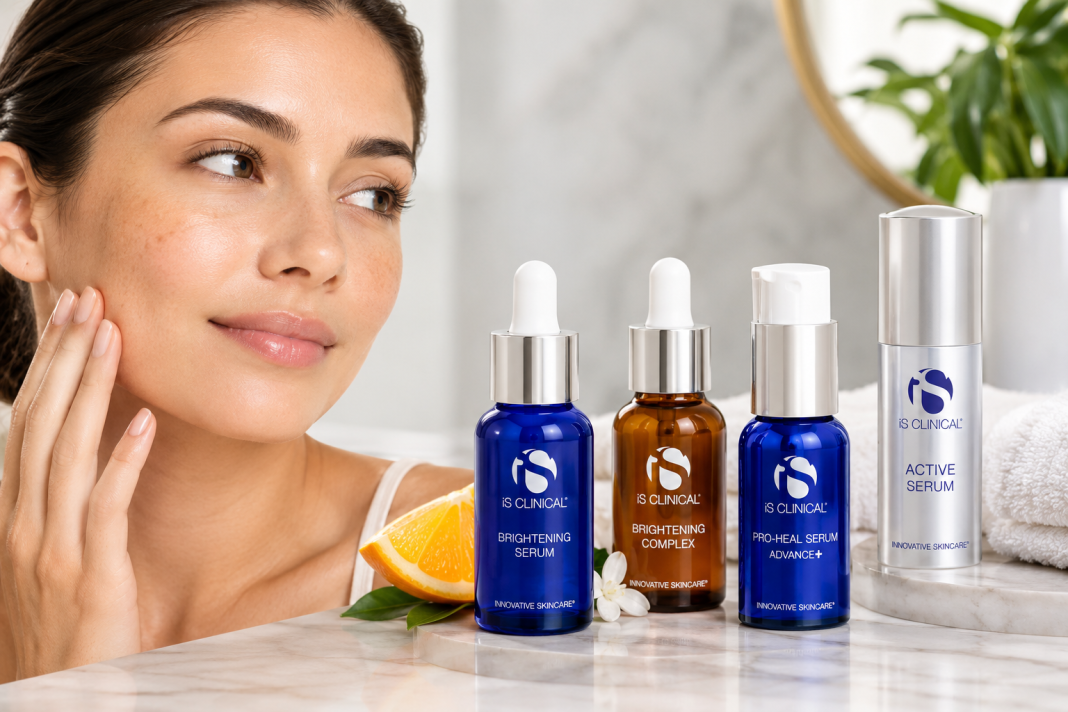
The iS Clinical range includes several products formulated specifically around uneven skin tone. Its Brightening Serum contains alpha-arbutin and mushroom-derived kojic acid, while Brightening Complex combines those ingredients with a vitamin C derivative. The brand also offers vitamin C-focused formulas such as Pro-Heal Serum Advance+, which contains L-ascorbic acid along with antioxidant ingredients.
Alpha-Arbutin
Alpha-arbutin is used in skincare formulations designed to improve the appearance of discoloration. It is particularly relevant for people who want a targeted brightening product without immediately moving toward prescription treatments.
In iS Clinical’s Brightening Serum, alpha-arbutin is paired with mushroom-derived kojic acid rather than used as a standalone brightening ingredient. That combination gives the formula a more targeted role within an uneven-skin-tone routine.
Kojic Acid
Kojic acid is another ingredient commonly used in products formulated for hyperpigmentation. It is included in iS Clinical’s Brightening Serum and Brightening Complex, both of which are positioned by the brand for improving the appearance of discoloration and uneven tone.
Kojic acid can be useful, but more active ingredients aren’t automatically better. If a product causes persistent burning or irritation, it can work against your goal. The American Academy of Dermatology recommends choosing gentle skincare when dealing with melasma and dark spots because irritation itself can contribute to additional pigmentation.
Vitamin C
Vitamin C is widely used in brightening skincare because of its antioxidant properties and its role in supporting a more radiant-looking complexion.
iS Clinical’s Pro-Heal Serum Advance+ contains L-ascorbic acid, along with vitamins E and A and olive leaf extract. The manufacturer describes the formula as supporting skin clarity, radiance, and protection from environmental stressors.
Vitamin C can be particularly useful when pigmentation is accompanied by dullness or an uneven overall complexion. However, it should be viewed as one component of a broader routine rather than a substitute for sun protection.
Comparing iS Clinical Serum Options for Uneven Skin Tone
There isn’t one universally best iS Clinical serum for dark spots because different pigmentation concerns call for different approaches. Someone dealing mainly with uneven tone may have different needs from someone with acne-related marks or sensitive skin.
| iS Clinical product | Key ingredients | Primary focus |
| Brightening Serum | Alpha-arbutin, mushroom-derived kojic acid | Uneven tone and visible discoloration |
| Brightening Complex | Alpha-arbutin, mushroom-derived kojic acid, vitamin C derivative | Brightening, hydration, antioxidant support |
| Pro-Heal Serum Advance+ | L-ascorbic acid, vitamins A and E, olive leaf | Antioxidant support, radiance, skin appearance |
| Active Serum | Exfoliating and renewing ingredients | Renewing, clearing, and brightening appearance |
iS Clinical currently lists Brightening Serum and Brightening Complex within its uneven-skin-tone collection, alongside other products intended to support a more even-looking complexion.
The important point is that product selection should follow the skin concern rather than the popularity of a particular serum.
How to Use an iS Clinical Dark Spot Treatment
A good pigmentation routine doesn’t need to contain a dozen products. In fact, piling multiple strong actives onto the skin can create irritation, making the situation harder to manage.
A practical routine generally follows this sequence:
- Cleanse gently. Remove makeup, sunscreen, oil, and daily buildup without aggressively scrubbing the skin.
- Apply your treatment serum. Use the iS Clinical formula recommended for your skin and pigmentation concerns.
- Moisturize. A healthy skin barrier can make an active skincare routine easier to tolerate.
- Apply sunscreen during the day. Use broad-spectrum SPF 30 or higher, with reapplication as directed, especially when spending time outdoors.
Sun protection deserves particular attention. UV exposure can darken existing pigmentation and contribute to new discoloration. For people concerned about melasma or dark spots, the AAD also notes that visible light can worsen hyperpigmentation, particularly in darker skin tones, and recommends considering tinted sunscreen containing iron oxide.
In other words, a brightening serum without consistent daytime sun protection is an incomplete strategy.
How Long Does It Take to See Improvement?
Pigmentation doesn’t develop overnight, so expecting a few days of serum use to completely remove a dark spot isn’t realistic.
The timeline depends heavily on what caused the discoloration, how deep the pigment is, the person’s skin tone, and whether the trigger continues. The American Academy of Dermatology notes that some dark spots can take six to 12 months to fade once the underlying cause has been addressed, while deeper pigmentation can persist even longer.
Consistency matters more than constantly changing products. Give a well-tolerated routine enough time to work, while paying attention to irritation and changes in the skin.
When Should You Consider Professional Hyperpigmentation Treatment?
Over-the-counter or professional skincare can be useful for mild discoloration, but persistent pigmentation deserves a closer look. A dermatologist or qualified skincare professional can help determine whether you’re dealing with post-inflammatory hyperpigmentation, melasma, sun-related pigmentation, or another condition.
A professional hyperpigmentation treatment may involve a combination of topical skincare and in-office procedures depending on the diagnosis. Dermatologists may use prescription medications, chemical peels, microneedling, or laser and light-based treatments in appropriate cases.
The choice isn’t simply about finding the strongest treatment. Some procedures can irritate the skin and potentially worsen pigmentation if they’re not appropriate for the individual, particularly when the underlying cause hasn’t been addressed.
For that reason, professional guidance can be particularly useful when dark spots keep returning or don’t respond to a consistent skincare routine.
Can iS Clinical Skincare Prevent Dark Spots From Returning?
No serum can guarantee that pigmentation won’t return. If the original trigger remains, new discoloration can develop even after existing marks improve.
Sun protection is one of the most important parts of maintaining results. The AAD recommends broad-spectrum, water-resistant SPF 30 or higher and advises reapplying sunscreen approximately every two hours when outdoors or after swimming or sweating.
It’s also worth paying attention to irritation. If a new product repeatedly stings or burns, continuing to use it isn’t necessarily helping. Gentle skincare can reduce the risk of inflammation that may contribute to additional dark spots.
Choosing iS Clinical Skincare for Hyperpigmentation
The best approach to iS Clinical skincare for hyperpigmentation starts with identifying the type of discoloration rather than choosing a serum based solely on its brightening claims.
For example, someone with occasional acne marks may benefit from a different routine than someone experiencing symmetrical facial patches associated with melasma. Someone with sensitive skin may also need a slower introduction to active ingredients.
If you’re considering clinical skincare, a professional consultation can help determine which products fit your skin type, current routine, and specific pigmentation concerns. It can also help prevent the common mistake of combining too many exfoliating or brightening products at once.
FAQs
Does iS Clinical Brightening Serum help with dark spots?
iS Clinical Brightening Serum is formulated to improve the appearance of uneven skin tone and discoloration. Its formula includes alpha-arbutin and mushroom-derived kojic acid. How well it works for an individual depends on the cause and depth of the pigmentation, as well as consistent use and sun protection.
What is the best iS Clinical serum for hyperpigmentation?
There isn’t one serum that is best for every type of hyperpigmentation. iS Clinical offers several products aimed at uneven skin tone, including Brightening Serum, Brightening Complex, and vitamin C-focused formulas. Product selection should take into account the type of pigmentation, skin sensitivity, and the rest of the skincare routine.
Can vitamin C help improve dark spots?
Vitamin C is commonly used in skincare to support a brighter, more even-looking complexion and provide antioxidant protection. iS Clinical’s Pro-Heal Serum Advance+ contains L-ascorbic acid along with vitamins A and E and olive leaf extract.
Should I use sunscreen while treating hyperpigmentation?
Yes. Sun exposure can make existing pigmentation more noticeable and contribute to additional discoloration. Dermatologists recommend broad-spectrum SPF 30 or higher, and tinted sunscreen containing iron oxide can provide additional protection against visible light that may worsen hyperpigmentation.
When should I see a skincare professional about dark spots?
Consider professional evaluation when pigmentation is persistent, repeatedly returns, spreads, or doesn’t improve with a consistent routine. A professional can help identify the type of pigmentation and determine whether topical skincare alone is appropriate or whether other treatments should be considered.
A More Practical Approach to Brighter, More Even-Looking Skin
Treating hyperpigmentation is usually a process rather than a quick fix. A targeted serum can provide useful brightening support, but the bigger picture matters: identifying the cause, avoiding unnecessary irritation, protecting the skin from UV and visible light, and giving the routine enough time to work.
For many people, an iS Clinical dark spot treatment can fit comfortably into that approach. The goal isn’t to strip away the skin’s natural color. It’s to gradually improve the appearance of uneven pigmentation while keeping the skin comfortable and healthy-looking.
When pigmentation is stubborn or difficult to identify, professional guidance is often the more sensible next step. A personalized plan can help determine whether a brightening serum is enough or whether a more comprehensive professional hyperpigmentation treatment is appropriate.