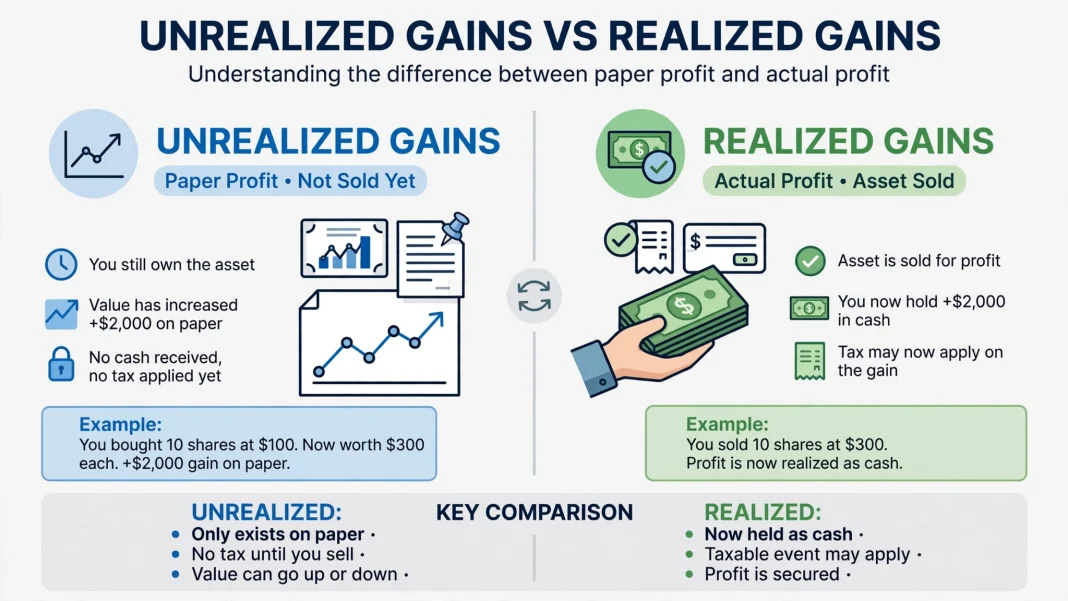

Navigating personal finance and investment management often comes down to mastering foundational concepts that dictate your tax obligations and overall portfolio performance. When assets like stocks, real estate, or business equity fluctuate in market value, tracking your actual financial progress can become confusing. Knowing how market movements impact your balance sheet allows you to make informed decisions regarding asset sales, tax planning, and overall wealth accumulation without running into unexpected liabilities.
The fundamental distinction between Unrealized Gains Vs Realized Gains centers on whether an asset has actually been sold or converted into cash. Paper value increases represent paper growth, meaning your asset’s market worth has risen since you purchased it, but you still own the underlying investment. Once you choose to sell or trade that asset, the growth transforms into a completed transaction, triggering accounting actions and potential capital gains taxes under current tax codes.
The Mechanics of Growth on Paper
An increase in paper value reflects the dynamic nature of supply and demand across financial markets. When you acquire shares of stock or property, market pricing constantly adjusts based on quarterly earnings, broader economic indicators, and investor sentiment. If an asset rises significantly above your initial purchase price, your total net worth expands accordingly. However, because you haven’t closed out the position, that growth remains subject to market volatility.
Holding onto rising assets without liquidating them offers distinct advantages, particularly regarding tax deferred growth. Because federal tax authorities generally do not tax unsold assets, your capital continues to compound untouched. This dynamic allows investors to build long-term equity, leverage portfolio assets for loans, or pass appreciated investments down through generations while deferring tax obligations indefinitely.
The Shift to Completed Transactions and Tax Exposure
When you execute a sale, your investment journey shifts from paper tracking to actual cash realization. The moment a transaction closes, the difference between your original cost basis and the final sale price forms a clear taxable event. Depending on how long you held the asset prior to liquidation, these gains face short-term capital gains tax rates or lower long-term capital gains rates.
Properly timing these transactions plays a vital role in comprehensive tax strategy. Investors frequently employ strategic tax-loss harvesting, pairing taxable gains against realized losses from underperforming investments to offset their total annual tax burden. Understanding how sales affect your taxable income bracket prevents surprises when filing season arrives and preserves more of your wealth for future growth.
Aligning Asset Growth with Financial Goals
Building long-term financial security requires balancing investments that accumulate value over time with liquidity strategies that meet short-term cash needs. Relying solely on paper appreciation can create liquidity challenges if market conditions turn downward unexpectedly. Conversely, liquidating assets too frequently generates friction through repeated capital gains taxes and transaction fees, slowing down long-term wealth compounding.
Developing a clear plan for asset sales ensures that every financial move serves a specific objective, whether funding retirement, acquiring new real estate, or diversifying your broader portfolio holdings. By carefully coordinating asset liquidations alongside professional tax guidance, you protect your growing balance sheet while maintaining full control over your financial future.
For more details visit our website: https://windfalladvisors.com/
Strategic investment management is an ongoing process of balancing market opportunities with smart tax planning. Keeping a close eye on both paper growth and liquidated profits ensures your portfolio remains resilient, tax efficient, and aligned with your personal prosperity.