

For most travelers, infrastructure is invisible until it becomes a problem. Delayed flights, crowded terminals, and rushed connections all point to a deeper truth: the systems built to support movement have not kept pace with the way people actually travel today. Nowhere is this more evident than in regional ground transportation.
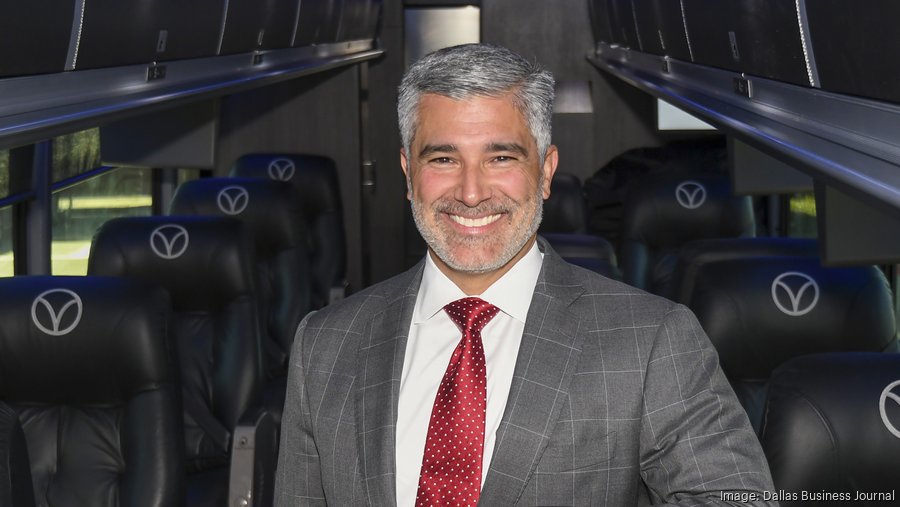
Alexander Danza, founder and CEO of Vonlane, did not set out to disrupt the industry in the traditional sense. Instead, he focused on the friction points that had quietly become normalized. By redesigning how regional mobility could be delivered, through a hybrid of hospitality, reliability, and design restraint, he introduced a model that challenges what infrastructure needs to be in order to serve people well.
The Career That Preceded the Idea
Danza’s path to Vonlane began in the world of business consulting. His early years at Arthur Andersen provided a disciplined foundation in operations and process design. Later, as president of Savoya, an executive transportation firm, he developed an inside view of the habits and expectations of high-frequency travelers.
These experiences shaped his thinking. He saw that the traditional travel industry often focused more on logistics than on lived experience. Speed was treated as the only value worth optimizing, even when it came at the cost of comfort, clarity, and continuity. The question that began to take shape for Danza was not how to move people faster, but how to move them better.
Design Thinking Without the Branding
When Vonlane launched in 2013, it did not market itself as a tech company or a luxury disruptor. It positioned itself as a thoughtful solution to a real, recurring problem: short-haul travel that left passengers feeling drained, delayed, or disconnected. The answer was not to invent a new type of vehicle, but to redesign the experience around what matters most in transit: time, attention, and ease.
Each Vonlane coach features just 22 wide, reclining leather seats. There is reliable Wi-Fi, personal outlets, and onboard attendants. It is not the hardware that makes the difference, but the sum of small choices that make travel feel seamless rather than fragmented. The decisions are not about extravagance, but about removing the micro-frictions that chip away at a traveler’s focus and well-being.
Danza’s model works because it treats experience as infrastructure. And rather than building new terminals or stations, Vonlane uses upscale hotel lobbies as boarding points. This move avoids the burden of construction and instead leverages existing environments already designed for comfort, security, and accessibility.
Hotels as Hubs: A Simple but Radical Choice
The choice to integrate travel terminals into hotels was not only strategic, it was quietly radical. Terminals have always existed on the edges of urban life. They are places people pass through, not places they want to be. By contrast, hotels are destinations in themselves. They are clean, quiet, staffed, and supported by food and parking options.
This shift does more than improve the boarding experience. It reduces capital requirements, shortens the time to enter new markets, and offers passengers a more familiar, pleasant space to begin their journey. It also signals something more subtle: that infrastructure need not always mean construction. Sometimes it can mean collaboration.
For cities with rising populations and increasing density, this approach offers a model that avoids adding more pressure to public resources. It allows private enterprise to build transportation capacity by working within existing structures rather than expanding physical footprints.
A Model Rooted in Restraint
What makes Danza’s approach notable is not just what it includes, but what it leaves out. Vonlane has not rushed into new markets without demand. It has not diluted its core service in the name of scale. It has not tried to be everything to everyone. Instead, it has grown deliberately, first across Texas, then into Tennessee and Georgia, targeting corridors where the need is clear and the model fits.
This kind of growth, rooted in operational discipline, often goes unnoticed in a business culture obsessed with velocity. But it reflects a deeper kind of ambition. Vonlane is not trying to dominate the market overnight. It is trying to build something that can last, something that continues to work not only for passengers, but for the cities and partners it serves.
Implications Beyond Transit
There are broader lessons in Danza’s work. In an age where convenience is often equated with technology, Vonlane reminds us that innovation can also come from design, patience, and empathy. The company’s success does not rest on algorithms or automation, but on understanding human needs and meeting them with clarity.
There is also a lesson in how Danza views partnerships. By aligning with hotels, he sidesteps many of the challenges that new infrastructure projects often face – land use, permitting, neighborhood pushback and instead finds value in what already exists. This model of integration rather than expansion is a blueprint worth studying for other sectors facing similar constraints.
A Different Kind of Innovation
Alexander Danza did not invent a new way to travel. What he did was harder. He took a familiar system and redesigned it in a way that felt invisible to the traveler but essential in practice. He focused on moments that most providers overlook: the quiet minutes before boarding, the ease of sitting down without hassle, the experience of staying connected without stress.
In doing so, he built a new kind of infrastructure, not made of steel and concrete, but of decisions, partnerships, and priorities. His work at Vonlane suggests that the future of travel may not come from building more, but from building smarter.

