
As digital interactions grow more complex, the need for secure and private communication has never been greater. In today’s world, where online transactions, blockchain networks, and digital identities dominate the landscape, ensuring trust without compromising privacy is a major challenge. This is where Zero Knowledge Proof comes in—a groundbreaking cryptographic concept that allows one party to prove the validity of a statement to another without revealing any underlying information.
In this article, we’ll explore what Zero Knowledge Proof means, how it works, and why it’s becoming a cornerstone of modern cybersecurity and blockchain systems.
What Is Zero Knowledge Proof?
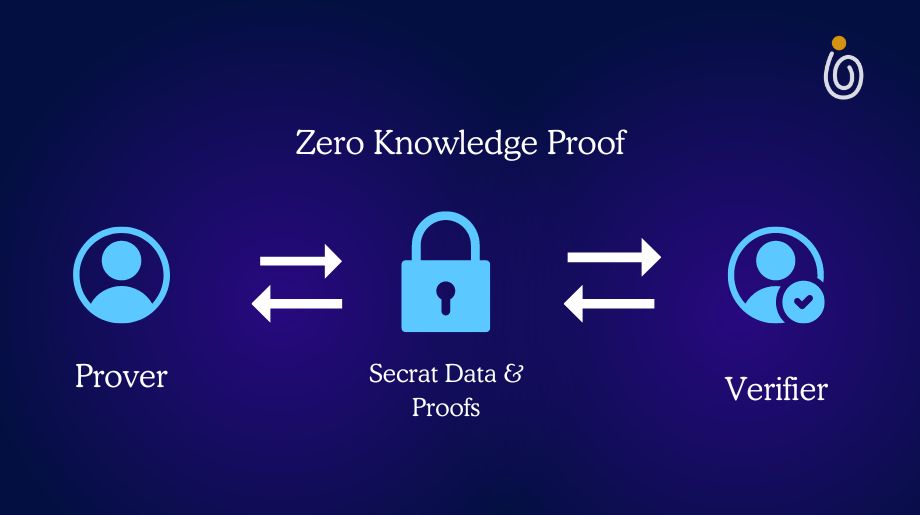
At its core, a Zero Knowledge Proof (ZKP) is a cryptographic method that enables one party (called the “prover”) to convince another party (the “verifier”) that a statement is true without sharing any additional information beyond the truth of that statement.
For example, imagine you want to prove to a website that you are over 18 years old. With traditional verification, you would provide a copy of your ID, exposing personal details like your name, address, and date of birth. However, with Zero Knowledge Proof, you can prove that you meet the age requirement without revealing any personal data.
This revolutionary concept allows for privacy-preserving authentication and verification across countless digital systems, from banking and healthcare to blockchain and beyond.
The Concept Behind Zero Knowledge Proof
The idea of Zero Knowledge Proof was first introduced in the 1980s by researchers Shafi Goldwasser, Silvio Micali, and Charles Rackoff. Their work transformed the way cryptographers thought about verification and privacy.
The basic properties that define a valid Zero Knowledge Proof are:
- Completeness: If the statement is true, an honest verifier will be convinced by an honest prover.
- Soundness: If the statement is false, a cheating prover cannot convince the verifier that it’s true.
- Zero-Knowledge: No information other than the truth of the statement is revealed.
These three principles ensure that communication remains both trustworthy and private—something that traditional authentication methods often fail to achieve.
How Zero Knowledge Proof Works
While the mathematics behind Zero Knowledge Proof can be complex, the concept can be explained through analogy.
Imagine a cave with a secret door that only opens when you know the correct password. You want to prove to someone that you know the password without actually revealing it. You can walk into the cave, close the door, and then come out through the secret door to demonstrate that you know how to open it—without ever disclosing the password itself.
This analogy mirrors how Zero Knowledge Proof functions in digital systems. Through sophisticated algorithms, it creates a mathematical “proof” that something is true without exposing the private data involved.
There are two main types of ZKPs in practice today:
- Interactive Zero Knowledge Proofs: Require back-and-forth communication between the prover and verifier.
- Non-interactive Zero Knowledge Proofs (NIZK): Use cryptographic algorithms that allow proof generation and verification without direct interaction—ideal for blockchain and decentralized systems.
Applications of Zero Knowledge Proof in the Real World
The potential of Zero Knowledge Proof extends across multiple industries, reshaping how organizations and individuals manage data security.
1. Blockchain and Cryptocurrencies
ZKPs are a foundational element in many modern blockchain protocols. For example, privacy-focused cryptocurrencies like Zcash use Zero Knowledge Proof to allow users to prove that a transaction is valid without revealing sender, receiver, or transaction amount details.
This not only enhances privacy but also maintains transparency and trust within decentralized systems. Websites such as zkp.com provide deep insights and resources for understanding and applying Zero Knowledge Proof in blockchain technology.
2. Authentication and Identity Verification
Traditional authentication systems often require sensitive personal data. With ZKPs, users can verify their identity, age, or access rights without disclosing confidential information. This innovation could revolutionize how online logins, digital IDs, and access controls function.
3. Financial Transactions
In the banking and fintech sectors, Zero Knowledge Proof can be used to confirm account balances or creditworthiness without exposing specific financial details. This creates more secure and private financial ecosystems, reducing risks of data leaks and fraud.
4. Healthcare and Data Privacy
In healthcare, patient data privacy is paramount. ZKPs allow institutions to validate medical information or research data without exposing personal health records, ensuring compliance with global data protection regulations.
5. Cloud Computing and Data Sharing
When sharing data across organizations or platforms, Zero Knowledge Proof ensures that the recipient can verify data authenticity without viewing the actual content. This has major implications for secure cloud storage and data collaboration.
Advantages of Zero Knowledge Proof
The growing adoption of ZKPs is driven by their numerous benefits:
- Enhanced Privacy: ZKPs ensure that no sensitive data is disclosed during verification.
- Improved Security: Since no private information is transmitted, the risk of interception or theft is minimized.
- Efficiency: Non-interactive ZKPs streamline processes by eliminating repeated back-and-forth verification.
- Regulatory Compliance: They help organizations meet privacy standards such as GDPR by reducing data exposure.
With these benefits, it’s no surprise that Zero Knowledge Proof is being hailed as a major step forward for data security and cryptographic trust.
Challenges and Limitations
Despite its promise, Zero Knowledge Proof technology faces several challenges. The cryptographic computations required are often resource-intensive, which can impact scalability and performance. Moreover, implementing ZKPs correctly requires deep technical expertise—small mistakes can compromise security.
Additionally, while ZKPs excel at proving simple truths, applying them to large-scale or complex systems remains an ongoing area of research and innovation. Companies and researchers worldwide, including those contributing to zkp.com, are actively working to improve the scalability and accessibility of this technology.
The Future of Zero Knowledge Proof
The importance of Zero Knowledge Proof will only continue to grow as digital ecosystems expand. From decentralized finance (DeFi) to secure online voting, its potential applications are vast.
Emerging innovations such as zk-SNARKs and zk-STARKs are already pushing ZKP performance to new heights, enabling faster and more scalable implementations suitable for modern Web3 systems.
As privacy becomes a top priority for users and organizations alike, Zero Knowledge Proof is poised to become a core component of the next generation of internet infrastructure.
Conclusion
Zero Knowledge Proof represents one of the most important advancements in modern cryptography. By enabling verification without disclosure, it strikes the perfect balance between trust and privacy.
From securing blockchain transactions to protecting personal data and improving digital authentication, ZKPs are redefining what privacy means in the digital age.
As technology continues to evolve, platforms like zkp.com are leading the way, offering resources, research, and tools to make Zero Knowledge Proof accessible for developers, enterprises, and individuals worldwide.
In the near future, this technology may very well become the standard for secure communication and digital identity—transforming the way we share information while keeping our secrets safe.