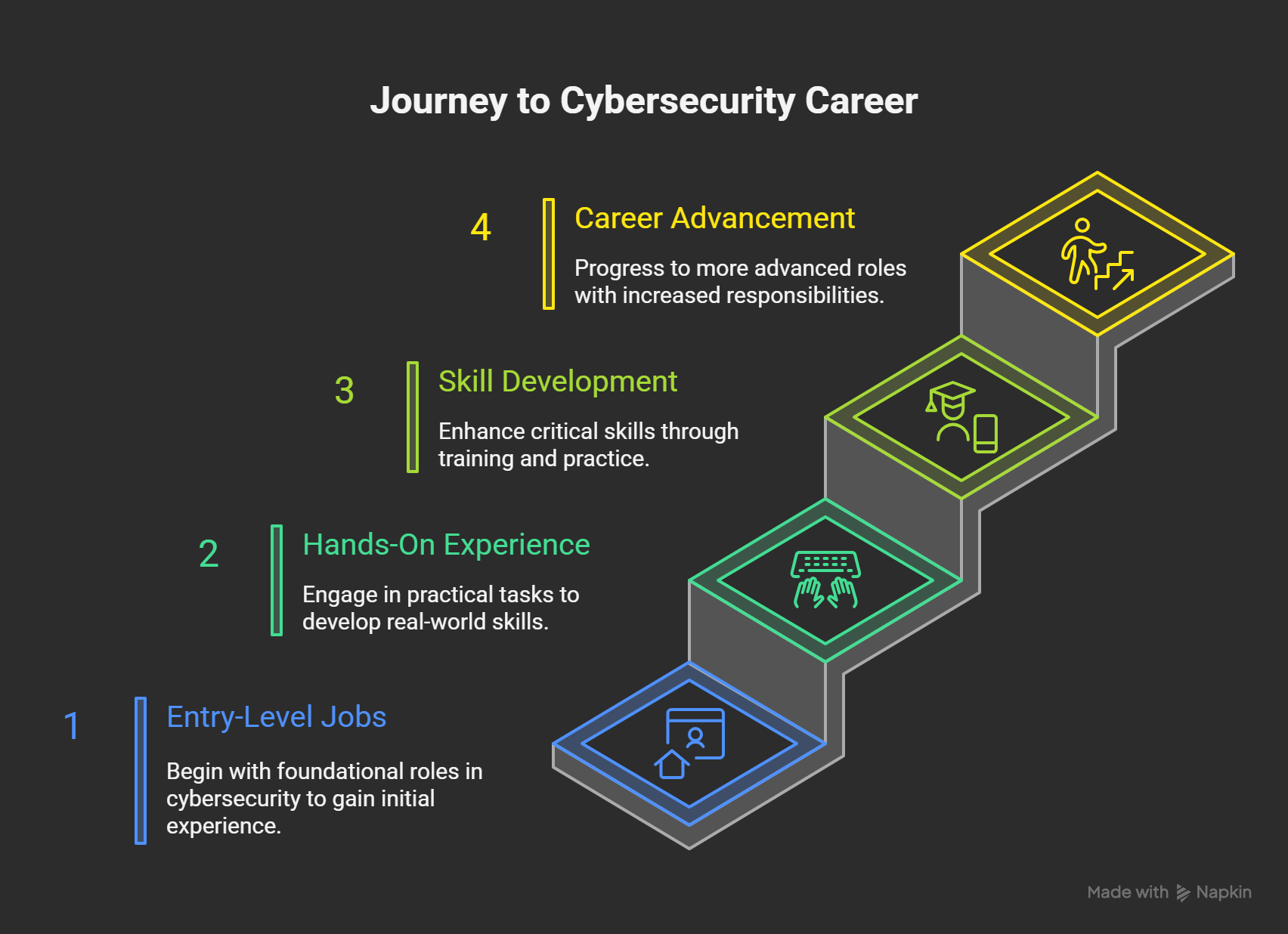

With cyberattacks becoming more frequent and sophisticated, the demand for skilled cybersecurity professionals is skyrocketing. For newcomers to the industry, cybersecurity entry level jobs offer an excellent way to gain hands-on experience, build essential skills, and launch a stable, high-paying career in IT security.
Explore the top cybersecurity entry level jobs available for beginners who want to start a secure and rewarding career.
Why Start a Career in Cybersecurity?
Cybersecurity is one of the fastest-growing fields in IT. According to recent industry reports, there are over 3.5 million unfilled cybersecurity positions worldwide, creating a talent shortage that favors motivated beginners.
Key reasons to pursue cybersecurity entry level jobs:
- High demand and job security – Organizations of all sizes need cybersecurity talent.
- Competitive salaries – Even entry-level roles pay above-average wages compared to other IT jobs.
- Clear career advancement path – You can grow into mid-level or senior roles in just a few years.
- Impactful work – Protecting sensitive data and preventing breaches makes cybersecurity a mission-critical profession.
Must-Have Skills for Working in Cybersecurity
Cybersecurity professionals say these are the most important skills to succeed:
Soft Skills (People and Mindset)
- Good communication: Listen carefully and explain ideas clearly in both writing and speech.
- Attention to detail: Small mistakes can cause big problems, so accuracy matters.
- Curiosity and humility: Be eager to learn and open to new information.
- Creative problem-solving: Think outside the box to solve technical challenges.
- Adaptability and teamwork: Be flexible and work well with others.
- Staying calm under pressure: Keep a level head when things get stressful.
Hard Skills (Technical Knowledge)
- Explain tech simply: Break down complex topics so non-technical people can understand.
- Strong computer science basics: Understand how systems, networks, and software work.
- Specialize in one area: Develop deep expertise in a specific cybersecurity subfield.
- Learn a programming or scripting language: At least one is essential for automation and problem-solving.
- Understand attacker tools and tactics: Be familiar with frameworks like MITRE ATT&CK.
- Organize and track investigations: Manage evidence and multiple tasks efficiently.
- Make informed decisions under pressure: Handle sensitive information and high-risk situations wisely.
Top Cybersecurity Entry Level Jobs
Here are the most common cybersecurity entry level jobs for 2025, along with their key responsibilities:
1. Security Analyst (SOC Analyst)
- Monitors security systems for suspicious activity
- Investigates and documents potential threats
- Works within a Security Operations Center (SOC)
- Average Salary: $60,000 – $80,000 per year
2. IT Support Technician with Cybersecurity Focus
- Provides basic IT support while implementing security policies
- Ensures systems are updated and patched
- Assists in preventing unauthorised access
- Average Salary: $45,000 – $65,000 per year
3. Junior Penetration Tester (Ethical Hacker)
- Assists in identifying vulnerabilities in systems
- Performs basic security tests under supervision
- Documents findings for remediation
- Average Salary: $55,000 – $75,000 per year
4. Incident Response Technician
- Responds to real-time security alerts
- Helps contain and mitigate active threats
- Supports forensic investigations of security breaches
- Average Salary: $58,000 – $78,000 per year
5. Risk and Compliance Assistant
- Ensures security policies meet industry regulations
- Prepares audit documentation
- Supports governance, risk, and compliance teams
- Average Salary: $50,000 – $70,000 per year
6. Cybersecurity Intern or Apprentice
- Gains hands-on experience in a security team
- Learns tools, procedures, and frameworks
- Often leads to full-time employment after training
- Stipend/Salary: $15 – $25 per hour
Certifications That Help You Land Cybersecurity Entry Level Jobs
While having a college degree in IT or computer science can be an advantage, it’s not always necessary to start your career in cybersecurity. Certifications are a great way to prove your skills, stand out to employers, and show that you’re serious about the field. Cert Empire recommends the following popular beginner-friendly certifications:
- CompTIA Security+ – A globally recognized certification that covers core security concepts and is considered the industry standard for entry-level roles.
- Certified Cybersecurity Entry-level Technician (CCET) – Designed specifically for individuals who are new to cybersecurity and want to validate their foundational skills.
- CompTIA Network+ – Focuses on networking fundamentals, which are essential for understanding how systems communicate and stay secure.
- Cisco CyberOps Associate – Prepares you for roles in a Security Operations Center (SOC) by teaching monitoring, analysis, and response tasks.
- (ISC)² Certified in Cybersecurity (CC) – A free certification from (ISC)² that provides a strong foundation for those just beginning their cybersecurity journey.
Steps to Get Cybersecurity Entry Level Jobs
Breaking into cybersecurity requires a structured approach:
- Build a Strong IT Foundation – Learn networking, operating systems, and basic IT troubleshooting.
- Earn Entry-Level Certifications – Choose one or two beginner certifications to validate your skills.
- Gain Practical Experience – Use virtual labs, open-source tools, or internships to develop hands-on skills.
- Create a Cybersecurity-Focused Resume – Highlight projects, labs, or volunteer work.
- Apply for Internships or IT Support Roles – Even general IT jobs can lead to cybersecurity opportunities.
- Join Cybersecurity Communities – Engage on forums, LinkedIn groups, or local meetups to network with professionals.
Salary Expectations for Cybersecurity Entry Level Jobs
Here’s a snapshot of average salaries for common roles:
| Job Role | Salary Range (USD) |
| Security Analyst (SOC Analyst) | $60,000 – $80,000 |
| Junior Penetration Tester | $55,000 – $75,000 |
| IT Support Technician (Cyber Focus) | $45,000 – $65,000 |
| Incident Response Technician | $58,000 – $78,000 |
| Risk & Compliance Assistant | $50,000 – $70,000 |
Future Growth and Career Path
Starting with cybersecurity entry-level jobs opens the door to mid- and senior-level positions, such as:
- Cybersecurity Engineer
- Penetration Tester (Senior)
- Incident Response Manager
- Security Architect
- Chief Information Security Officer (CISO)
With just 2–4 years of experience, many professionals move from entry-level roles to positions paying $90,000 – $120,000 annually.
Tips to Succeed in Cybersecurity Entry Level Jobs
- Stay Updated on Threats – Follow cybersecurity blogs, podcasts, and industry reports.
- Practice in Home Labs – Use tools like Wireshark, Metasploit, or VirtualBox to learn in a safe environment.
- Document Your Learning – Share projects on GitHub or LinkedIn to showcase your skills.
- Seek Mentorship – Experienced professionals can guide your career path.
- Consider Specialized Paths Early – Decide whether you’re more interested in offensive security (ethical hacking) or defensive roles (monitoring and incident response).
Why Cybersecurity Entry Level Jobs Are Worth It
Starting a career in cybersecurity provides:
- Stability – The field is recession-resistant and constantly evolving.
- Learning Opportunities – You’ll gain exposure to diverse technologies.
- Impact – Your work directly protects organizations and individuals from cyber threats.
- Career Mobility – Experience in cybersecurity is transferable across industries, from finance to healthcare to government.
Final Thoughts
Cybersecurity entry level jobs are the gateway to one of the most rewarding careers in IT. With high demand, competitive salaries, and endless learning opportunities, now is the perfect time to start your journey. By building your skills, earning beginner certifications, and gaining hands-on experience, you can secure your first cybersecurity role and quickly progress to more advanced positions. Whether you’re switching careers, graduating from college, or self-studying online, cybersecurity is open to anyone who is willing to learn and stay curious. Take the first step today — the industry needs you.
FAQs
1. What are cybersecurity entry level jobs?
Cybersecurity entry level jobs are beginner roles focused on protecting systems, networks, and data from cyber threats. They include positions like SOC analyst, IT support technician, and junior penetration tester.
2. Do I need a degree to get an entry level job in cybersecurity?
A degree is helpful but not mandatory. Many employers hire candidates with certifications, hands-on experience, or strong technical skills even without formal education.
3. What certifications help with cybersecurity entry level jobs?
Certifications such as CompTIA Security+, (ISC)² Certified in Cybersecurity (CC), and Cisco CyberOps Associate are highly recommended for beginners.
4. How much do cybersecurity entry level jobs pay?
Most entry-level cybersecurity positions pay between $50,000 and $80,000 annually in the U.S., depending on location, certifications, and employer size.
5. What skills do I need for a cybersecurity entry level job?
Foundational IT knowledge, networking basics, familiarity with operating systems, and strong problem-solving skills are essential. Soft skills like communication and analytical thinking are also important.
6. Can I get a cybersecurity job with no experience?
Yes. Many people transition into cybersecurity through internships, apprenticeships, IT support roles, or self-study using virtual labs and projects.
7. What is the easiest cybersecurity job to start with?
A Security Operations Center (SOC) analyst role is often considered the most accessible, as it involves monitoring systems and learning security tools under supervision.
8. How do I gain practical experience in cybersecurity?
You can use free labs, cybersecurity simulations, bug bounty platforms, or open-source tools to develop real-world skills at home or online.
9. Are cybersecurity entry level jobs remote?
Many cybersecurity roles can be done remotely, especially positions involving monitoring, compliance, or risk assessment. However, some companies require on-site work for sensitive data handling.
10. What’s the career growth path after an entry level cybersecurity job?
With 2–4 years of experience, you can advance into roles like cybersecurity engineer, penetration tester, incident response manager, or even security architect.