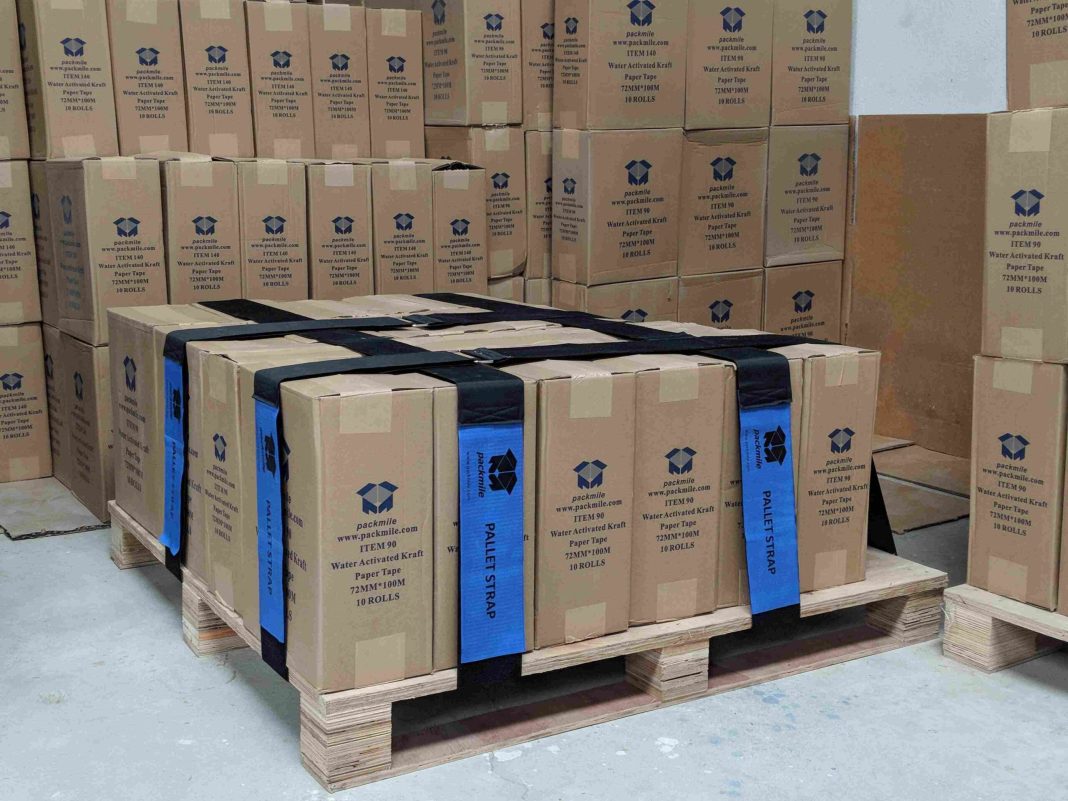

Goods are moved in warehouses, great, without damage or delays, through secure and efficient palletization. For many years, the use of plastic wrap has been the traditional method for the securement of pallets. However, many warehouses are now reconsidering the whole thing and moving to the use of reusable pallet straps.
Reusable pallet straps are a feasible alternative that endorses faster operations, reduced expenses, and eco-friendly packaging. The article outlines the comparison between reusable pallet straps and plastic wrap and also reveals the best choice for contemporary warehouses.
Understanding Pallet Stabilization in Warehouses
The security of boxes and products during the entire process of storage and transportation is assured by pallet stabilization. A very efficient system eliminates all types of movements, decreases the likelihood of product damage, and safeguards workers throughout the whole process of handling.
Among the different ways to stabilize pallets, the most widely used ones are plastic stretch wrap and reusable pallet straps. They both serve the same function but have quite different characteristics in terms of effectiveness, cost, and long-term value etc.
What Are Reusable Pallet Straps?
Reusable pallet straps are made to support boxes and products together on a pallet, and they are adjustable straps. They are constructed of tough and long-lasting materials, and usually, Velcro is used to keep the products securely in position.
Reusable pallet straps can be used multiple times, as opposed to the plastic wrap that can only be used once. They are simple to put on, take off, and adjust, which means they are perfect for rapidly moving warehouse environments.
What Is Plastic Wrap?
Plastic wrap, otherwise referred to as stretch film, is a type of single-use plastic that is tightly wound around pallets. Through creating tension, it secures boxes and is popular because of the low initial investment needed.
Nevertheless, plastic wrap is thrown away after one application. This results in continuous costs, accumulation of waste, and extended processing times.
Key Differences Between Reusable Pallet Straps and Plastic Wrap
Ease of Use
Straps for reusable pallets are very easy to use. The employees place the straps around the pallets, modify the tension, and then fasten them. It does not require any special tools or devices.
The use of plastic films usually involves dispensers or wrapping machines, or both. Wrapping and unwrapping of pallets consume more time and are more physically demanding, especially for large-scale operations.
Speed and Efficiency
Reusable pallet straps have cut down the time for packing and unpacking by a large percentage. Every pallet can be either locked or released in a matter of just a few minutes.
Plastic wrap is a production-halting material. The cutting, handling, and disposing of the wrap add extra steps to the operation and, in the long run, affect the productivity of the entire warehouse.
Cost Comparison Over Time
Initial Investment
Initially, as the plastic wrap is bought in rolls and has a low unit cost, it seems to be the option with the lowest cost. On the other hand, the reusable pallet straps need a bigger initial investment.
Long-Term Savings
The number of uses of the reusable pallet straps is so high that they will never need to be repurchased constantly. Thus, material and waste disposal costs are greatly reduced in the long run for warehouses.
On the other hand, plastic wrap is a continuous product and has to be replaced consistently. These costs of return, which are mainly the recurring costs of packaging, pile up and thus the long-term packaging cost increases.
Durability and Load Security
Strength and Stability
Reusable pallet straps are constructed from high-tech materials, which give them a wide range of load-bearing capacities from light to heavy-duty. They ensure a smooth flow of boxes by maintaining uniform tension.
Plastic wraps can easily get broken, become loose, or even move out of the initial position during transportation. Its ability to hold the items intact can easily be compromised through changes in temperature or rough handling.
Adjustable Fit
Reusable pallet straps have a very accurate adjustment capability, which provides for the best fit. In case the boxes should move, the straps can be tightened without the necessity of repackaging the whole pallet.
Plastic wrap provides no such convenience. When cut, it is necessary to start the entire process of application all over again.
Safety for Warehouse Workers
Reduced Injury Risk
The reusable pallet straps are easier to manage and take off. There won’t be any need for knives or cutters, hence reducing the chances of cuts and injuries to workers.
Plastic wrap is many times requires sharp tools to be removed. This raises the probability of accidents, mainly in the case of busy warehouse environments.
Better Load Control
The disposable pallet straps hold the boxes tightly, so there is no chance of products falling during the loading and unloading process. This results in improved safety at the worksite.
Environmental Impact
Sustainability Benefits of Reusable Pallet Straps
The use of reusable pallet straps results in less plastic waste that is not going to be used again. They can be reused numerous times, and therefore, little discarded packaging material is generated. Moreover, they need less space for storage, and the costs of waste management are also reduced.
Environmental Drawbacks of Plastic Wrap
Plastic wrap is one of the main sources of waste in terms of packaging. It is of no use after just one use, and most of the time it is thrown away into landfills. Warehouses that wrap their products with plastic are generating a lot of waste, which is increasing their environmental footprint and disposal costs.
Storage and Space Efficiency
The use of reusable pallet straps only requires a little storage space. It is possible to store these straps in a small space and keep using them. The rolls of plastic wrap, on the other hand, consume more space and necessitate more frequent restocking. This not only increases the mess in the warehouse but also poses problems for inventory management.
Customization and Branding
Straps for pallets that can be reused come in various sizes, widths, and designs tailored according to customer needs. The warehouses can either select the usual widths of 25mm, 50mm, or 100mm, or they can have the exact measurements as per their requirement.
Companies printing their logos on the straps is one of the branding possibilities that make the packaging process more visible and professional, besides adding value to the brand. On the other hand, plastic wrap provides no chance for either customization or branding.
Conclusion: Which Is Better for Warehouses?
If a warehouse is committed to efficiency, safety, and cost control, then it should definitely use reusable pallet straps. Plastic wrap might look like an easier option, but the long-term expenses and ecological impact of plastic wrap make it unfit for today’s operations.
Straps for pallets that can be reused make the pallets more stable, occupy less time in packing, and take better care of the workers while at the same time being aligned with sustainable packaging objectives. In the case of a warehouse where the movement of pallets occurs very often, they are the best and most trustworthy solution.
If the warehouse you operate in wants to enhance palletization speed, minimize expenses, and use eco-friendly packaging, then these reusable pallet straps are the ones to go with.
Packmile has designed reusable pallet straps that are not only strong and durable but also have a customized option to suit your warehouse operations, all at reasonable prices. Reach out to Packmile now to discuss which pallet strap is best for you and your business, and get on to the next station of pallet handling that is safe and smart.



