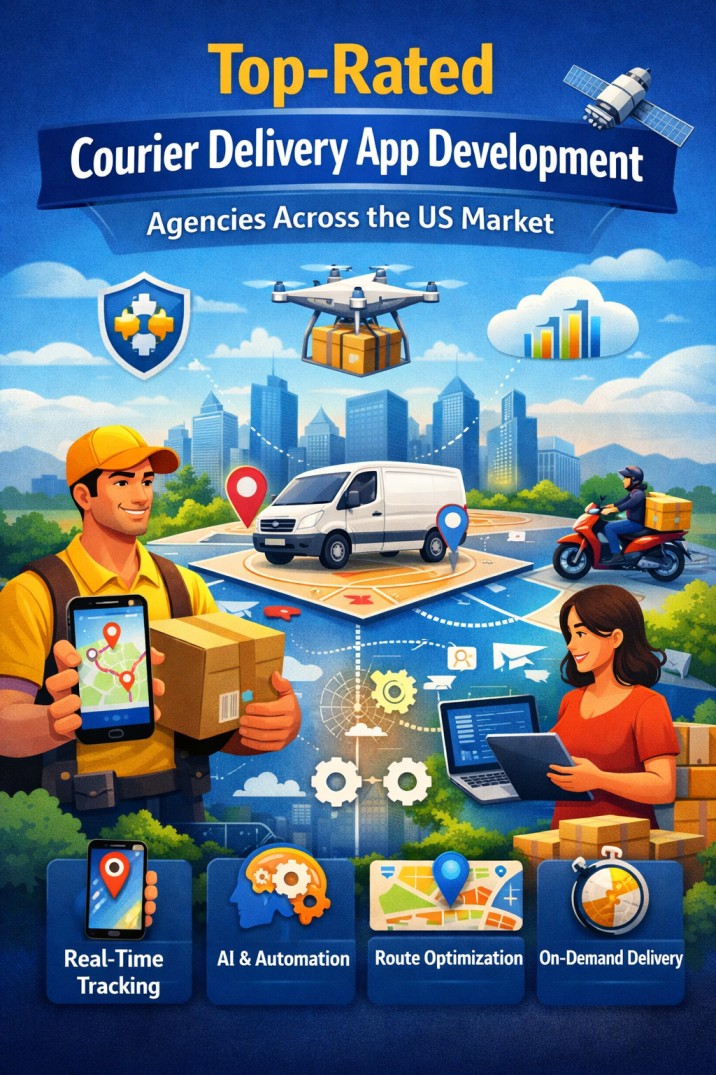

The logistics and courier ecosystem in the United States is evolving at an unprecedented pace. Rapid digitization, rising customer expectations, and the explosive growth of eCommerce have pushed courier businesses to embrace intelligent, scalable mobile solutions. Today, delivery management apps are not just operational tools they are strategic platforms enabling real-time tracking, route optimization, analytics, and customer engagement.
Businesses aiming to gain a competitive edge are increasingly investing in courier delivery app development solutions that streamline last-mile operations while enhancing transparency and service efficiency. However, choosing the right technology partner remains a crucial decision that directly impacts project success, scalability, and long-term ROI.
Key market trends shaping courier app innovation in 2026
The courier technology landscape is witnessing a structural transformation driven by automation, predictive analytics, and customer-centric design. Modern logistics apps now integrate AI-powered route planning, IoT tracking, blockchain for shipment security, and advanced reporting dashboards. According to recent industry insights, the global last-mile delivery market is projected to surpass $200 billion by 2027, while nearly 70% of logistics firms are expected to adopt AI-enabled dispatch systems by 2026. Organizations are focusing on developing solutions that enable end-to-end delivery visibility, automated dispatching, and seamless communication between drivers, customers, and fleet managers. Additionally, on-demand delivery models and sustainability initiatives are influencing how courier platforms are conceptualized and developed..
Critical factors businesses consider when selecting tech partners
Selecting an agency for logistics app development requires evaluating several strategic and technical parameters. Companies today prioritize development partners with deep domain expertise, scalable architecture capabilities, and a proven track record in delivering high-performance logistics platforms.
Important decision criteria include:
- Experience in transportation and logistics software
- Ability to integrate GPS, mapping, and real-time tracking features
- Expertise in cloud infrastructure and API integrations
- UI/UX proficiency for driver and customer-facing interfaces
- Post-launch support and performance optimization services
Essential features modern courier delivery apps must include
To meet evolving operational demands, courier businesses expect feature-rich applications that enhance efficiency while improving user experience. Leading agencies now focus on delivering customizable modules that can adapt to diverse business models.
Core functionalities include:
- Real-time shipment tracking and automated status updates
- AI-driven route optimization and delivery scheduling
- Digital proof of delivery and secure payment integration
- Fleet management dashboards and performance analytics
- Customer notifications and feedback management systems
How scalable architecture influences courier app performance
Scalability is a fundamental requirement for courier applications handling thousands of daily deliveries. Modern development frameworks emphasize modular architecture, cloud deployment, and microservices-based infrastructure to ensure consistent performance during peak demand cycles.
A well-structured architecture not only supports business expansion but also enables seamless integration with third-party logistics tools, warehouse systems, and CRM platforms. Agencies that prioritize scalable engineering practices help businesses future-proof their technology investments.
Top 7 Courier Delivery App Development Agencies in 2026
Below is a curated list of highly reputed agencies known for delivering robust courier and logistics app solutions in the US market.
1. Utility
Utility is a New York-based digital product agency recognized for crafting scalable logistics applications that combine intuitive UX with advanced backend engineering. Their solutions emphasize real-time operational visibility and performance optimization.
Why They’re Selected
- Strong expertise in enterprise mobility solutions
- Proven experience with logistics startups and large carriers
- Focus on data-driven product strategy
Key Services
- Pickup and delivery app development
- Delivery workflow automation solutions
- Fleet tracking and analytics integration
2. Hyperlink InfoSystem
Hyperlink InfoSystem delivers innovative logistics applications with a strong focus on emerging technologies and cost-efficient scalability. Their development approach balances user experience excellence with operational functionality for courier service providers.
Why They’re Selected
- Extensive global portfolio in on-demand solutions
- Agile development methodology
- Rapid deployment capabilities
Key Services
- End-to-end logistics app development
- API integration
- Maintenance and feature enhancement
3. Cubix
Cubix is known for engineering advanced courier delivery platforms that incorporate AI-powered tracking, predictive route optimization, and seamless customer communication features. Their technology solutions cater to startups as well as enterprise logistics providers seeking digital transformation.
Why They’re Selected
- Expertise in intelligent logistics software engineering
- Strong focus on innovation and automation
- Dedicated project management frameworks
Key Services
- Smart dispatch system development
- Real-time driver communication modules
- Performance analytics and reporting tools
4. Suffescom Solution
Suffescom Solution specializes in developing feature-rich courier applications that enhance operational transparency and delivery speed. Their solutions are designed to support high-volume shipment management and provide scalable infrastructure for growing logistics businesses.
Why They’re Selected
- Industry-specific development expertise
- Cost-effective engagement models
- High client retention rate
Key Services
- Route optimization and scheduling solutions
- Shipment tracking system development
- Logistics process automation tools
5. TechAhead
TechAhead builds robust logistics applications that emphasize user-centric design and high-performance architecture. Their courier solutions enable businesses to streamline delivery workflows while improving customer satisfaction and operational productivity.
Why They’re Selected
- Strong mobile engineering capabilities
- Focus on scalable and secure development
- Strategic consulting for digital logistics transformation
Key Services
- Custom delivery management platforms
- Cloud migration and modernization
- UX optimization and performance tuning
6. MindInventory
MindInventory provides intelligent courier app solutions that combine modern design principles with advanced technological frameworks. Their development strategies help logistics businesses enhance efficiency, reduce delivery delays, and gain actionable operational insights.
Why They’re Selected
- Expertise in cross-platform mobile development
- Transparent development process
- Emphasis on quality assurance
Key Services
- Courier workflow digitization
- Real-time notification systems
- Integration with logistics management software
7. Appinventiv
Appinventiv is a globally recognized technology partner known for delivering enterprise-grade logistics and courier platforms. Their engineering teams focus on building scalable ecosystems that support dynamic delivery networks, data analytics, and automation-driven operational excellence.
Why They’re Selected
- Extensive experience with large-scale mobility solutions
- Advanced cloud and AI integration capabilities
- Strong reputation for timely project delivery
Key Services
- On-demand courier app architecture design
- Intelligent fleet and route management systems
- Continuous support and platform optimization
Strategic benefits of partnering with experienced app agencies
Working with specialized courier technology agencies offers numerous operational and strategic advantages. These partners bring domain knowledge, engineering excellence, and innovation capabilities that accelerate product development and market readiness.
Businesses benefit from:
- Faster time-to-market for digital delivery platforms
- Reduced operational costs through automation
- Enhanced customer experience and service reliability
- Data-driven decision-making capabilities
- Improved scalability and technology adaptability
Conclusion
The courier and logistics sector in the United States is undergoing rapid technological advancement, driven by digital transformation and increasing customer expectations. Selecting the right development agency plays a pivotal role in building high-performance delivery applications that support operational growth and long-term business success.
The agencies listed above demonstrate strong expertise in logistics mobility solutions, scalable architecture design, and innovative feature integration. By collaborating with the right technology partner, courier businesses can modernize their delivery infrastructure, improve efficiency, and maintain a competitive advantage in the evolving logistics marketplace.
FAQs
1. How much does it cost to build a courier delivery app in the US?
The development cost typically ranges from $30,000 to $150,000 depending on app complexity, features, integrations, and development timeline.
2. How long does it take to develop a courier mobile application?
A basic courier app may take 3–4 months, while enterprise-level logistics platforms can require 6–10 months or more.
3. What technologies are commonly used in courier app development?
Popular technologies include React Native, Flutter, Node.js, Python, cloud platforms like AWS, and GPS mapping APIs.
4. Can courier apps integrate with existing logistics systems?
Yes, most modern apps support integration with ERP, CRM, warehouse management, and third-party shipping APIs.
5. Why is real-time tracking important in courier applications?
Real-time tracking improves transparency, enhances customer trust, and enables businesses to manage delivery operations more efficiently.
6. What are the key features customers expect in courier apps today?
Customers expect live tracking, instant notifications, secure payments, delivery scheduling, and easy communication with drivers.