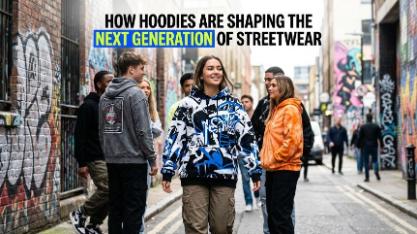

Streetwear has never stood still. What began as a culture rooted in skateboarding, music, sports, and independent creativity has developed into one of the most influential forces in contemporary fashion. Yet, despite constant changes in silhouettes, graphics, fabrics, and consumer preferences, one garment continues to anchor the movement: the hoodie.
Hoodies have moved far beyond their reputation as casual layering pieces. They now represent comfort, identity, cultural participation, and personal style. From oversized fits worn with sneakers to carefully constructed premium pieces paired with tailored garments, the hoodie has become remarkably adaptable. Its ability to work across different aesthetics is one reason it remains central to the future of streetwear.
The next generation of streetwear is also being shaped by a more informed consumer. Today’s shoppers increasingly consider design originality, garment quality, cultural relevance, versatility, and the story behind a product before making a purchase. Hoodies sit directly at the intersection of these expectations, giving designers and brands an unusually flexible canvas for experimentation.
Why the Hoodie Became a Streetwear Essential
The hoodie succeeds because it combines practicality with visual impact. It provides warmth, creates an instantly recognizable silhouette, and offers a large surface for artwork, typography, logos, embroidery, and other forms of creative expression. Unlike highly formal garments, it does not require the wearer to follow a rigid styling formula.
That flexibility has helped hoodies travel comfortably between different cultural spaces. They can be associated with athletic influences, underground music scenes, skate culture, luxury fashion, gaming communities, or minimalist everyday wardrobes. Each group can interpret the same basic garment differently.
Several characteristics explain its lasting appeal:
- Comfort: Soft fabrics and relaxed construction make hoodies suitable for extended everyday wear.
- Versatility: They can be layered over shirts or under jackets and combined with everything from denim to tailored trousers.
- Creative potential: Large front, back, and sleeve areas provide room for distinctive graphics and branding.
- Gender-neutral appeal: Relaxed silhouettes can work across a broad range of consumers.
- Seasonal adaptability: Different weights and fabric compositions allow hoodies to function throughout much of the year.
Streetwear brands have therefore learned that a hoodie can be more than another item in a collection. It can become a recognizable signature product that communicates the personality of an entire label.
Celebrity Culture and the Rise of Statement Hoodies
Entertainment has played a major role in transforming hoodies into cultural signifiers. Musicians, athletes, actors, creators, and other public figures regularly influence what consumers consider desirable. When a recognizable personality wears a particular silhouette, graphic, or colorway, that visual can quickly spread across social platforms and fan communities.
This connection between celebrity culture and apparel has also changed how consumers discover products. A garment may first attract attention because of its association with a song, album, tour, personality, or online moment. The consumer then evaluates its design independently and decides whether it fits their own wardrobe.
A drake hoodie, for example, can appeal to shoppers who are interested in the intersection of music culture and contemporary casual fashion. The broader lesson for streetwear brands is that culturally relevant garments can carry meaning beyond their physical construction. A successful design becomes part of a conversation.
Personal Identity Is Becoming More Important
The future of streetwear will increasingly revolve around self-expression rather than simply following a fixed trend. Younger consumers often mix influences rather than subscribing to a single fashion category. A person might combine vintage sportswear with contemporary sneakers, an oversized hoodie with refined trousers, or graphic-heavy pieces with understated accessories.
Hoodies are particularly well suited to this approach because their basic structure leaves considerable room for interpretation. The same sweatshirt can look completely different depending on its proportions, color, graphics, footwear, accessories, and layering strategy.
Designers are responding by exploring details that make familiar hoodie silhouettes feel more individual. These may include:
- Oversized or cropped proportions
- Heavyweight fleece construction
- Washed and vintage-inspired finishes
- Minimal tonal embroidery
- Large back graphics
- Distressed or raw-edge detailing
- Unique drawstrings and hardware
- Unusual color combinations
- Layered or panelled construction
Instead of asking consumers to adopt a complete aesthetic, modern streetwear increasingly gives them individual pieces that can be interpreted in their own way.
The Influence of Online Communities
Social media has accelerated the pace at which streetwear trends develop. A design can move from a niche community to a much larger audience through short-form videos, outfit posts, creator collaborations, and fan discussions. This has made visual identity more important than ever.
For hoodie brands, this creates both an opportunity and a challenge. A strong design can gain visibility rapidly, but consumers are also exposed to an enormous volume of competing products. Generic designs can easily disappear among countless alternatives.
Successful labels therefore need to think beyond placing a logo on a sweatshirt. The garment needs a recognizable visual language. Color, typography, illustration style, fit, photography, packaging, and storytelling should work together to create an identifiable brand experience.
From Fan Merchandise to Fashion Statements
Another important shift is the changing perception of merchandise. Traditionally, merchandise was often treated as a straightforward way for fans to display their support for a musician, team, creator, or entertainment property. Today, well-designed merchandise can function as legitimate streetwear in its own right.
The distinction between “merch” and fashion has become increasingly fluid. Consumers may purchase a hoodie because they appreciate the cultural reference, but continue wearing it because the garment itself has a compelling silhouette and design.
A sincerely yours hoodie illustrates how a recognizable phrase or cultural association can become part of a wearable identity. The strongest products in this space give consumers both emotional relevance and everyday styling potential.
Quality Is Becoming a Competitive Advantage
As the streetwear market becomes more crowded, construction quality can distinguish a memorable hoodie from an ordinary one. Consumers are increasingly able to recognize differences in fabric weight, stitching, fit, finishing, and overall durability.
Heavyweight cotton and premium fleece, for instance, can create a more substantial drape than lightweight sweatshirt fabric. Ribbed cuffs and waistbands help maintain shape, while carefully designed seams can improve both durability and visual structure. Even small decisions around hood construction can dramatically change the way a garment sits when worn.
For brands, quality should be considered throughout product development rather than added at the final stage. A strong hoodie typically requires attention to:
- Fabric composition and GSM
- Color consistency
- Pattern accuracy
- Seam construction
- Stitch density
- Print and embroidery durability
- Rib recovery
- Hood shape and proportion
- Wash and shrinkage performance
These factors matter because streetwear garments are often worn repeatedly. A hoodie that maintains its shape, color, and graphics after frequent use can create much stronger long-term value than a product designed primarily for visual impact at the point of purchase.
How Hoodie Design Is Evolving
The traditional hoodie remains popular, but designers are increasingly treating it as a foundation for experimentation. Proportion is one of the most visible areas of change. Oversized hoodies continue to offer a relaxed, dramatic silhouette, while shorter and more structured versions provide a sharper alternative.
Graphic placement is evolving as well. Instead of limiting artwork to a central chest print, designers are experimenting with sleeve graphics, asymmetric placement, small front details, large back illustrations, woven patches, and tonal branding.
Color is becoming more nuanced too. While bold shades remain important, muted neutrals, faded tones, earthy palettes, and vintage washes allow consumers to build more sophisticated wardrobes around casual garments.
| Hoodie Direction | Key Characteristics | Streetwear Appeal |
|---|---|---|
| Oversized | Relaxed proportions, dropped shoulders, generous body width | Creates a bold contemporary silhouette and supports layered styling |
| Minimalist | Neutral colors, subtle branding, clean construction | Works across casual and elevated wardrobes |
| Graphic | Illustrations, typography, large back prints, cultural references | Provides strong visual identity and self-expression |
| Vintage-Inspired | Washed colors, faded graphics, worn-in finishes | Connects modern streetwear with nostalgia and archival aesthetics |
| Premium | Heavyweight fabrics, refined finishing, elevated details | Bridges the gap between casualwear and luxury fashion |
Streetwear and the New Meaning of Premium
Premium streetwear no longer has to look formal or traditional. Consumers increasingly associate luxury with material quality, distinctive design, limited availability, craftsmanship, and cultural credibility rather than simply conventional tailoring.
That shift has opened the door for hoodies to occupy a higher position in the fashion hierarchy. A carefully engineered heavyweight hoodie with excellent construction can become a premium wardrobe staple even without elaborate decoration.
This has also encouraged brands to rethink pricing. Instead of competing exclusively through low costs, emerging labels can build perceived value through fabric selection, limited drops, thoughtful design systems, collaborations, and consistent brand storytelling.
Practicality Remains at the Core
Even as hoodies move into premium territory, practicality remains one of their greatest strengths. Consumers want clothing that fits naturally into busy lifestyles. A hoodie can be worn while traveling, commuting, relaxing, exercising casually, attending events, or meeting friends.
This versatility makes it particularly valuable in a wardrobe increasingly built around interchangeable pieces. Rather than purchasing garments for one specific occasion, shoppers can prioritize items that move between different settings.
Features such as spacious kangaroo pockets, adjustable hoods, comfortable cuffs, durable fabric, and easy-care construction reinforce this everyday functionality. The most successful future-facing designs will likely combine these practical benefits with stronger aesthetic differentiation.
How Brands Can Build Better Hoodie Collections
Creating a successful hoodie range requires more than producing multiple colors of the same garment. Each piece should have a clear purpose within the collection and contribute to the overall brand identity.
- Define the audience: Understand the lifestyles, preferences, cultural interests, and spending habits of the intended customer.
- Establish a design language: Choose consistent approaches to typography, graphics, color, proportions, and finishing.
- Select appropriate fabrics: Match fabric weight, hand feel, durability, and performance characteristics to the intended positioning.
- Develop multiple silhouettes: Consider oversized, standard, cropped, or structured fits rather than relying on one shape.
- Test the product: Evaluate fit, wash performance, colorfastness, seam strength, and graphic durability before scaling production.
- Create controlled releases: Use limited drops, seasonal capsules, and selective colorways to maintain interest without overwhelming customers.
This approach gives every hoodie a role rather than turning the collection into a collection of disconnected graphics.
Collaboration Will Continue to Drive Innovation
Collaborations are another powerful force shaping the next generation of streetwear. Brands can partner with musicians, artists, athletes, designers, creators, and communities to develop products that carry multiple layers of cultural meaning.
The best collaborations feel natural because both parties contribute something meaningful. A creator may bring an audience and cultural perspective, while the apparel brand contributes product development, manufacturing knowledge, and distribution. The resulting hoodie can therefore function as both merchandise and a genuine fashion product.
Collaboration also gives established brands an opportunity to experiment with new visual languages without completely changing their core collections. Limited collaborative releases can test unusual graphics, fabrics, colorways, and silhouettes while generating valuable consumer feedback.
Sustainability and the Future of Hoodie Production
Sustainability is becoming an increasingly important consideration across fashion. Hoodies are not exempt from this shift. Because they are often produced in substantial quantities, choices around materials, manufacturing, packaging, and product longevity can have meaningful environmental implications.
Brands can respond by focusing on durable construction and longer product lifecycles. A hoodie designed to remain wearable for years may offer greater value than a cheaper garment that quickly loses its shape or appeal.
Material selection can also influence a product’s environmental profile. Depending on the brand’s goals, designers may explore recycled fibers, organic cotton, responsible sourcing programs, lower-impact dyes, or blended fabrics engineered for specific performance requirements.
However, sustainability should not simply become another marketing slogan. Consumers are increasingly interested in tangible information about how products are made, what materials they contain, and how long they are expected to last.
The Role of the Classic Coach Aesthetic
Streetwear’s evolution does not mean every product must be experimental. Familiar wardrobe staples can remain powerful when they are updated with thoughtful proportions, materials, or branding.
A coach hoodie can fit into this broader movement by connecting recognizable casual styling with the contemporary streetwear wardrobe. The appeal of such pieces comes partly from their versatility: they can support a layered outfit without competing with every other element.
This balance between familiarity and innovation is likely to remain important. Streetwear consumers may want something fresh, but they also want clothing they can realistically integrate into their existing wardrobes.
What the Next Generation of Streetwear Consumers Wants
The modern streetwear customer is not simply looking for a recognizable logo. They want products that reflect personal taste and feel relevant to their communities. Authenticity has become particularly valuable because consumers can quickly compare brands, research product origins, and share their experiences online.
The emerging expectations can be summarized across several areas:
- Authenticity: Products should have a clear reason for existing rather than feeling like trend-driven releases.
- Comfort: Wearability remains essential even when a garment is positioned as premium fashion.
- Originality: Consumers want designs that offer something beyond repetitive branding.
- Quality: Durable materials and construction increasingly justify premium prices.
- Versatility: Pieces that work across multiple outfits provide stronger wardrobe value.
- Cultural relevance: Connections to music, art, sports, creators, and communities can add emotional significance.
Why Hoodies Will Remain Central to Streetwear
Fashion trends inevitably change, but the hoodie has characteristics that make it unusually resistant to becoming irrelevant. It is comfortable without being visually plain, expressive without requiring formal styling, and familiar without being locked into a single aesthetic.
Its future will likely involve a combination of heritage and experimentation. Classic fleece construction may sit alongside technical textiles. Minimal branding may coexist with elaborate artwork. Oversized silhouettes may continue while more tailored alternatives gain attention. Limited collaborative drops may exist alongside dependable everyday basics.
Most importantly, the hoodie will continue to adapt to the people wearing it. Streetwear has always been less about following one universal dress code and more about creating personal combinations from shared cultural references. The hoodie fits that philosophy perfectly.
Frequently Asked Questions (FAQs)
Why are hoodies so important to streetwear?
Hoodies combine comfort, versatility, and strong visual potential. Their large printable surfaces and adaptable silhouettes make them ideal for branding, artwork, cultural references, and personal styling.
Are oversized hoodies still relevant?
Yes. Oversized silhouettes remain an important part of contemporary streetwear because they create a relaxed appearance and provide plenty of room for layering. However, fit preferences vary, so brands increasingly offer multiple proportions.
What makes a hoodie feel premium?
Premium perception can come from heavyweight or high-quality fabric, excellent construction, refined finishing, distinctive design, durable graphics, thoughtful fit, and consistent brand presentation.
How are celebrities influencing hoodie trends?
Musicians, athletes, creators, and other public figures can introduce particular colors, silhouettes, graphics, or cultural references to large audiences. Their influence can accelerate product discovery and help turn garments into recognizable cultural symbols.
Will sustainable hoodies become more common?
Sustainability is likely to remain an important consideration in hoodie design and manufacturing. Durable construction, responsible materials, transparent sourcing, and longer product lifecycles can all contribute to more responsible apparel strategies.
Build the Next Chapter of Streetwear
Hoodies are shaping the next generation of streetwear because they offer something few garments can match: an adaptable platform for comfort, creativity, culture, and identity. Their continued evolution will come from better materials, smarter design, meaningful collaborations, and consumers who want clothing that feels authentic to their lives.
For brands and fashion enthusiasts alike, the opportunity is clear. Instead of treating the hoodie as a basic wardrobe staple, look at it as a canvas for innovation and cultural storytelling. Explore emerging silhouettes, invest in quality, experiment with distinctive design, and build pieces that consumers will want to wear repeatedly. The next era of streetwear is already taking shape—and the hoodie is right at its center.



