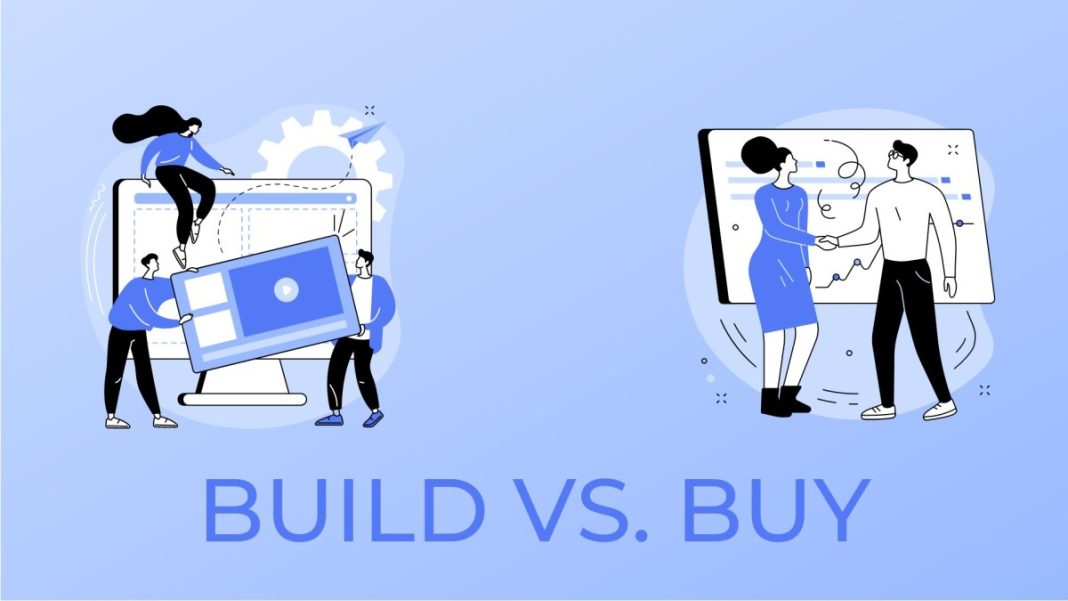

Two of the most consequential technical decisions a growing business makes this year aren’t really technical decisions at all. They’re build-versus-buy calls, dressed up as platform questions: whether to build a native app focused on one platform or hedge across both from day one, and whether to build an ecommerce storefront on a platform like Shopify or invest in something custom. Both get framed as budget questions far more often than they should be. The real decision hinges on something more specific in each case.
Native-First or Platform Hedge
The instinct to build for every platform simultaneously spreads a limited engineering budget across two codebases before either one has proven the product actually works. A growing number of companies are choosing instead to launch focused, on one platform, then expand once the core product has demonstrated real traction.
iOS users spend more, consistently, across nearly every category that charges money, subscription conversion, revenue per user, and purchase volume all skew meaningfully higher than on Android in most markets a US or European business targets first. For a company trying to prove a business model works before committing further budget, that’s a real, quantifiable difference worth building a decision around.
This decision also carries weight with investors and partners evaluating the business. A founder who explains they built on one platform deliberately, with reasoning tied to where their highest-value users actually are, reads as someone making calculated resource decisions. Many investors specifically ask whether a team worked with a real iOS app development services partner or hedged across platforms with a thin, split-focus build, since the answer often reveals how seriously a team thought through execution versus how quickly they wanted something to show.
The math behind this holds up operationally too. A small team iterating fast on one codebase responds to user feedback within days. The same team split across two platforms spends real engineering hours just keeping both versions in sync, time that could otherwise go toward the product itself. This isn’t a universal rule, a business targeting markets where Android device fleets dominate should weight that reality heavily, but the decision should follow the actual target user pulled from real data, considered on its own terms as its own specific case.
Shopify or a Custom Ecommerce Build
The same build-versus-buy logic applies to ecommerce, with a different set of tradeoffs. Shopify earns its dominance honestly for a large share of online retailers: standard product catalogs, conventional checkout, common payment processing, and a mature app ecosystem all come essentially solved out of the box. A business selling physical products through a fairly conventional storefront gets a working, reliable store running in weeks, at a fraction of custom development cost, with hosting, security, and compliance handled for it.
The friction shows up once a business’s actual operations stop matching what Shopify assumes a typical store looks like. A highly specific product configurator, an unusual subscription model, or checkout logic that needs to branch in complex ways all start requiring workarounds and stacked third-party apps fighting against the platform’s own structure. A store running a dozen apps to patch together custom functionality often loads slower than a purpose-built storefront doing the same job natively, and that performance gap has a direct, measurable effect on conversion.
A useful test before deciding either direction: list every feature the business genuinely needs and mark each as either standard retail functionality or specific to how this particular business operates. A list that’s overwhelmingly standard points toward Shopify. A list with several genuinely specific items points toward a dedicated ecommerce website development services partner building around the business’s actual workflow, even at higher upfront cost. That decision usually produces a better long-term outcome than bending a growing, increasingly specific business to fit a platform’s generic assumptions.
What Both Decisions Have in Common
Neither of these choices is really about which option sounds more impressive. Both come down to an honest audit of what’s actually standard about a business’s situation and what’s genuinely specific to it, since generic infrastructure serves generic needs well and serves specific needs poorly, regardless of whether the infrastructure in question is a mobile platform or an ecommerce platform.
The businesses getting this right treat both decisions as research questions answered with real data, independent of whatever a competitor or a popular template happens to assume. A company that’s done this audit honestly for one of these decisions usually finds the same discipline pays off when it applies the same thinking to the other.
What Getting This Wrong Actually Costs
Businesses that get either decision wrong rarely find out immediately, which is part of what makes both mistakes so persistent. A business that hedged across two platforms too early usually doesn’t see the cost as a single bad decision, it shows up gradually as a slower release cadence, a growing backlog of platform-specific bugs, and a team that stays perpetually behind on both versions without ever becoming genuinely excellent at either one. A business that chose Shopify for operations that were never actually standard sees a similar slow bleed: a rising monthly app subscription bill, a storefront that gets harder to maintain with every new workaround, and conversion rates that quietly underperform a competitor running a purpose-built alternative.
Both mistakes share the same root cause: a decision made on a default or a vague sense of what seemed safer, skipping the specific audit of what the business actually needed. That audit costs very little time to run properly. Skipping it costs considerably more, spread out over the following two or three years in ways that are much harder to trace back to the original decision once they show up.
The Takeaway
Build-versus-buy isn’t a single decision a growing business makes once. It shows up repeatedly, in the app platform choice and the ecommerce platform choice alike, and the businesses that handle it well are the ones asking the same honest question every time: does our actual situation match what the generic option assumes, or does our real competitive advantage live somewhere a generic option can’t reach.