

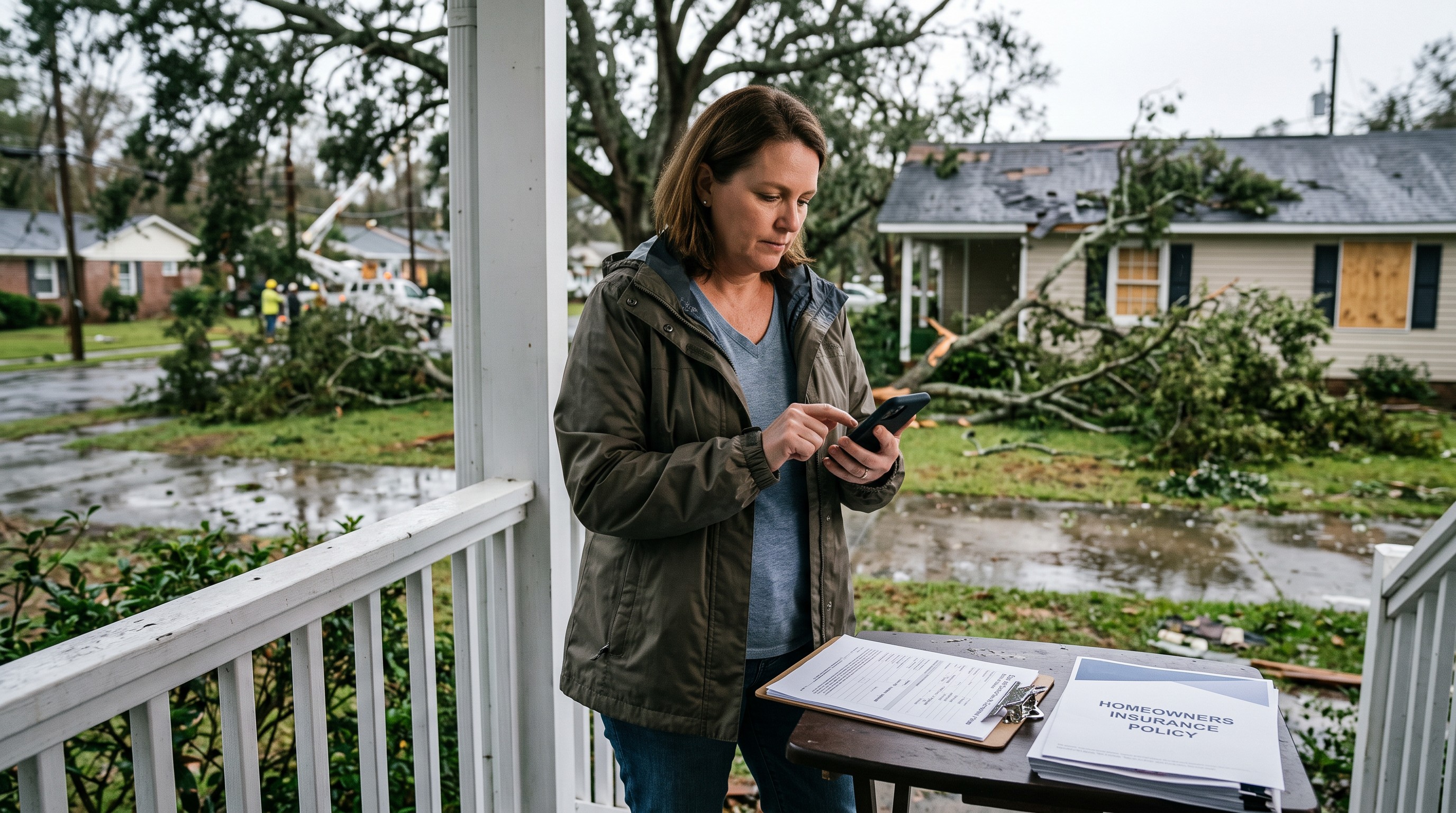
The storm has passed. The power may be out, the yard is full of branches, and there’s water where there shouldn’t be. Your first instinct might be to start cleaning up. Before you do, take a breath. The steps you take in the first few days after a storm shape how smoothly your claim goes and how much you recover.
Filing a claim on home insurance in coastal NC often involves more than one policy, a special hurricane deductible, and a busy claims system handling thousands of homes at once. This guide walks you through the process step by step, so you can protect your home and your claim.
Step 1: Put safety first
No claim is worth getting hurt. Before you go inside or start any work, check for hazards:
- Downed power lines, which may still be live
- The smell of gas, which means you should leave and call the gas utility from a safe distance
- Standing water near outlets or electrical panels
- Sagging ceilings, cracked foundations, or other signs of structural damage
- Snakes, insects, and other wildlife displaced by flooding
If you evacuated, wait until local officials say it’s safe to return. Wear sturdy boots, gloves, and long sleeves when you inspect the property. Your home insurance in coastal NC will still be there tomorrow. Your safety comes first.
Step 2: Document everything before you clean up
Photos and videos are your strongest evidence. Before you move anything or make repairs, record the damage thoroughly:
- Walk through every room and record video, describing what you see out loud.
- Photograph damage up close and from a distance so the adjuster can see context.
- Capture the exterior, including the roof, siding, windows, fences, and outbuildings.
- Record water lines on walls to show how high flooding reached.
- Photograph damaged belongings, including model and serial numbers when you can.
- Note the date and time of each set of photos.
If you made a home inventory before the storm, now is when it pays off. Compare it with what you see so nothing gets missed. Thorough documentation is the foundation of every successful claim on home insurance in coastal NC.
Step 3: Prevent further damage
Your policy requires you to take reasonable steps to protect your property from more damage. If you don’t, the insurer may refuse to pay for losses that happen afterward.
Reasonable steps include covering a damaged roof with a tarp, boarding broken windows, shutting off water to a broken pipe, and pulling wet carpet and padding to slow mold growth. Keep receipts for every supply you buy and every service you pay for, since these costs are usually reimbursable under your home insurance in coastal NC.
Hold off on major, permanent repairs until your adjuster has inspected the damage, unless waiting would put your home at greater risk. If you must throw away soaked, damaged items for health reasons, photograph them first and keep a small sample of materials like carpet if possible.
Step 4: Report the claim promptly
Contact your agent or insurer as soon as you safely can. Most policies require prompt notice, and early reporting gets you into the adjuster queue sooner. After a major hurricane, that queue can be long.
When you call, have this information ready:
- Your policy number and contact details
- The date of the storm and a brief description of the damage
- Where you’re staying if you can’t live in the home
- Your photos and any emergency repair receipts
Write down your claim number, the name of each person you speak with, and the date of every conversation. A simple claim log keeps your home insurance in coastal NC claim organized and makes follow-up much easier.
Step 5: Understand wind vs. flood claims
This is where coastal claims get complicated. Standard homeowners policies cover wind damage but exclude flood. Flood damage, including storm surge, falls under a separate flood policy. Some coastal homes also have a separate wind-only policy through the state’s coastal property pool, often called the Beach Plan.
That means one storm can lead to two or even three claims. A roof torn off by wind goes to your homeowners or wind policy. Water that rose from outside and entered through the doors goes to your flood policy. Rain that came through the damaged roof is often treated as wind-related damage.
Report damage to every policy that may apply, and let the adjusters sort out which one pays for what. Don’t assume a loss isn’t covered because you’re not sure how it happened. If you’re unsure which policies you have, your agent can tell you. Getting this right is one of the most important parts of a claim on home insurance in coastal NC.
Flood claims also have their own deadlines. Federal flood policies generally require a signed proof of loss within 60 days of the loss, though extensions are sometimes granted after major disasters. Ask your adjuster about the deadline early.
Step 6: Know your deductible
Many coastal policies use a separate hurricane or named storm deductible, often set at 1% to 5% of your dwelling coverage. On a home insured for $400,000, a 2% deductible is $8,000. Your flood policy will have its own deductible as well.
Knowing these numbers helps you set realistic expectations and plan your budget for repairs. It also helps you decide whether minor damage is worth claiming under your home insurance in coastal NC at all.
Step 7: Use your loss of use coverage
If a covered loss makes your home unlivable, your homeowners policy usually pays additional living expenses. That can include a hotel or rental, meals beyond your normal grocery bill, laundry, and extra mileage. Keep every receipt and ask your insurer how they want expenses submitted. Note that flood policies typically don’t include this coverage, so it generally applies only when the damage falls under your homeowners or wind policy.
Step 8: Prepare for the adjuster’s visit
An adjuster will inspect the damage and estimate the cost of repairs. Be present if you can. Walk the adjuster through every area of damage, share your photos and inventory, and point out anything that isn’t obvious, like water damage inside walls or under flooring.
It’s smart to get your own repair estimates from licensed local contractors as well. If the adjuster’s estimate seems low, those independent estimates give you a solid basis for discussion. Ask the adjuster to explain any items that aren’t covered, and request explanations in writing.
Step 9: Watch out for storm scams
After every major storm, out-of-town contractors and scammers arrive looking for quick money. Protect yourself and your home insurance in coastal NC claim with a few simple rules:
- Hire contractors licensed in North Carolina, and verify the license.
- Get written estimates and contracts before work begins.
- Avoid paying large sums up front or in cash.
- Be cautious of anyone who offers to cover your deductible. That can be insurance fraud.
- Read carefully before signing any document that gives a contractor rights to your insurance payment.
- Don’t let anyone pressure you into signing on the spot.
A trustworthy contractor will give you time to review the agreement and talk with your insurer.
Step 10: If you disagree with the settlement
Sometimes the first offer doesn’t match the real cost of repairs. Start by asking the insurer to explain how it reached its number, and provide your contractor estimates and photos. Many disagreements get resolved at this stage.
If not, many policies include an appraisal process, where each side chooses an appraiser to help settle disputes over the amount of loss. You can also hire a public adjuster licensed in North Carolina, who works for you in exchange for a percentage of the settlement. If you believe your claim was handled unfairly, the North Carolina Department of Insurance offers consumer assistance and can help with complaints.
Prepare before the next storm
The best claims start before hurricane season. Make a home inventory, store your policy documents and agent’s number where you can reach them, and photograph your home’s condition each spring. Review your coverage every year, including your hurricane deductible and flood policy, so your home insurance in coastal NC matches your home and your budget.
Get claims help from Coastal Shield Insurance
When a storm hits, you shouldn’t have to sort out wind, flood, and deductibles on your own. Coastal Shield Insurance is a local, independent agency in Wilmington, and claims help is part of what we do. We explain what your policies cover, help you report damage to the right carriers, and stay in touch as your claim moves forward. Before the next storm, we can also review your coverage and compare options from multiple carriers to close any gaps.
Need help with a claim or a coverage review? Visit the Coastal Shield Insurance website to reach out online. You’ll get straight answers from the same local people every time, so you’re never alone after a storm.


