

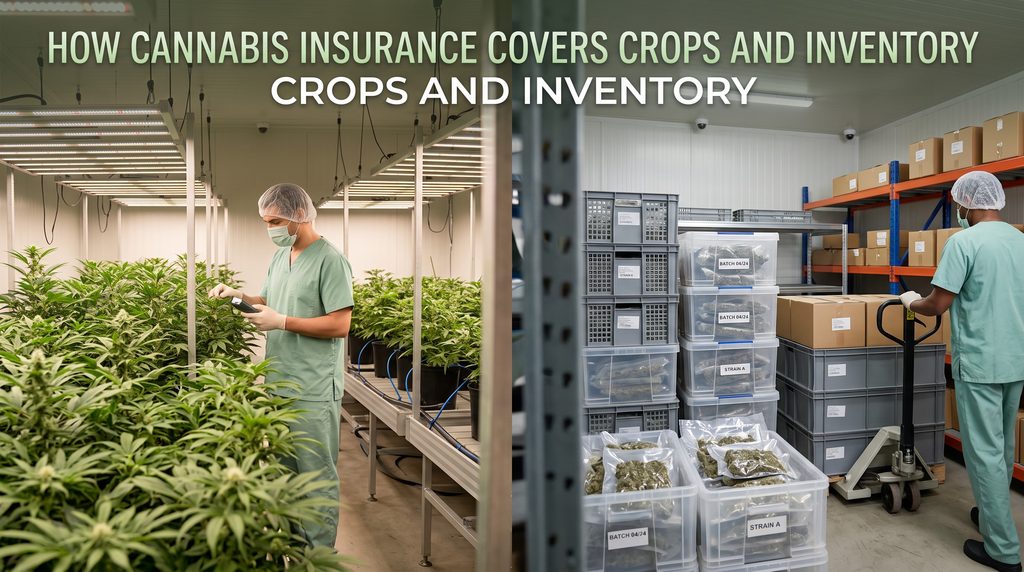
For a cannabis business, the product is the business. Plants in the grow room, harvested flower in the drying room, and finished goods on the shelf represent months of work and a large share of company value. Yet many standard property policies don’t cover growing plants or cannabis inventory at all. That’s why crop and inventory protection sits at the center of any solid cannabis insurance program.
A single fire, equipment failure, or theft can wipe out an entire harvest. Without the right coverage, that loss falls entirely on the business. This guide explains how cannabis insurance covers crops and inventory, what risks it addresses, how losses are valued, and what operators can do to strengthen their protection.
Why standard property insurance falls short
Traditional commercial property policies often exclude growing crops, plants, and products that remain federally restricted. Even businesses that carry property coverage for their building and equipment may find their product left out. Specialized cannabis insurance fills that gap by covering plants and inventory as insurable property.
Carriers that write cannabis insurance understand the industry’s unique risks. They know that a cultivation facility may hold plants at every stage of growth, from clones to mature flowering plants. They also understand that value changes as the crop matures. Standard insurers usually aren’t set up to handle these details. That specialized knowledge is what separates true cannabis insurance from a generic policy with an exclusion attached.
What crop and inventory coverage protects
Cannabis insurance for crops and inventory can protect product at many stages of the supply chain. The specifics depend on the policy and the type of business. Coverage may extend to:
- Mother plants and clones used for propagation
- Plants in vegetative and flowering stages
- Harvested plants that are drying or curing
- Trim, biomass, and material held for processing
- Concentrates, oils, and extracts
- Packaged finished goods, such as flower, edibles, and vape products
- Inventory held for wholesale or retail sale
Not every policy covers every stage. A dispensary may only need coverage for finished goods, while a cultivator needs protection for living plants. Review your cannabis insurance to confirm which stages are included and what limits apply to each.
Common covered causes of loss
Crop and inventory coverage responds to specific perils. These vary by policy, but cannabis insurance commonly addresses losses caused by:
- Fire, including fires started by grow lights or electrical systems
- Theft and burglary
- Vandalism
- Water damage from burst pipes or sprinkler leaks
- Smoke damage
- Certain weather events, depending on the policy and location
Some policies also cover losses that result from equipment failure. If an HVAC system breaks down and temperature swings ruin a crop, equipment breakdown coverage may respond. This is an important add-on to cannabis insurance for indoor growers, whose plants depend on controlled environments.
Indoor versus outdoor cultivation
Indoor and outdoor grows face different risks. Indoor facilities rely on lighting, ventilation, irrigation, and climate control. Equipment failures and electrical fires are major concerns. Cannabis insurance for indoor operations often pairs crop coverage with equipment breakdown protection.
Outdoor grows face nature directly. Wind, hail, wildfire, and flooding can damage crops in the field. Coverage for outdoor crops is often more limited, and some weather perils may be excluded or carry higher deductibles. Outdoor cultivators should review their cannabis insurance closely to understand which weather events are covered.
Greenhouse operations fall somewhere in between. They combine natural light with controlled systems, and they face both equipment and weather risks. A broker experienced in cannabis insurance can help structure coverage that matches a greenhouse’s mix of exposures.
Common exclusions to watch
Every policy has exclusions, and crop coverage is no different. Many cannabis insurance policies exclude losses from pests, mold, mildew, and plant disease. Some exclude crop failure due to poor growing practices or gradual deterioration. These exclusions can be significant, since pests and mold are common threats in cultivation.
Other exclusions may involve unexplained inventory shortages, employee theft without proper documentation, or losses tied to regulatory actions, such as a state-ordered destruction of product. Read the exclusions carefully and ask your broker how your cannabis insurance handles each one. Some gaps can be closed with endorsements or separate policies.
How crops and inventory are valued
Valuation is one of the most important and most debated parts of a claim. The method you choose affects how much you’ll receive after a loss. Cannabis insurance policies may value product in different ways.
Some policies pay the cost to grow or produce the product, including labor, nutrients, and utilities. Others pay a wholesale value or selling price, which can be much higher. Finished goods may be valued at their selling price, while plants in early stages may be valued at production cost. Understanding the valuation method helps you set limits that match your real exposure under cannabis insurance.
Values also change over time. A crop near harvest is worth far more than freshly planted clones. Market prices for cannabis can rise and fall. Review your limits regularly, especially before peak harvest periods, so your cannabis insurance keeps pace with your inventory.
Documentation strengthens your coverage
Good records make claims faster and more accurate. State cannabis regulations typically require businesses to track plants and products from seed to sale. Those same tracking systems can support an insurance claim. Records showing plant counts, weights, and stages help prove what was lost under your cannabis insurance.
Keep additional documentation as well. Photos and videos of grow rooms, inventory counts, production costs, and sales records all help establish value. Store copies offsite or in secure cloud storage so a fire or break-in doesn’t destroy your records along with your product. Organized records make every cannabis insurance claim easier to support.
Security and loss prevention
Insurers often require specific security measures for cannabis businesses. Cameras, alarms, access controls, and secure storage are common requirements. Many states mandate similar measures for licensing. Meeting these standards supports your cannabis insurance and reduces the risk of theft.
Environmental controls matter too. Monitoring systems that alert staff to temperature, humidity, or power problems can prevent a small issue from destroying a crop. Backup generators protect plants during power outages. Fire suppression systems limit damage if a fire starts. These measures can improve your risk profile and your cannabis insurance terms.
Inventory in transit
Product doesn’t stay in one place. Cultivators ship to processors, processors ship to wholesalers, and wholesalers deliver to dispensaries. Inventory moving between locations faces theft and accident risks. Crop and inventory coverage may not extend to goods in transit, so many businesses add cargo coverage to their cannabis insurance.
Cargo coverage protects product while it’s on the road. It can respond to theft, vehicle accidents, and other covered losses during transport. Businesses that handle their own deliveries or rely on licensed distributors should confirm how transit is covered. Pairing cargo protection with crop coverage keeps your cannabis insurance consistent from field to shelf.
Sublimits, deductibles, and seasonal peaks
Crop and inventory coverage often carries its own sublimit, separate from the building and equipment. If your inventory value spikes at harvest, a fixed limit may fall short. Some carriers offer reporting forms or seasonal adjustments that let your cannabis insurance limit rise and fall with your inventory.
Deductibles deserve attention too. A high deductible lowers premium but means absorbing more of a loss yourself. For a cultivator with a large crop, even a modest percentage deductible can be significant. Balance deductibles against your cash reserves when choosing cannabis insurance.
Review your coverage at least once a year and whenever your operation changes. Adding grow rooms, increasing production, or launching new product lines can all change the value at risk. Keeping your broker informed ensures your cannabis insurance grows with your business.
Building a complete program
Crop and inventory coverage works best as part of a broader plan. A complete cannabis insurance program may also include property coverage for buildings and equipment, general liability, product liability, product recall, equipment breakdown, cargo, and workers’ compensation. Each protects a different part of the business.
Product recall coverage, for example, helps when a batch must be pulled from shelves due to contamination or labeling errors. Product liability protects against claims that a product caused harm. Together with crop and inventory coverage, these policies help cannabis insurance protect the business from seed to sale.
Protect your harvest with MFE Insurance
MFE Insurance works with cultivators, processors, wholesalers, dispensaries, and consumption lounges to build cannabis insurance programs that fit their operations. Our coverage options include crop and inventory, property, cargo, equipment breakdown, general liability, product liability, and product recall. We’ll review your facility, growing methods, and inventory values to recommend protection that matches your real exposure.
Are you ready to protect your crop? Contact MFE Insurance or request a quote online to speak with our team about cannabis insurance.


