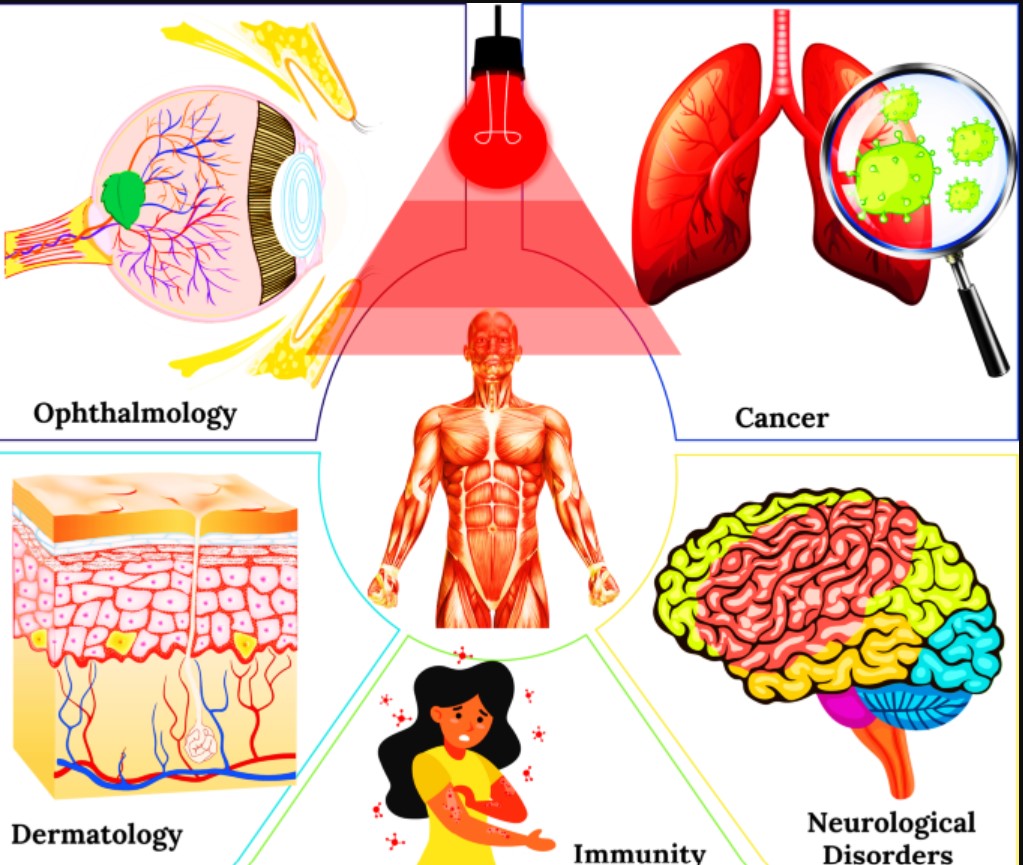

Red light therapy may look like a distinctly modern wellness trend, but the science behind it has been developing for decades. What is now commonly encountered in recovery and wellness settings grew from laboratory experiments with low-powered lasers, followed by research into how particular wavelengths of light interact with cells and tissues.
That history matters when considering red light therapy Melbourne options today. Modern red light therapy in Melbourne is part of a much longer story known as photobiomodulation: the use of light to influence biological processes without relying on the tissue-heating effects associated with high-powered lasers.
The journey from experimental laser beams to accessible LED systems did not happen because the underlying science suddenly became simple or settled. It happened through changes in technology, terminology and the questions researchers were asking.
Red light therapy works differently from heat-based treatments
Photobiomodulation is not simply another term for applying heat to the body. It involves exposing tissue to selected wavelengths of light at relatively low intensities, with researchers investigating the photochemical and biological responses that may follow.
Red and near-infrared wavelengths have received particular attention. One widely studied explanation proposes that light can interact with components associated with mitochondrial activity. Mitochondria are cellular structures involved in producing the energy cells use for normal functions.
It is useful, however, to distinguish a plausible mechanism from a conclusively established one. Photobiomodulation research covers different wavelengths, doses, devices, tissues and study designs. Results from one experimental setting cannot automatically be applied to every red light treatment or wellness use.
That distinction becomes particularly relevant as photobiomodulation moves beyond research environments.
LEDs helped light therapy move beyond specialised laboratories
The transition from lasers to light-emitting diodes, or LEDs, was one of the developments that made photobiomodulation more practical outside specialised research settings.
For much of the field’s early history, lasers were the dominant light source. LEDs later demonstrated that coherent laser light was not necessarily required for photobiomodulation research.
For practical delivery, LEDs changed what a light-therapy device could look like. Instead of concentrating light into a narrow laser beam, arrays of LEDs could illuminate larger areas. LEDs were also comparatively inexpensive and adaptable for use in panels and other formats.
This technological change helped create the conditions for photobiomodulation to move from laboratory equipment towards the systems now encountered in clinics, recovery facilities and wellness environments.
The science is more nuanced than the lifestyle headlines
The growing visibility of red light therapy Melbourne services can make photobiomodulation appear more settled than it is. In reality, researchers continue to investigate both its mechanisms and the circumstances in which particular forms of light exposure may produce meaningful effects.
A laboratory study showing a cellular response is different from a controlled human trial. Evidence relating to one condition does not establish a general whole-body wellness benefit. Device parameters also matter, so results produced using one wavelength, intensity or exposure protocol cannot automatically be transferred to a different system.
For consumers, that context is more useful than a long list of claimed benefits.
Lifestyle adoption changed access, not the standards of evidence
As LED technology became easier to incorporate into larger devices, photobiomodulation entered a new phase. A technology once strongly associated with experimental lasers could now be delivered through LED panels and other comparatively accessible systems.
That shift helps explain why someone searching for red light therapy Melbourne today encounters a very different landscape from the laboratories where the field began. The physical technology has become easier to deliver, while the terminology has also evolved towards the broader concept of photobiomodulation.
What has not changed is the need to examine claims individually.
A treatment being non-thermal does not mean every proposed benefit is established. Similarly, decades of research into photobiomodulation do not make every contemporary wellness claim equally well supported. Research quality, treatment parameters, study populations and the outcome being measured all affect what can reasonably be concluded.
This is particularly relevant because photobiomodulation now sits across several contexts. Scientific studies may investigate specific biological processes or defined clinical applications, while wellness settings may use similar light technologies for broader recovery or wellbeing purposes. Those contexts should not be treated as interchangeable.
Conclusion
The photobiomodulation wave is less a story of a new treatment appearing overnight than one of technology gradually becoming more accessible.
Research that began with low-powered lasers in the 1960s expanded into questions about how red and near-infrared light interact with biological systems. The development of LEDs then made it possible to deliver light across larger areas using more practical equipment, helping photobiomodulation move beyond specialised laboratories.
History provides useful context for the current interest in red light therapy Melbourne. The technology has changed substantially, but responsible interpretation still depends on distinguishing established findings from proposed mechanisms and emerging evidence. The most useful way to understand modern red light therapy is therefore not as a sudden wellness breakthrough, but as the latest stage of a scientific field that is still being investigated.