

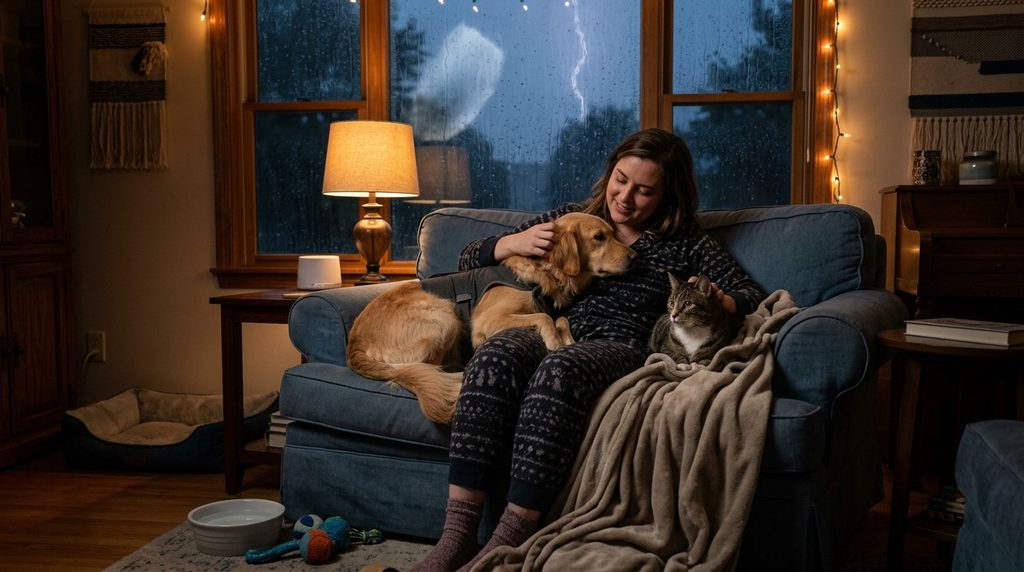
For a noise-sensitive pet, a thunderstorm at 2 a.m. with no one home can be terrifying. Pets may pant, tremble, hide, or try to escape, and some injure themselves or damage the house in a panic. An overnight pet sitter keeps a calm, familiar person in the home through the night, so your pet is not alone when the noise starts.
This article explains why some pets fear loud sounds, what that fear looks like, and the practical steps a sitter uses to help. It also covers how to prepare your home and your pet before you travel.
Why some pets fear loud noises
Noise sensitivity is common in both dogs and cats. Thunder, fireworks, construction, gunshots, and even the beeping of a smoke detector can set it off. Storms bring more than sound. Many pets also react to changes in air pressure, wind, flashes of lightning, and possibly the static electricity that builds up in their coats.
Fear can come from genetics, a lack of early exposure to noise, or a bad experience. It often gets worse with age. A dog who was mildly uneasy as a young adult may become far more fearful in the senior years. That is one reason many owners book an overnight pet sitter when storms are in the forecast.
Northern Virginia sees frequent thunderstorms in spring and summer, often in the late afternoon and evening. Fireworks around holidays, especially the Fourth of July and New Year’s Eve, can continue late into the night. If you will be away during either, plan ahead.
Signs your pet is afraid
Fear does not always look dramatic. Some pets show it loudly, while others go quiet. An overnight pet sitter watches for both. Common signs include:
- Panting, trembling, or shaking when it is not hot.
- Pacing or being unable to settle.
- Hiding under beds, in closets, or in bathtubs.
- Clinging to a person or following them from room to room.
- Drooling, whining, or barking.
- Accidents in the house, even in house-trained pets.
- Chewing, scratching at doors, or trying to dig through walls or floors.
- Trying to escape through windows, screens, or doors.
Cats often hide and stay hidden for hours. They may also skip meals or avoid the litter box after a stressful night. Knowing your pet’s specific signs helps an overnight pet sitter respond early, before fear becomes panic.
Why being alone makes it worse
Many noise-sensitive pets cope much better when a calm person is nearby. Alone, a frightened dog may spend hours in a state of panic, and some cause serious damage trying to get out. Dogs have broken teeth and nails on crates and doors during storms. Cats may hide in places where they can get stuck.
An overnight pet sitter changes that picture. The sitter can notice the first signs of fear, put your comfort plan into action, and keep your pet safe until the storm passes. Daytime visits cannot cover a storm that rolls through at midnight.
How an overnight pet sitter comforts a frightened pet
A good sitter follows a plan built around your pet. The approach is calm, consistent, and focused on safety. Here are the main techniques an overnight pet sitter uses.
Creating a safe space
Most fearful pets look for a small, enclosed area. The sitter sets up or uses a safe space you already have, such as a covered crate with the door open, an interior bathroom, a closet, or a basement room. Interior rooms with few windows block more sound and light.
The space should include your pet’s bed, a familiar blanket, and a few toys. If your pet already chooses a hiding spot on their own, the sitter lets them use it rather than pulling them out.
Masking the noise
Background sound can soften the sharp cracks of thunder or fireworks. An overnight pet sitter may play white noise, a fan, calm music, or the TV at a steady volume. Closing curtains and blinds also blocks lightning flashes, which some pets fear as much as the sound itself.
Staying calm and present
Pets watch people closely during stressful moments. A sitter who stays relaxed and speaks in a quiet, steady voice gives your pet a sense of safety. Comforting a scared pet does not reinforce fear. Gentle petting, sitting nearby, or letting your pet lean against them is fine if your pet wants that contact.
The sitter also avoids anything that adds stress. That means no scolding, no forcing a pet out of a hiding place, and no dragging a frightened dog outside during a storm.
Offering distraction when it helps
Some pets can be redirected during milder noise. A favorite chew, a lick mat with a little food spread on it, or a puzzle toy can give the brain something else to focus on. An overnight pet sitter tries these gently and stops if your pet is too stressed to engage.
Following your calming routine
If your pet uses a snug-fitting anxiety wrap, the sitter puts it on at the first signs of a storm. If your veterinarian has prescribed anti-anxiety medication for storms or fireworks, the sitter gives it exactly as directed. Many of these medications work best when given before the noise starts, so share timing instructions clearly.
What a stormy night with a sitter looks like
Picture a storm that arrives at 11 p.m. The overnight pet sitter has already checked the forecast and taken your dog out for a final leashed potty break at 10. As the first rumble hits, the sitter closes the blinds, turns on the fan in the interior bathroom, and gives any prescribed medication if your plan calls for it. Your dog settles into the covered crate with a familiar blanket while the sitter stays close by.
When the storm passes, the sitter checks that your dog has calmed down, offers water, and notes how long the fear lasted. That note goes into the visit report, so you know exactly how the night went. If your pet showed new or unusual signs of distress, the overnight pet sitter can flag it so you can follow up with your veterinarian.
Keeping pets from escaping
Frightened pets bolt. That is why many lost-pet reports spike after storms and fireworks. An overnight pet sitter takes extra care with doors and gates during noisy nights.
Practical safety steps include:
- Taking dogs out on a leash for potty breaks, even in a fenced yard.
- Timing potty breaks before a storm arrives when possible.
- Checking that windows, screens, and gates are secure.
- Keeping cats in a closed room when doors will be opened.
- Making sure collars fit snugly and ID tags are current.
Microchips are an important backup. Confirm your pet’s microchip registration has your current phone number before you travel.
How you can prepare before your trip
Your overnight pet sitter will do the most good with clear information. Before you leave, share the details that only you know:
- Which noises bother your pet and how strongly.
- Your pet’s usual hiding spots and preferred safe space.
- What helps, such as music, a wrap, or a certain blanket.
- What makes things worse, such as being touched or being confined.
- Any prescribed medication, with dose and timing.
- Your veterinarian’s number and the nearest emergency animal hospital.
Set up the safe space before you go so your pet is already used to it. Leave the wrap, chews, and calming items where the sitter can grab them quickly.
Long-term help for noise phobia
A sitter can help your pet through a stormy night, but long-term improvement usually takes a plan. Talk to your veterinarian about noise fear, especially if it is getting worse. Options may include behavior training, gradual exposure to recorded sounds at low volume, and medication.
Your overnight pet sitter can support that plan by following the same routine you use at home. Consistency between you and the sitter helps your pet feel secure, even when you are away.
Overnight care for noise-sensitive pets with Paw Pals Pet Sitting
If your pet struggles with storms or fireworks, you should not have to cancel a trip or worry all night from a hotel room. Paw Pals Pet Sitting provides in-home overnight visits across Northern Virginia. Your overnight pet sitter arrives between 8 and 10 p.m., stays for at least 10 hours, and finishes with a 30-minute morning visit that includes breakfast.
Our trained and certified sitters can give oral and topical medications, follow your calming routine, and keep your pet company through the night. We begin with an in-person Meet and Greet so your pet knows the sitter before you leave, and we send personalized visit reports so you know how the night went. We serve Centreville, Chantilly, Fairfax, Herndon, Reston, Vienna, and nearby communities.


