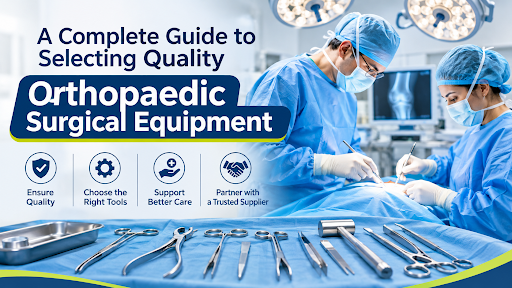
Orthopaedic procedures require careful planning, skilled professionals, and instruments designed for specific medical applications. Orthopedic Surgical Instruments support doctors in treating injuries and conditions affecting bones, joints, and the musculoskeletal system. Understanding instrument types, materials, handling, and maintenance helps healthcare facilities make informed purchasing decisions and maintain dependable clinical environments.
Understanding the Role of Orthopaedic Instruments
Orthopaedic instruments are developed to assist with procedures involving hard and soft tissues around the skeletal system. Surgeons may need to cut, shape, hold, drill, measure, or stabilise bone during treatment. The instruments selected depend on the condition, surgical technique, patient needs, and the professional judgement of the operating team.
Instruments should be easy to identify, handle, inspect, and process according to the healthcare facility’s infection prevention protocols.
Common Types and Their Applications
Different procedures call for different instrument designs. Bone cutters and rongeurs are used to remove or shape bone where clinically indicated. Osteotomes and chisels help surgeons divide or reshape bone with controlled force. Bone drills create openings for fixation devices, while reamers may be used to prepare bone surfaces or canals for specific procedures.
Forceps and clamps help hold tissue or bone fragments, depending on their design. Retractors hold surrounding tissues away from the operative field, improving access and visibility. Measuring instruments, depth gauges, and alignment tools assist with assessing dimensions and positioning implants or fixation components.
Materials and Manufacturing Quality
Material choice influences an instrument’s strength, corrosion resistance, weight, and ability to withstand repeated processing. Stainless steel is widely used because it can provide a durable surface and tolerate appropriate cleaning and sterilisation when maintained according to instructions.
Manufacturing quality is equally important. Consistent finishing, secure joints, smooth movement, accurate alignment, and well-defined working edges contribute to reliable handling. Buyers should review product specifications and check for visible defects, rough surfaces, loose components, or signs of corrosion.
How to Select Suitable Instruments
Purchasing decisions should begin with a clear understanding of the procedures performed by the facility. Surgeons and procurement teams can prepare a list of required instruments, sizes, patterns, and quantities. They should consider whether products are intended for general use, a particular speciality, or a specific surgical technique.
Ergonomics deserves attention because instrument balance, grip, weight, and ease of movement can affect handling. Compatibility with existing systems is another consideration, particularly when instruments are used with implants, power equipment, or specialised trays. Product descriptions should clearly state dimensions, material, intended application, and any limitations.
A Medical Equipment Online Store can help buyers review product categories and compare specifications before contacting a supplier. However, online descriptions should not replace professional evaluation. Customers should confirm availability, warranty terms, delivery arrangements, after-sales support, and instructions for use before placing an order.
Cleaning, Sterilisation, and Maintenance
Correct reprocessing is essential for reusable surgical instruments. Staff should follow the manufacturer’s instructions and the facility’s approved protocols for pre-cleaning, washing, rinsing, drying, inspection, packaging, and sterilisation. Instruments should be cleaned promptly after use because dried soil can make effective cleaning more difficult.
Moving parts, hinges, and locking mechanisms need regular inspection. Damaged, blunt, misaligned, or corroded instruments should be removed from service and assessed by qualified personnel. Appropriate storage protects working edges and helps prevent instruments from becoming mixed, damaged, or contaminated.
Training also matters when new instruments are introduced. Staff should understand the manufacturer’s guidance, safe use, inspection points, and reprocessing requirements. Teams should identify damaged items and report concerns promptly. These practices help maintain consistency between departments and ensure instruments are available in suitable condition when needed for planned clinical procedures.
Working with a Dependable Supplier
A supplier should provide accurate product information and respond clearly to questions about specifications, availability, and intended applications. Buyers may compare product ranges, request catalogues, and verify relevant certifications or documentation.
Price is one factor, but it should be considered alongside construction, suitability, service, and expected product life. A considered purchasing process helps facilities balance budgets with clinical requirements.
Conclusion
Selecting appropriate orthopaedic equipment involves more than choosing individual products. Healthcare teams should consider procedure requirements, instrument design, material quality, handling, cleaning instructions, and supplier support. Careful inspection and consistent maintenance help preserve reusable instruments and support safe clinical workflows. Comparing specifications through a trusted Medical Equipment Online Store can make product research more convenient, while final decisions should remain guided by qualified professionals and the facility’s established purchasing and infection control standards.