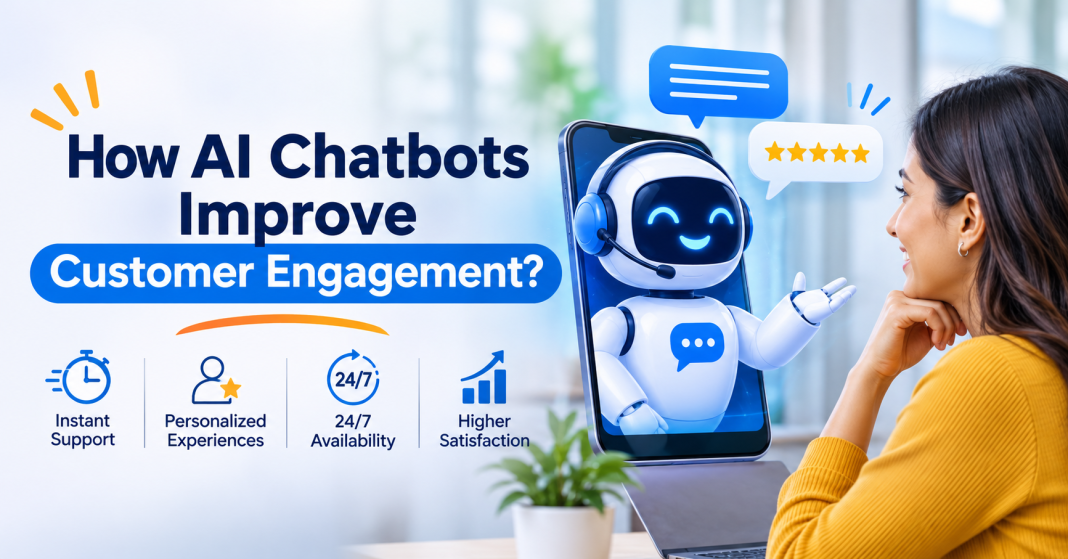

Customer engagement has become one of the most important factors in building successful business relationships. Customers today expect quick responses, personalized interactions, and consistent support whenever they need assistance. Traditional customer service methods often struggle to meet these expectations, especially when businesses handle large volumes of inquiries across multiple communication channels. This is where artificial intelligence is making a significant difference. AI-powered chatbots help businesses communicate with customers more efficiently while creating convenient and meaningful experiences.
By combining automation, natural language processing, and machine learning, modern chatbot technology allows businesses to understand customer queries, provide relevant information, and offer support around the clock. These capabilities are changing how companies interact with their audiences and build long-term customer relationships.
As customer expectations continue to evolve, businesses need solutions that combine speed, convenience, and personalization. AI Customer Service helps organizations deliver more responsive support while reducing the workload associated with repetitive customer inquiries.
1. Providing Instant Responses to Customer Queries
One of the biggest advantages of AI chatbots is their ability to respond to customer questions instantly. Customers do not want to wait for hours or days to receive answers about products, services, orders, or account-related concerns. Delayed responses can lead to frustration and negatively affect the overall customer experience.
AI chatbots help eliminate unnecessary waiting times by answering frequently asked questions immediately. Whether a customer wants to check an order status, understand a service, or request basic assistance, chatbots can provide relevant information within seconds.
Instant communication makes customers feel valued and improves their overall interaction with a business. It also allows human support teams to concentrate on complex issues that require personal attention.
2. Offering 24/7 Customer Support
Customer expectations are no longer limited to traditional business hours. People may need assistance early in the morning, late at night, or during weekends and holidays. Maintaining a large customer support team to provide continuous assistance can be expensive and challenging.
AI chatbots solve this problem by offering round-the-clock support. They can handle customer inquiries at any time without requiring human agents to remain available throughout the day.
This continuous availability ensures that customers can access important information whenever they need it. For businesses serving customers across different countries and time zones, this feature is particularly valuable.
Consistent availability also reduces the chances of losing potential customers because support is unavailable when they are ready to make a purchase.
3. Creating Personalized Customer Experiences
Customers appreciate businesses that understand their preferences and provide relevant recommendations. Generic responses may solve basic problems, but personalized communication creates stronger relationships.
AI chatbots can use available customer information, previous interactions, browsing behavior, and purchase history to deliver more relevant responses. For example, an online shopping chatbot can recommend products based on a customer’s previous purchases or interests.
Similarly, banking chatbots can provide relevant account information and guide customers through common banking activities, subject to appropriate authentication and security controls.
Personalized interactions make conversations more useful and engaging. They also help businesses understand customer expectations and deliver experiences that encourage repeat interactions.
4. Improving Communication Across Multiple Channels
Modern customers communicate with businesses through various platforms, including websites, mobile applications, social media, and messaging services. Managing these conversations separately can create inconsistent experiences.
AI chatbots support omnichannel communication by helping businesses manage customer interactions across multiple channels. Customers can ask questions through their preferred platforms and receive consistent assistance.
For example, a customer might begin a conversation on a company’s website and later continue the interaction through a messaging application. With properly integrated systems, relevant conversation history can be made available to support teams.
This creates a smoother communication journey and reduces the need for customers to explain their concerns repeatedly.
5. Reducing Customer Effort
A positive customer experience should be simple and convenient. Customers become frustrated when they have to navigate complicated menus, repeat information, or contact multiple departments to resolve a single issue.
AI chatbots simplify these processes by guiding customers through conversations using straightforward questions and relevant suggestions.
For instance, a customer looking for information about a delayed delivery can interact with a chatbot, provide an order reference, and receive an update without navigating several pages.
Reducing unnecessary steps makes customer interactions more convenient. When businesses make it easier for people to find answers and complete tasks, they can improve satisfaction and encourage customers to continue using their services.
6. Supporting Faster Problem Resolution
Customer engagement is not only about answering questions. It is also about helping customers resolve their concerns effectively.
Advanced chatbots can identify customer requirements, understand conversational intent, and provide suitable solutions. They can guide users through troubleshooting processes, share relevant instructions, and assist with routine service requests.
When an issue requires human involvement, chatbots can transfer the conversation to an appropriate support agent along with the available interaction history.
This approach reduces repetitive communication and helps agents understand the problem before responding. As a result, customers receive more focused assistance and businesses can improve service efficiency.
7. Gathering Customer Feedback and Insights
Understanding customer opinions is essential for improving products, services, and support processes. However, collecting feedback through traditional methods can sometimes be time-consuming.
AI chatbots make feedback collection easier by asking customers about their experiences during or after an interaction. They can collect responses about service quality, satisfaction levels, product preferences, and common challenges.
Businesses can analyze this information to identify recurring concerns and understand areas that require improvement.
For example, if customers frequently ask questions about the same product feature, a company can update its website content or improve its product instructions.
These insights help organizations make informed decisions and develop better customer engagement strategies.
8. Increasing Customer Engagement Through Proactive Assistance
Instead of waiting for customers to ask questions, businesses can use AI chatbots to initiate helpful conversations at relevant moments.
For example, an online retailer can use chatbot notifications to inform customers about abandoned shopping carts, ongoing offers, delivery updates, or product availability.
Similarly, service providers can send reminders about upcoming appointments, payment deadlines, or scheduled maintenance.
However, proactive communication should always be relevant and respectful of customer preferences. Too many unnecessary notifications can negatively affect the customer experience.
When implemented thoughtfully, proactive assistance keeps customers informed and encourages meaningful interactions with a brand.
The Role of AI in Building Better Customer Relationships
An AI Chatbot for Customer Service can go beyond providing automated answers by understanding customer intent, maintaining conversational context, and supporting customers throughout different stages of their journey.
However, successful implementation requires more than simply introducing chatbot technology. Businesses must ensure that chatbots provide accurate information, protect customer data, and offer smooth access to human agents whenever necessary. Regular monitoring and improvements are also important to maintain response quality.
Conclusion
AI chatbots are transforming customer engagement by making business communication faster, more accessible, and more personalized. From providing instant responses and 24/7 support to gathering customer feedback and simplifying problem resolution, these intelligent tools offer several advantages for modern organizations.
As technology continues to advance, chatbots will become more capable of understanding customer needs and supporting complex interactions. Businesses that adopt these solutions strategically can create more convenient customer experiences, strengthen relationships, and improve overall service performance.
Ultimately, the goal of AI chatbots is not to remove the human element from customer service but to make every interaction more efficient and meaningful. Combining intelligent automation with human expertise can help businesses build stronger and longer-lasting customer relationships.