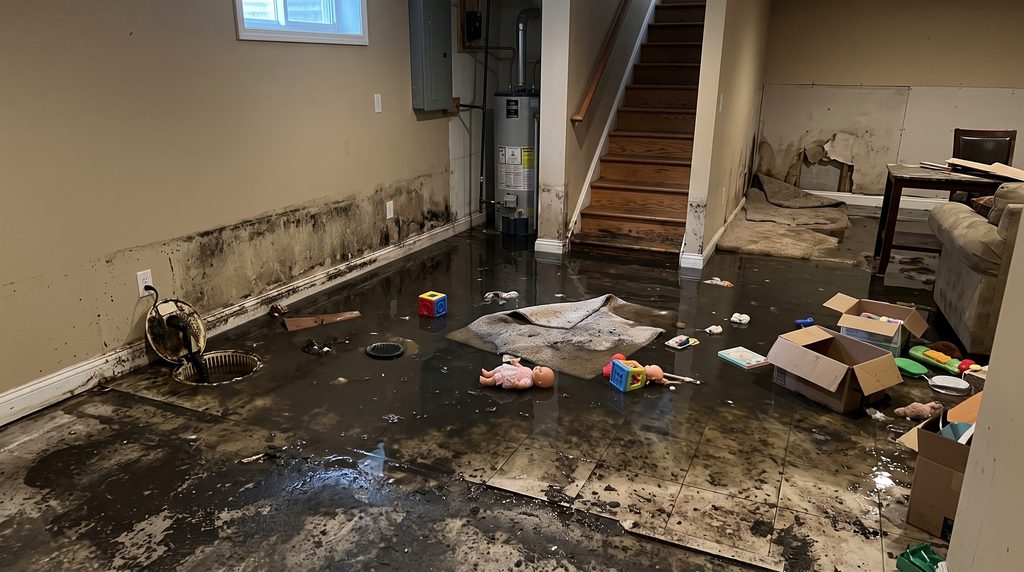
In New Jersey, a heavy rainstorm can fill a basement in under an hour. Water pours through window wells, seeps up through the floor or bubbles out of a floor drain. Many owners assume their homeowners insurance in New Jersey will pay for the cleanup. Then the adjuster explains the policy excludes most of it.
Basement water is one of the most misunderstood areas of home coverage. Whether you are paid depends on where the water came from, not how much damage it caused. This guide explains the gaps in homeowners insurance in New Jersey, the coverage that fills them and the steps that keep water out in the first place.
Why basement water claims get denied
A standard policy covers water damage that is sudden and comes from inside the home’s systems. A burst supply line, a cracked water heater or a washing machine hose that splits are typical covered losses. Water from outside the home, or water that backs up through the plumbing, is treated very differently.
Homeowners insurance in New Jersey generally excludes:
- Flood, meaning surface water, overflowing rivers and streams, and storm surge
- Groundwater that seeps through foundation walls or the basement floor
- Water that backs up through sewers or drains
- Water that overflows from a sump pump or sump well
- Gradual leaks and seepage that happen over weeks or months
That list covers the most common ways basements flood in New Jersey. Many owners learned this firsthand after the remnants of Hurricane Ida in 2021, when intense rain flooded basements in neighborhoods far from any river or the shore.
Flood and sewer backup are not the same thing
These two causes are often confused, and the difference decides which coverage applies.
Flood is water that rises from outside and enters the home. Heavy rain overwhelms the ground, a creek spills over its banks or storm surge pushes inland. Flood losses require a separate flood insurance policy.
Sewer or drain backup happens when the municipal sewer line or your own drain line can’t handle the volume. Water reverses direction and comes up through floor drains, toilets or tubs on the lowest level. Sump pump failure is a close cousin: the pump stops, or can’t keep up, and the well overflows. These losses are covered only by a water backup endorsement added to your homeowners insurance in New Jersey.
One storm can cause both at once. An adjuster will look at how water entered the home to decide which policy responds, so having both types of protection removes the guesswork.
The water backup endorsement
A water backup endorsement adds coverage for damage caused by water backing up through sewers or drains and by sump pump overflow. It is one of the most affordable additions you can make to homeowners insurance in New Jersey, and one of the most useful for homes with finished basements.
Points to check when you add it:
- The limit, which often ranges from $5,000 to $25,000 and can sometimes go higher
- Whether a separate deductible applies
- Whether sump pump mechanical failure is covered, not just overflow
- Whether the endorsement excludes backup caused by a flood
That last item matters. Many endorsements do not pay when the backup was caused by flooding in the area. In that situation, a flood policy is what responds.
Set the limit by what is in your basement. A finished space with flooring, drywall, a bathroom, furniture and electronics can easily produce a $40,000 claim. A $5,000 limit will not go far.
The flood insurance basement gap
Owners with flood insurance are often surprised a second time. Policies through the National Flood Insurance Program cover basements only in a narrow way.
In a basement, federal flood policies generally cover essential equipment and structure, such as:
- Furnaces, water heaters, central air units and heat pumps
- Electrical panels and outlets
- Sump pumps and well water tanks
- Foundation elements and stairways
- Washers, dryers and food freezers
They generally do not cover finished flooring, carpeting, paneling, furniture or most personal belongings stored below ground level. So a finished basement can be poorly covered even with both a homeowners policy and a federal flood policy in place.
Private flood insurance can close part of this gap. Some private policies offer broader basement coverage, higher limits and additional living expenses. Ask your agent to compare private and federal options alongside your homeowners insurance in New Jersey.
Also keep the waiting period in mind. Federal flood policies usually take effect 30 days after purchase, with limited exceptions such as a policy bought at a mortgage closing. If you wait until a storm is in the forecast, it is too late.
You do not need to live near water to flood
Many New Jersey owners skip flood coverage because their home is outside a high-risk flood zone. Flood maps show where water from rivers and the ocean is most likely to reach. They do not fully capture flooding from intense rainfall overwhelming storm drains in developed neighborhoods.
New Jersey now requires sellers and landlords to disclose certain flood risk information, including past flood damage, so buyers and tenants can make better decisions. Read those disclosures carefully. If a home has flooded before, plan your homeowners insurance in New Jersey and flood coverage with that history in mind.
Seepage and maintenance claims
Some basement water is never covered by any policy. Slow seepage through cracked walls, condensation, poor grading and clogged gutters are maintenance issues. Insurers treat them as predictable, not sudden. Mold that grows from long-term moisture is also typically excluded or tightly limited.
The best defense against these losses is upkeep, since homeowners insurance in New Jersey will not step in.
How to keep water out of your basement
Prevention lowers your risk and can reduce the size of any claim you file. Consider these steps:
- Install a backwater valve on your main sewer line to stop sewage from flowing back into the house
- Add a battery backup to your sump pump, since storms often knock out power when you need the pump most
- Test the sump pump each spring and fall by pouring water into the pit
- Place water leak sensors near the water heater, sump pit and floor drains
- Clean gutters and extend downspouts several feet away from the foundation
- Grade soil so it slopes away from the house
- Install window well covers on below-grade windows
- Store valuables, documents and electronics on shelves or upper floors
Some carriers offer discounts for leak detection and automatic water shutoff systems. Ask whether your homeowners insurance in New Jersey qualifies.
What to do when your basement floods
If water gets in, act quickly to protect your home and your claim:
- Stay out of standing water if the electrical panel or outlets may be submerged. Shut off power at the main breaker only if it is safe to reach.
- Photograph and video the water level, its source and all damage.
- Report the claim to your agent and, if you have it, your flood insurer.
- Remove water and start drying the space to limit mold. Keep receipts for pumps, fans and cleanup services.
- Keep damaged items until the adjuster sees them, or document them in detail before disposal.
- Note where the water entered, such as a floor drain, a wall or a window well. This detail helps determine which coverage applies.
A quick coverage review
Ask yourself these questions about your current homeowners insurance in New Jersey:
- Does my policy include water backup coverage, and is the limit high enough?
- Is sump pump failure covered, or only overflow?
- Do I have flood insurance, and does it cover what is in my basement?
- Would a private flood policy cover more?
- Do I know my deductibles for each type of water loss?
If you are not sure about any of these, it is time for a review.
Close the gaps with JMG Insurance Corp
Basement water losses are common in New Jersey, and the coverage rules are easy to get wrong. JMG Insurance Corp is an independent agency with offices serving New Jersey, New York, Connecticut and Massachusetts. We can review your homeowners insurance in New Jersey, add water backup protection with the right limit and compare federal and private flood insurance options so your basement is covered from more than one direction.