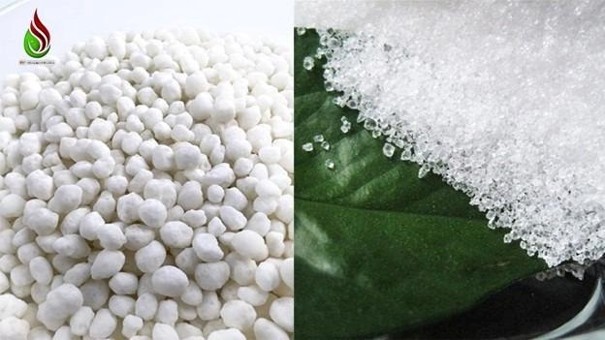

A farmer in southern Iraq and a greenhouse operator outside São Paulo have never met, never spoken, and grow completely different crops. But this season, they’re both waiting on the same shipment: bags of ammonium sulfate, one filled with fine crystal, the other with coarse granule, both loaded from the same yard in Iran. Neither ordered the “same” product, they ordered what their soil actually needed. Somehow, one supplier is filling both requests. That supplier is Barno.
Barno produces and supplies ammonium sulfate in two forms: crystal and granule. The company positions itself not simply as a manufacturer standing behind a production line, but as a supplier standing behind a buyer’s order, packing, and moving product to match what a farm, a distributor, or an importer actually needs. That distinction matters in an industry where consistency and reliable bulk supply ammonium sulfate often count for more than the chemistry itself.
Crystal and Granule Ammonium Sulfate Fertilizer
The two forms Barno offers aren’t interchangeable, and the difference shows the moment a bag is opened. Crystalline ammonium sulfate is fine-grained, almost sand-like, with a higher surface area that allows it to dissolve quickly once it reaches soil or water. That speed makes it a common choice for fertigation systems and blended fertilizer mixes, where fast, even nutrient release matters. Granular ammonium sulfate, by contrast, is coarser and denser. It breaks down more slowly, which suits direct broadcast application across open fields, and its larger particle size makes it easier to handle, store, and spread evenly with standard equipment. Buyers tend to choose based on their application method first and their crop second: greenhouse and precision operations often lean toward crystal, while large-scale broadcast farming favors granule. Barno supplies both, which lets a single buyer source consistent chemistry in whichever physical form their operation is built around.
That flexibility has carried the product well beyond Iran’s own fields. Barno’s ammonium sulfate now moves into a range of export markets, including Iraq, India, Brazil, Turkey, Pakistan, and Russia, a spread that covers everything from large industrial farms to smaller regional distributors. Each of these markets brings its own preferences in form, packaging, and volume, and Barno’s dual-form supply means it can meet a shipment specification in Basra the same week it fills a different one bound for São Paulo. It’s a pattern less visible than the fertilizer itself: the same base compound, reshaped in form and logistics to fit wherever it’s headed next.
None of this depends on a single headline claim. It shows up instead in repeat orders, the same importer coming back for a second container, the same distributor requesting a slightly different granule size for the next season. For a compound as ordinary as ammonium sulfate, that kind of return business is the real measure of whether a supplier delivers what was promised the first time. As global demand for reliable nitrogen-sulfur fertilizers continues to grow, Barno’s position isn’t built on being the loudest name in the market, it’s built on being the one that shows up, bag after bag, exactly as ordered.