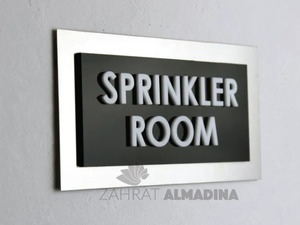

Custom name plates are a simple way to identify people, rooms, departments, and work areas. In an office, a clear name plate can help visitors find the right person without confusion. It can also make desks, doors, and reception areas look more organised. With choices such as acrylic, metal, and other materials, businesses can select a style that suits their workplace.
1. Custom Name Plates for Clear Office Identification
Custom name plates are mainly used to provide clear identification. In an office environment, employees may work in different rooms, departments, or sections. Without proper identification, visitors may need to ask several people before finding the right place.
A name plate can solve this simple problem by displaying useful information in an easy-to-read format.
For example, an office door could have:
Ahmed Khan
Sales Manager
Another room could simply display:
Meeting Room
The information depends on how the space is used. Some businesses need only an employee’s name, while others may include a designation, department, room number, or company logo.
Custom plates can be used on:
- Office doors
- Employee desks
- Reception counters
- Meeting rooms
- Department entrances
- Workstations
- Conference rooms
- Private offices
- Reception areas
The most important thing is clarity. A name plate should allow someone to understand the information quickly without needing to stand very close to it.
2. Acrylic Name Board for Modern Offices
An acrylic name board is a common choice for offices that want a clean and modern appearance. Acrylic has a smooth surface and can be made in different colours, thicknesses, and finishes.
Clear acrylic can provide a simple glass-like look, while coloured acrylic can be selected to match the interior of an office. Text and logos can also be added according to the design.
For example, a company may use acrylic plates for every employee’s office door. The basic layout can remain the same, while the employee name and designation change on each plate.
This approach creates a consistent appearance throughout the workplace.
An acrylic name board can also be used for:
- Reception areas
- Directors’ offices
- Meeting rooms
- Conference rooms
- Department signs
- Employee desks
- Waiting areas
The size should match the amount of information displayed. A small plate may be enough for a person’s name, but a larger plate may be needed when a company wants to include a logo, department, and job title.
Acrylic is particularly useful indoors because it can provide a neat appearance without making the space look too busy.
3. Office Name Plates for Employees
Office name plates help employees identify their individual work areas. They can be placed on doors, desks, cubicles, or walls.
A simple employee plate might include the person’s name and job title.
For example:
Sarah Ali
Human Resources Manager
Another employee could have:
Mohammed Hassan
Accountant
Using a similar layout for every employee makes the workplace easier to understand. Visitors can recognise the signs as part of the same office identification system.
Office name plates are also helpful in workplaces where several employees have similar roles. Adding a person’s name and department can reduce confusion.
For example, instead of simply writing “Manager,” a plate can say:
Omar Ahmed
Operations Manager
This provides more useful information without making the sign complicated.
For large offices, businesses can prepare a list of all required names and positions before production. This helps reduce spelling errors and keeps the design consistent.
4. Choosing the Right Size and Shape
The size of a name plate should depend on its location and the amount of information it needs to display.
A plate installed beside an office door does not need to be extremely large. However, the letters should still be large enough for visitors to read comfortably.
A desk plate can usually be smaller because people will view it from a shorter distance.
For example:
- Desk plate: suitable for a name and designation
- Door plate: suitable for name, position, and department
- Wall plate: may need more space for larger information
- Reception sign: may require a larger format
The shape can also affect the appearance. Rectangular plates are commonly used because they provide enough space for text. Square or other shapes can work when the design calls for something different.
Before selecting dimensions, consider where the plate will be installed. A narrow office door may not have enough space for a wide plate. Likewise, a small desk may look crowded if the name plate is too large.
The goal is to find a balance between visibility and available space.
5. Design and Font Selection
Good name plate design does not require complicated graphics. In many cases, a simple layout is easier to read and looks more organised.
The font is one of the most important design choices. Decorative fonts may look interesting, but they can become difficult to read when used in small sizes.
Simple fonts are generally more practical for office identification.
A basic layout might look like this:
Name
Job Title
Department
The person’s name can be slightly larger than the other information. This allows visitors to identify the person quickly.
Colour contrast also matters. Dark lettering on a light background is usually easy to read. Light lettering can work on a darker background.
A company logo can be included, but it should not take attention away from the person’s name or room information.
It is also useful to avoid filling every available space. Empty space around the text can make the design easier to read.
For example, a plate containing only a name and title may look better with a simple layout than one filled with several decorative elements.
6. Where Custom Name Plates Can Be Used
Custom name plates are useful in many different areas of a workplace. They are not limited to private offices.
Reception
A reception desk can use a name plate to identify the receptionist or reception area.
Meeting Rooms
Rooms can be labelled according to their function or number.
Example:
“Meeting Room 3”
Departments
Department plates can help visitors locate different sections of an organisation.
Example:
“Finance Department”
Employee Desks
Small plates can identify employees at shared workstations.
Conference Rooms
Larger offices may have several conference rooms, making clear labels useful.
Management Offices
Managers, directors, and other senior staff can use individual door plates.
Clinics
Doctors’ rooms, consultation areas, and reception spaces can also use clear identification plates.
Educational Institutions
Schools and training centres can use plates for classrooms, laboratories, staff rooms, and administrative offices.
Because every workplace has different requirements, customisation allows the information and design to be adjusted for each location.
7. Benefits of Using Custom Name Plates
There are several practical reasons businesses use customised identification plates.
Easy Identification
The biggest benefit is that people can quickly identify a person or room.
Better Navigation
Visitors can find departments and offices without asking for directions repeatedly.
Organised Appearance
Clearly labelled spaces can make an office easier to understand and navigate.
Flexible Information
Businesses can include names, job titles, room numbers, departments, or other relevant details.
Consistent Office Design
Using one design style across different rooms can create a more organised workplace.
Easy Updates
When employees move to another office or change positions, individual plates can be updated without changing the entire signage system.
Professional Presentation
Simple, readable identification can contribute to a tidy office environment.
For example, imagine a company with 20 private offices but no door labels. Visitors may have difficulty finding the correct employee. Adding simple plates can make the same office easier to navigate.
The benefit is not about making the sign complicated. It is about making information available at the right place.
8. Examples of Custom Name Plate Designs
Different workplaces may need different approaches. Here are some simple examples.
Example 1: Private Office
Daniel Thomas
General Manager
A small rectangular plate can be placed beside or on the office door.
Example 2: Department
Human Resources
A department sign does not necessarily need an employee’s name.
Example 3: Meeting Room
Conference Room 1
A simple design can make the room easy to locate.
Example 4: Desk
Fatima Noor
Marketing Executive
A smaller plate can be placed on an employee’s desk.
Example 5: Reception
Reception
A clear sign can help visitors identify the first point of contact when entering an office.
Example 6: Shared Office
Accounts Department
Room 204
Combining the department and room number provides two useful pieces of information.
These examples show that a name plate does not always need the same information. The content should match the purpose of the space.
9. Important Things to Check Before Ordering
Before producing custom name plates, businesses should prepare all information carefully.
First, check the spelling of every person’s name. This is particularly important when ordering several plates at the same time.
Next, confirm job titles and departments. A small change in a designation can require a new plate.
Then select the material and dimensions. Consider whether the plate will be installed on a door, wall, desk, glass surface, or another location.
The mounting method should also be considered. Depending on the surface, a plate may be attached using adhesive, screws, spacers, or another suitable method.
A useful checklist includes:
- Correct name spelling
- Correct job title
- Correct department
- Correct room number
- Suitable size
- Suitable material
- Readable font
- Good text contrast
- Correct logo
- Suitable mounting method
- Final artwork approval
For businesses ordering many plates, it is helpful to review the complete list before production begins.
Zahrat Al Madina Printing Services offers printing and signage solutions that can be used for office identification, including customised name plates in different styles and materials.
10. Maintaining and Updating Office Name Plates
Once name plates are installed, basic maintenance can help keep them readable and presentable.
Dust and fingerprints can build up on smooth surfaces, especially on plates located near doors or reception desks. Regular cleaning with a suitable soft cloth can help maintain their appearance.
Avoid using harsh cleaning products unless they are known to be safe for the selected material. Some chemicals can affect printed surfaces or finishes.
Name plates should also be reviewed when office information changes.
For example, an employee may:
- Change departments
- Receive a new job title
- Move to another office
- Leave the company
- Move to a different floor
In such situations, the old information may no longer be useful.
A simple system for tracking office signage can make future updates easier. Businesses with many employees can keep a record of each plate, including the name, department, room number, and location.
This can prevent outdated information from remaining on doors or desks.
FAQs About Custom Name Plates
1. What are custom name plates used for?
They are used to identify people, offices, departments, meeting rooms, desks, and other spaces. The information can be changed according to the purpose of the plate.
2. What is an acrylic name board?
An acrylic name board is a sign made from acrylic material and customised with text, logos, colours, or other design elements. It is commonly used for indoor office identification.
3. Where should office name plates be installed?
They can be installed on office doors, desks, walls, reception counters, meeting rooms, and other areas where employee or room identification is needed.
4. Can a name plate include a company logo?
Yes. A company logo can be included along with the employee’s name, designation, department, or other information.
5. What information should an office name plate contain?
It depends on its purpose. Common information includes an employee’s name, job title, department, room number, or company name.
6. Are acrylic plates suitable for office doors?
Yes. Acrylic is commonly used for indoor office doors because it provides a clean appearance and can be customised in different ways.
7. How can I make an office name plate easy to read?
Use a clear font, suitable letter size, good contrast, and a simple layout. Avoid adding unnecessary information or decorative elements.
8. Can the same design be used for multiple employees?
Yes. A standard layout can be created and the employee details can be changed for each plate. This is useful for offices with many employees.
9. Can custom name plates be used on desks?
Yes. Smaller plates can be created for desks and workstations. They can display a person’s name, designation, or department.
10. What should I check before final production?
Check names, job titles, departments, room numbers, dimensions, material, colours, font size, logo placement, and the final design before production.
Conclusion
Custom name plates may be small, but they provide an important identification function in offices and other workplaces. A well-planned plate can help visitors find the right room, identify employees, and understand different areas of a building.
An acrylic name board can suit a modern interior, while office name plates can provide individual identification for employees and departments. The choice of material, size, font, colour, and placement should depend on the location and information being displayed.
The best approach is usually simple. Clear text, correct information, suitable dimensions, and an appropriate material are more important than adding too many design elements. With these points in mind, businesses can create an identification system that is easy to understand, organised, and suitable for their workplace.