
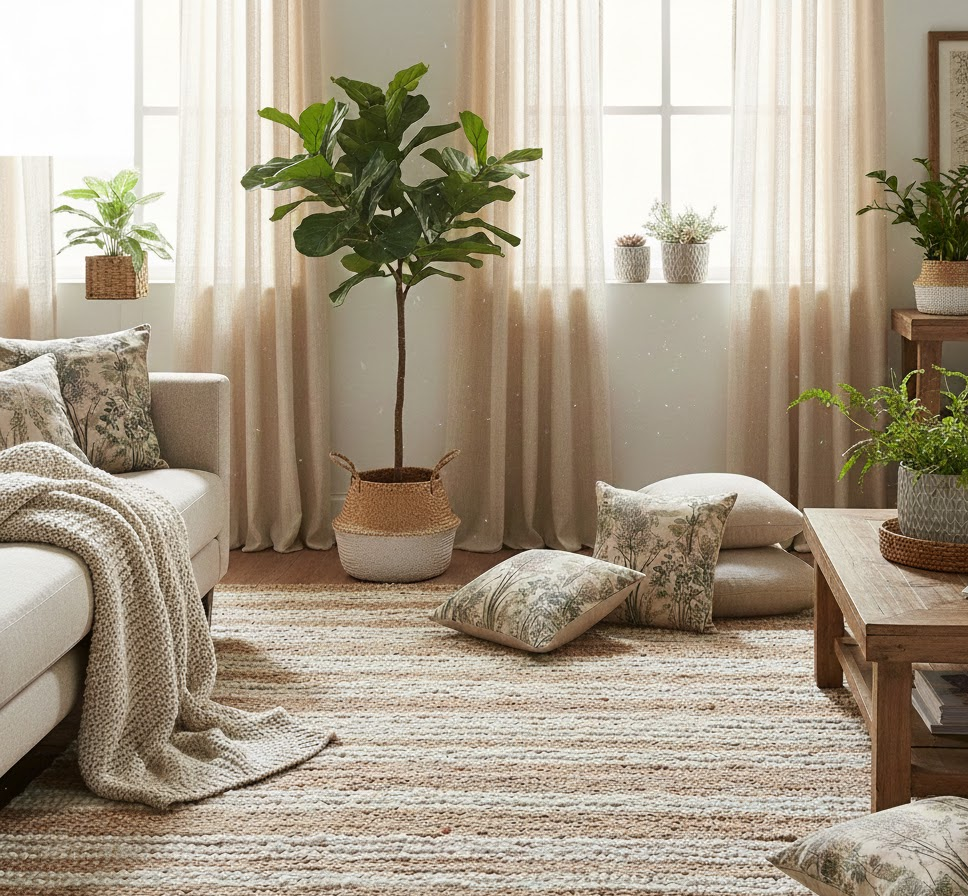

I’ve noticed that when people talk about sustainable living, rugs rarely make the list. We focus on bamboo toothbrushes, reusable bags, maybe even organic bedding—but the rug under our feet? It’s often overlooked. That’s a shame, because area rugs play a surprisingly big role in indoor air quality, resource use, and even how long things stay out of landfills.
So here’s the thing: a rug doesn’t become “eco-friendly” because of a green label or earthy color palette. Sustainability is about materials, processes, durability, and how thoughtfully the rug fits into your life. Let’s unpack what actually makes a rug sustainable—and which types tend to do it best.
What Does “Sustainable” Really Mean in Rugs?
At its core, a sustainable rug minimizes environmental harm across its lifecycle. That includes:
- Responsible raw materials (renewable or biodegradable fibers)
- Low-impact production (less water, fewer chemicals)
- Longevity (a rug that lasts years, not seasons)
- Healthy indoor use (low VOCs, fewer synthetic treatments)
In my years of writing about home textiles, I’ve learned that durability is often the most underrated eco feature. A rug you don’t have to replace every few years is already doing the planet a favor.
Natural Fibers That Lead the Way
Not all materials are created equal. Some fibers naturally align better with sustainable values.
Jute Rugs: Simple, Earth-Friendly, Honest
Jute rugs are made from one of the fastest-growing natural fibers on the planet. They require little irrigation, minimal chemical input, and biodegrade easily at the end of their life.
They’re not indestructible, though. I always think of jute as a “low-traffic, high-soul” choice—perfect for bedrooms or quiet living spaces where texture matters more than toughness.
Cotton Rugs: Versatile and Approachable
Cotton rugs, especially when made responsibly, strike a nice balance between comfort and practicality. An eco friendly cotton rug often uses natural dyes and fewer chemical finishes, which matters more than most people realize.
One big advantage? A washable cotton area rug can be cleaned at home, reducing the need for harsh chemical cleaners or professional treatments. That alone extends its usable life.
Modern homes tend to gravitate toward modern cotton rugs because they’re lightweight, adaptable, and easy to live with—especially in busy households.
Wool Rugs: Long-Lasting and Naturally Smart
When people ask me what rug material ages best, I almost always say wool. Wool rugs are renewable, naturally insulating, and resistant to dirt thanks to the fiber’s structure.
A well-made hand tufted wool rug can last for decades with basic care. Wool is also naturally flame-resistant and doesn’t trap allergens the way synthetics do. That’s sustainability through longevity.
Craftsmanship Matters More Than Trends
Here’s a mistake I see often: people assume all handmade rugs are sustainable. Not quite.
Hand tufed area rugs (yes, tufted—not knotted) can still be eco-conscious, but it depends on what’s backing them and how adhesives are used. Low-VOC latex backings are a good sign; synthetic glues, not so much.
The takeaway? Ask how the rug is made, not just where.
Design Choices That Support Sustainability
Style plays a role, too. Rugs that work across different interiors are more likely to stay in use.
- Modern contemporary area rugs often feature neutral palettes that age well.
- Timeless patterns outlast fast décor trends.
- Versatile sizes adapt when rooms change.
I’ve moved the same rug through three apartments. That kind of flexibility is sustainability in real life.
Common Pitfalls to Watch Out For
Even well-intentioned buyers slip up. A few things to be cautious about:
- Rugs labeled “natural” but blended with synthetics
- Heavy chemical odor (a sign of high VOCs)
- Ultra-low prices that hint at disposable quality
If a rug feels like it’s meant to be replaced quickly, it probably is.
A Thoughtful Way Forward
Sustainable living isn’t about perfection. It’s about making better choices when you can. Choosing rugs made from natural fibers like jute, cotton, or wool—and valuing craftsmanship over trends—quietly shifts the impact of your home.
Next time you walk across your rug, it might feel a little different knowing it’s not just soft underfoot but also easier on the world. And honestly? That awareness is where meaningful change usually starts.

