
Introduction
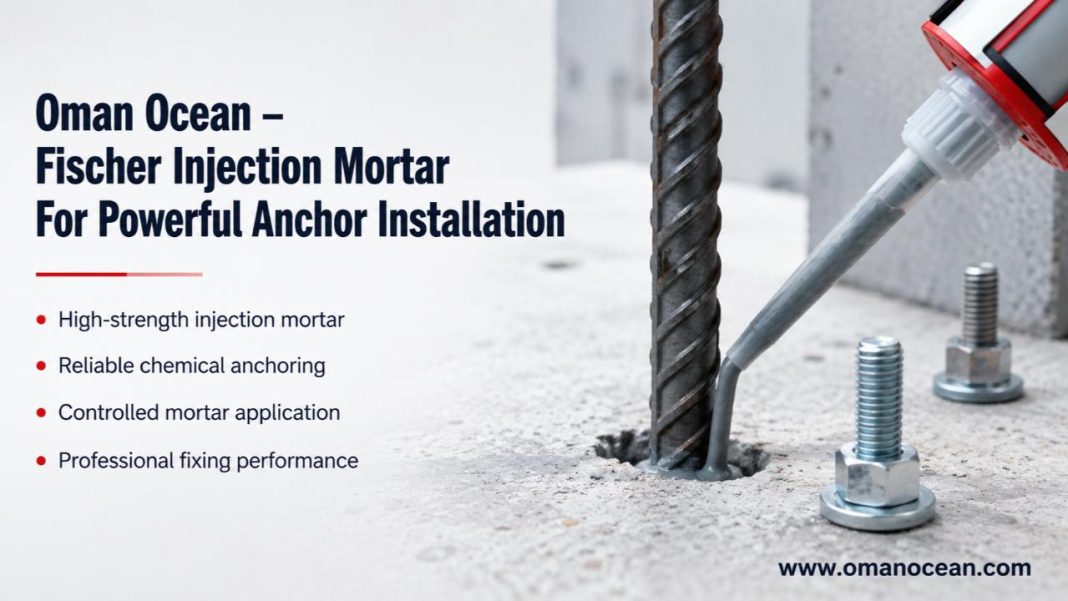
If you have ever stood under a massive highway overpass, looked up at a high-rise building, or watched heavy industrial machinery running at full tilt, you might have wondered what keeps those giant structures stuck together so securely. The secret usually comes down to high-performance anchorage, and that is where Fischer Injection Mortar changes the game entirely. When standard hardware or simple expanding anchors just will not cut it for structural integrity, engineers and construction pros reach for chemical anchoring systems. By filling every tiny micro-crevice inside a drilled hole with a specialized chemical compound, Fischer Injection Mortar forms a bond so ridiculously strong that the surrounding concrete will often break before the anchor itself gives way.
Key Features That Drive Ultimate Strength
Chemical anchors work on a completely different set of physical rules compared to traditional mechanical anchors. Mechanical options rely on expansion, forcing metal against concrete, which creates outward stress and can crack the material if placed too close to an edge. Chemical systems operate on pure adhesion and keying, which offers several distinct practical advantages.
Core Mechanics of Chemical Bonding
- Expansion-Free Anchoring: Because the chemical resin does not push outward against the hole walls, you can install anchors much closer to concrete edges and with tighter spacing between bolts without risking structural cracks.
- 100% Surface Contact: Liquid mortar flows into every irregular ridge, pit, and microscopic imperfection created by the drill bit, creating a seamless interlock over the entire embedded surface area.
- Hermetic Hole Sealing: The cured mortar acts as a waterproof seal around the steel rod, protecting the drilled cavity from water ingress, chemical exposure, and rust over time.
- Vibration and Dynamic Load Resistance: The synthetic resin absorbs micro-vibrations better than rigid mechanical clips, preventing the fast loosening caused by heavy machinery or seismic events.
How Chemical Resins Interlock with Concrete Walls
To truly understand high-load bonding, think about what concrete looks like up close. Even after drilling, the inside of a hole is not smooth; it is a rough terrain of exposed aggregate, sand, and cement dust.
When you inject a high-grade chemical anchor resin, it acts like a custom-molded glove. The liquid compound fills in every tiny ridge and micro-fissure along the concrete wall before solidifying into a rigid matrix. Once cured, the steel threaded rod or rebar is not just stuck inside the hole—it is structurally integrated into the concrete block itself.
This deep keying effect redistributes heavy tensile (pull-out) and shear (side-to-side) forces evenly along the entire depth of the anchor rod rather than concentrating the stress at a single expansion point. As a result, the assembly can handle extreme stress, heavy static loads, and dynamic structural forces without pulling free.
The Chemistry Behind Curing Under Pressure
The strength of modern injection systems lies in two-part chemical formulas, usually involving vinyl ester, epoxy, or hybrid resins. The cartridge keeps the base resin and hardener separated until the moment of application.
When you pull the trigger on the dispensing tool, both components are pushed through a static mixing nozzle. The internal spirals mix the dynamic ingredients thoroughly, triggering a chemical reaction that turns the paste from a smooth fluid into an incredibly dense solid.
Different chemical formulations serve different job site challenges:
- Epoxy Resins: Exceptional for deep embedment depths, massive load requirements, and diamond-cored holes where smooth walls demand superior adhesion.
- Vinyl Ester Hybrids: Perfect for fast curing times, cold-weather installations, and heavy-duty structural retrofits where speed is critical.
- Polyester Systems: Best suited for medium-load applications in solid brick, hollow blocks, or standard masonry walls.
Proper hole cleaning remains the single most important step in this chemical reaction. Dust acts as a barrier, preventing the resin from clinging directly to the concrete matrix. Blowing out the dust and brushing the hole walls ensures that the resin directly bites into the solid aggregate for maximum load capacity.
Conclusion
Building strong, lasting structures requires hardware and materials that refuse to compromise under extreme stress. From heavy industrial machinery bases to massive structural steel connections, chemical anchoring provides unmatched holding power by bonding seamlessly with concrete at a micro-level. When your project demands absolute stability, certified safety, and high-load performance, sourcing high-grade fasteners and structural adhesives from trusted suppliers like Oman Ocean Trading LLC ensures your construction builds remain safe, secure, and grounded for decades to come.