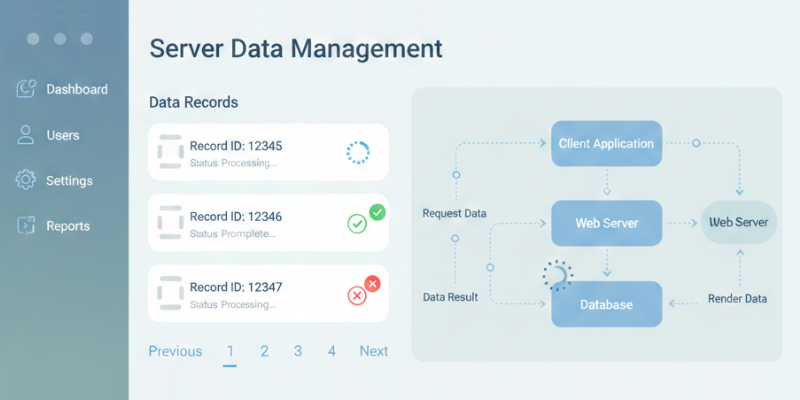

Modern web applications handle massive amounts of data every day. From product listings to user activity feeds, displaying all records at once is inefficient and overwhelming. Pagination and data fetching strategies solve this problem by loading data in a controlled and user-friendly way.
These approaches improve performance, reduce server load, and enhance the overall experience for users. Understanding these concepts is essential for anyone building scalable applications, and if you want to learn these skills practically, you can consider enrolling in the Full Stack Developer Course in Mumbai to strengthen your fundamentals with real-world exposure.
What is Pagination and Why it Matters
Pagination involves breaking down extensive datasets into smaller, more manageable segments. Instead of loading thousands of records at once, applications fetch a limited number of items per request. This makes pages load faster and keeps interfaces responsive. Pagination also helps users navigate data easily by allowing them to move step by step rather than scrolling endlessly. From a backend perspective, pagination reduces memory usage and prevents performance bottlenecks when handling high traffic.
Common Pagination Approaches
There are several pagination methods used in full-stack development. Page based pagination relies on page numbers and fixed limits, making it simple to implement and understand. Offset based pagination fetches records starting from a specific position, which works well for small datasets but can slow down with large tables.
Cursor based pagination uses a reference point from the last fetched record, offering better performance and consistency for dynamic data. Choosing the right approach depends on the nature of the data and how often it changes.
Understanding Data Fetching Strategies
Data fetching defines how and when data is requested from the server. Eager fetching loads all required data at once, which can be useful for small datasets but inefficient for larger ones. Lazy fetching loads data only when needed, improving performance and reducing unnecessary requests. On demand fetching is commonly used in modern applications where data is retrieved based on user actions such as scrolling or filtering. Learning when to fetch data is just as important as knowing how to paginate it.
Combining Pagination with Efficient Fetching
Pagination and data fetching work best when designed together. Fetching only the required fields for each page reduces payload size and speeds up responses. Caching frequently accessed pages minimizes repeated database queries. Prefetching the next page can improve perceived performance by loading data before users request it. These combined strategies create a smoother experience while keeping resource usage under control, which is a key skill taught in structured programs like a Full Stack Developer Course in Kolkata that focus on performance driven application design.
Challenges and Best Practices
Poor pagination can lead to inconsistent results, especially when data changes frequently. Sorting and filtering must remain stable across pages to avoid confusion. APIs should clearly define limits and response structures to ensure predictable behavior. On the frontend, loading indicators and clear navigation help users understand data flow. Testing pagination under real traffic conditions is essential to catch performance issues early and maintain reliability.
Pagination and data fetching strategies are foundational concepts in full stack development. They directly impact application speed, scalability, and user satisfaction.
Mastering these techniques allows developers to build applications that handle growing datasets without compromising performance. If you are aiming to develop these skills professionally, you may want to consider signing up for a Full Stack Developer Course in Delhi to gain hands-on experience and industry-relevant knowledge before building production-ready systems.



