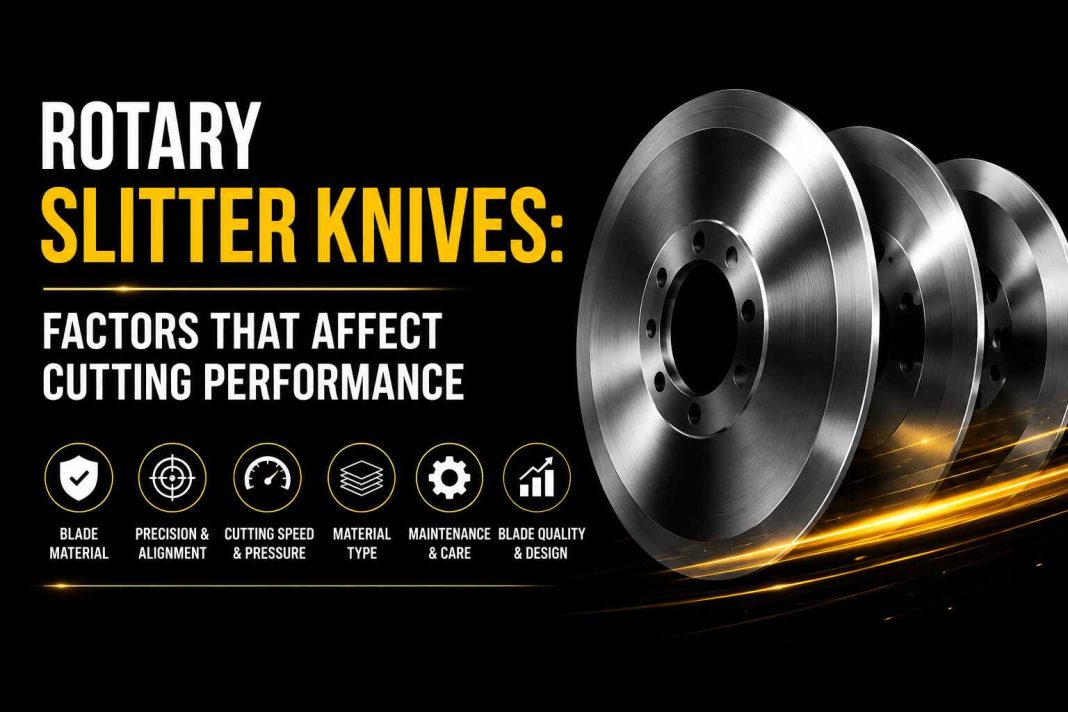

In modern manufacturing, rotary slitter knives play a crucial role in achieving precise, clean, and efficient cuts across a wide range of materials, including metal, paper, film, foil, textiles, and plastics. The performance of these cutting tools directly impacts product quality, production speed, and operational costs. Understanding the key factors that affect cutting performance can help manufacturers optimize efficiency and extend blade life.
1. Blade Material Quality
One of the most important factors influencing cutting performance is the material used to manufacture the blade. High-quality tool steels, carbide, and specialty alloys offer excellent hardness, wear resistance, and edge retention. Choosing the right material depends on the application and the type of material being processed. Durable slitter knives maintain their sharpness longer, resulting in cleaner cuts and reduced downtime for blade replacement.
2. Sharpness and Edge Geometry
The sharpness of a blade significantly affects cutting precision. A properly sharpened knife requires less cutting force and produces smoother edges. In addition to sharpness, edge geometry plays a vital role. Different cutting applications require specific bevel angles and edge profiles. Well-designed slitter knives ensure consistent performance while minimizing burr formation and material deformation.
3. Material Being Cut
The characteristics of the material being processed greatly influence cutting efficiency. Hard metals require stronger, wear-resistant blades, while softer materials such as paper or plastic may need different edge configurations. Material thickness, density, and surface properties should always be considered when selecting rotary Slitter tools to achieve optimal results.
4. Machine Setup and Alignment
Even the highest-quality blades cannot perform effectively if the Slitter machine is not properly configured. Accurate knife alignment, correct overlap settings, and appropriate cutting pressure are essential for maintaining consistent cut quality. Misalignment can cause uneven cuts, excessive blade wear, and increased material waste. Properly installed slitter knives help maximize production efficiency and reduce operational issues.
5. Cutting Speed and Production Conditions
Production speed has a direct impact on blade performance. Excessively high operating speeds can generate heat and accelerate wear, while speeds that are too low may reduce productivity. Finding the right balance between speed and cutting force helps maintain blade integrity and ensures consistent results throughout the production process.
6. Blade Maintenance Practices
Regular maintenance is essential for preserving cutting performance. Routine inspection, cleaning, sharpening, and proper storage can significantly extend blade lifespan. Neglecting maintenance often leads to dull edges, poor cut quality, and higher replacement costs. Manufacturers who implement preventive maintenance programs for their slitter knives typically experience improved productivity and lower operating expenses.
7. Blade Tolerances and Precision Manufacturing
Precision manufacturing ensures that rotary Slitter knives meet strict dimensional tolerances. Even minor variations in blade thickness, diameter, or concentricity can affect cutting accuracy. High-precision slitter knives provide better balance, smoother operation, and more consistent cutting performance, especially in high-speed production environments.
Conclusion
The cutting performance of rotary Slitter knives depends on several interconnected factors, including blade material, sharpness, edge geometry, machine setup, cutting speed, maintenance practices, and manufacturing precision. By carefully evaluating these factors and selecting high-quality slitter knives suited to the specific application, manufacturers can improve cut quality, reduce downtime, extend blade life, and achieve greater overall production efficiency. Investing in the right rotary Slitter solution ultimately leads to more reliable operations and long-term cost savings.