
You don’t always see the tech doing the heavy lifting.
There’s no flashing light. No beep. No “look at me!” moment.
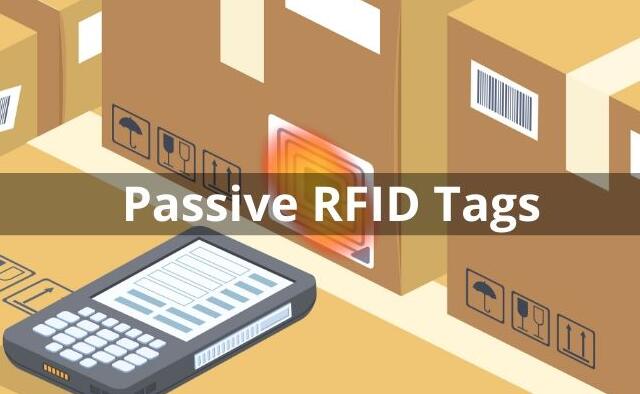
Just a quiet tag sitting on a pallet. Or a tool. Or a pair of boots. No battery. No wires. Nothing fancy. And yet, it knows where it is. It knows when it moves. And when it passes through the right space, an RFID scanner picks it up, adds it to your system, and you’re up to date without lifting a finger.
That’s passive RFID. Silent. Affordable. Efficient.
It doesn’t shout. It just works.
What Exactly Is Passive RFID?
Let’s break it down. Radio Frequency Identification RFID isn’t new. But it’s evolving fast.
At the simplest level, you’ve got two types: active and passive. Active tags carry their own battery. They’re constantly sending signals. Great for tracking over long distances or for assets that are constantly moving.
Passive RFID, though? That’s a different game.
These tags don’t transmit anything on their own. They wait to be “woken up” by an RFID scanner, a handheld device, or a fixed reader that sends out a pulse of energy. The tag picks it up, powers itself for a brief second, and sends back its unique ID.
That’s it. No fanfare. No need for batteries. Just smart design doing its job behind the scenes.
Why Go Passive? The Simplicity Is the Point
Let’s be honest: when you’re managing thousands or millions of items, simplicity isn’t just nice. It’s survival.
That’s where passive RFID shines.
You can tag every item in your warehouse without worrying about batteries dying or signal interference from too much chatter. You can install readers at key choke points, loading docks, entry gates, and packing lines, and let the system take care of the rest.
And the cost? It’s a fraction of active systems. You could tag your entire operation for less than it costs to fix a single bad inventory error.
That’s why companies working with Lowry Solutions are leaning hard into passive RFID: it delivers the coverage, consistency, and ROI they need without the complexity they don’t.
The Unsung Hero: RFID Scanners in Action
You might not give them much thought, but the RFID scanner is the heartbeat of the system.
Handheld or fixed, mobile or mounted, these devices bring passive RFID to life. They emit a signal, read the tags in range, and push that data straight into your system.
No manual input. No clipboard checks. No human error.
A warehouse associate walks down an aisle. Their scanner reads every tag in reach; no line-of-sight is needed. Inventory is updated in real-time. If anything’s missing, misrouted, or mismatched? You know immediately.
Lowry Solutions provides end-to-end support here, making sure your RFID scanner setup fits your environment, your workflows, and your growth plans because tech without strategy is just noise.
Real-Life Efficiency: What Passive RFID Looks Like on the Ground
Let’s say you’re in logistics.
A shipment arrives. As it passes through your dock door, a reader captures every tag on every pallet. You don’t have to open boxes. You don’t have to scan each SKU. You just get a full inventory update automatically.
Or maybe you’re in manufacturing. Tools are often misplaced. Parts get shuffled. With passive RFID, you can track each item’s last known location. A missing wrench? Search for it with a mobile RFID scanner and walk straight to where it was last seen.
In retail, passive tags embedded in garments track when items leave the stockroom, hit the floor, or leave the building. No more guessing. No more blind spots.
It’s not science fiction. It’s happening now, and Lowry Solutions is one of the reasons for this.
Are There Limits? Of Course. But They’re Shrinking Fast
No tech is perfect. Passive RFID has its constraints.
You need a scanner within a certain range, usually a few meters. Metal and liquids can interfere (though that’s improving). And while tags are cheap, the readers can be an upfront investment.
But here’s the thing: the cost is dropping. The reliability is rising. And with companies like Lowry engineering RFID ecosystems that work around your facility’s quirks, the payoff comes faster than you might expect.
Especially when you compare it to the cost of not knowing about stockouts, overages, theft, or lost tools.
The Silent Revolution in Asset Visibility
You don’t need blinking lights and constant updates to stay in control. Sometimes, the smartest systems are the quietest.
Passive RFID is exactly that: a whisper of a signal that transforms the way you track, manage, and trust your inventory. Paired with a well-placed RFID scanner, it becomes a silent network of truth running through your operation.
It’s not glamorous. But it’s powerful.
Because what’s more valuable than knowing without checking, guessing, or hoping that everything is where it should be?
Why More Companies Are Choosing Passive Over Active
Active RFID definitely has its place in shipping containers, fleet tracking, or high-value mobile assets. But for most indoor environments? Passive RFID does the job better, cheaper, and with less friction.
You don’t need 24/7 location pings. You just need to know what moved, where it moved, and when.
That’s where passive RFID excels, especially when backed by expert implementation from a partner like Lowry Solutions.
They don’t just sell tags and scanners. They build ecosystems. Systems that blend seamlessly into your workflows. Systems that grow with you. Systems that don’t scream for attention but never miss a beat.
The Quiet Path to Smarter Operations
Inventory tracking doesn’t have to be loud. It doesn’t have to be complex. And it definitely doesn’t have to rely on outdated, error-prone methods.
Passive RFID and a reliable RFID scanner setup offer something rare: quiet confidence.
The kind where you walk into your facility and already know what’s happening because your system tells you, in real-time, without drama.
In a world full of noise, that kind of clarity isn’t just helpful. It’s everything.