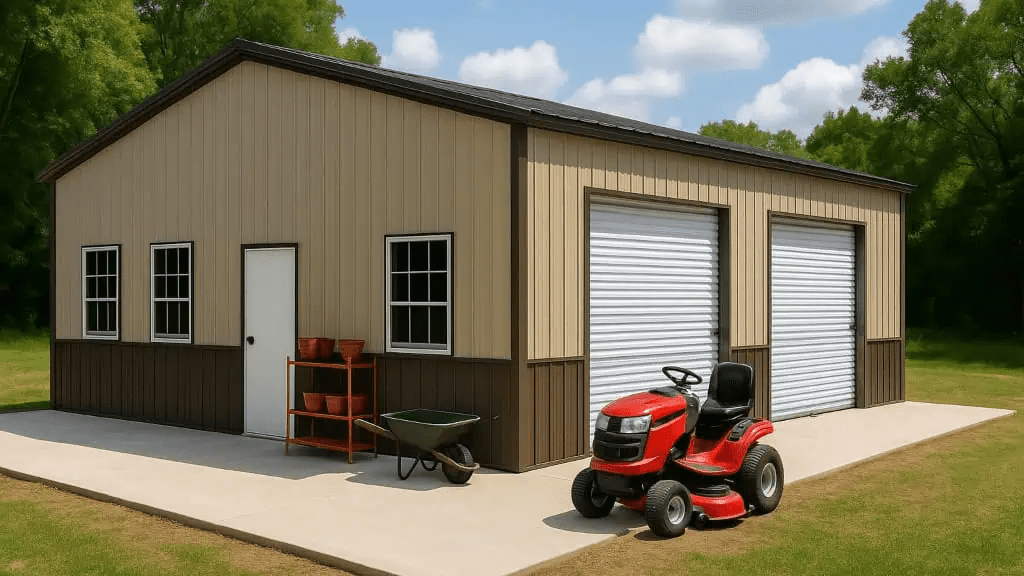

A 30x40x12 metal building offers 1,200 square feet in usable space with a generous 12-foot leg height because it ideally solves needs such as those for garages, workshops, small warehouses, and agricultural storage. But yet before you invest within this structure, it is important for you to understand all of the technical components. Understanding the foundation requirements along with installation challenges is also vital for the building’s durability plus usability.
In this blog, you’ll walk away fully informed because we’ll break down the core structure into simple, customer-friendly terms, from a professional, technical lens.
Structural Components of a 30x40x12 Metal Building
Every metal building is an engineered system of integrated parts. Here’s what goes into your 30x40x12 structure:
1. Steel Frame (Primary & Secondary Framing)
- Primary Framing: These are the main I-beams or tubular steel columns and rafters that support the building. For 30×40 structures, most dealers use 14-gauge or 12-gauge galvanized steel tubing.
- Secondary Framing: Includes wall girts and roof purlins that add support to panels and increase wind and snow load capacity.
2. Panels
- Roof Panels: Typically 29-gauge or 26-gauge steel sheets are, installed vertically or horizontally. A vertical roof system is highly recommended for this size to allow water and debris to run off easily.
- Side & End Wall Panels: Also steel, installed either horizontally or vertically. Color options and panel thickness may vary.
3. Garage Doors
- Can be roll-up or sectional, most commonly sized 8’x8′ or 10’x10′ for this size of building.
- Optional insulation, header seals, and automatic openers are available.
4. Walk-In Doors
- Standard size: 36″x80″, steel or aluminum with optional windows.
- Important for daily access without opening larger doors.
5. Windows
- Fixed, single-pane, or double-pane options are available.
- Common sizes: 24″x36″, 30″x30″.
- Can be added for natural lighting and ventilation.
6. Wainscot Panels
- Two-tone styling option:; lower section of wall panels (usually 3’) uses a contrasting color.
- Adds curb appeal and reduces visible wear and tear.
7. Screws & Fasteners
- Color-matched, self-drilling screws with neoprene washers.
- Stainless steel or zinc-coated options resist rust and leakage.
8. Bracing & Anchors
- Corner Braces, Truss Braces, and Purlin Braces are added based on wind and snow ratings.
- Anchors vary by foundation (detailed below).
Foundation and Relevant Anchors
The Foundation is critical to structural integrity. A 30x40x12 building can be installed on multiple types of foundations. Each foundation type has specific anchoring systems:
1. Concrete Slab Foundation
- Best For: Permanent structures, garages, commercial use.
- Anchors Used: Concrete wedge anchors (typically 6″ or 8″ long).
- Edge Detail: Monolithic or floating slab with 4–6″ thickness + 12″ footers.
2. Gravel or Ground (Earth) Foundation
- Best For: Agricultural use, storage sheds, temporary use.
- Anchors Used: Mobile home anchors or auger-style earth anchors.
- Requirement: Must be compacted and level; some counties may not permit this for large structures.
3. Asphalt Foundation
- Best For: Driveways, parking extensions.
- Anchors Used: Rebar anchors (driven through base rails).
- Note: Less durable than concrete; prone to movement with freeze/thaw cycles.
4. Wood Platform
- Best For: Temporary setups or when concrete isn’t feasible.
- Anchors Used: Lag bolts or specialized wood anchors.
- Note: Not ideal for heavy-duty applications.
Installation Process: Step-by-Step Breakdown
A 30×40 building installation is typically completed within 1–3 days, depending on the foundation and complexity. Here’s what the process looks like:
Step 1: Site Prep
- Clear debris, level ground, and ensure the foundation is square and measured per plans.
- Install underground utilities (if required).
Step 2: Base Rail Anchoring
- Position base rails and secure with the chosen anchors.
- Must ensure perfect alignment and squareness before proceeding.
Step 3: Frame Assembly
- Erect, vertical posts (legs), connect horizontal trusses, and install center rafters.
- Add all necessary bracing and wind supports.
Step 4: Roof and Wall Panel Installation
- Panels are added starting from the bottom up.
- Vertical roofs require hat channels or purlins to secure panels properly.
Step 5: Door & Window Framing
- Cut-outs made for roll-up doors, walk-in doors, and windows.
- Flashing and trim installed to prevent water infiltration.
Step 6: Trim, Flashing & Wainscot
- J-trim, corner trim, and base trim are installed.
- Wainscot panels added, if part of the design.
Step 7: Inspection & Final Adjustments
- Final tightening of bolts, alignment checks, and water-proofing as needed.
- Optional walkthrough with the client.
Common Installation Challenges
Despite being prefabricated, metal buildings are complex engineered systems. Challenges may include:
- Unlevel foundation: Can cause misalignment in frames and doors.
- Incorrect anchor usage: Leads to instability and potential building failure.
- Weather delays: Windy or rainy conditions can halt progress.
- Permit issues: Local zoning and code restrictions must be cleared beforehand.
- Access issues: Delivery trucks need room to unload and maneuver.
Pro Tips for Buyers
- Upgrade to 12-gauge framing if you’re in a snow or high-wind area.
- Invest in a concrete slab with footers for long-term durability.
- Get certified buildings for code compliance.
- Customize for your use case: vehicle size, storage racks, insulation needs.
Final Thoughts
A 30×40 metal building isn’t just a steel shell — it’s a highly engineered solution that, when installed properly, offers decades of reliable service. Whether you’re using it as a vehicle garage, workshop, farm storage unit, or light commercial space, understanding the components, foundations, and installation challenges will help you make smarter choices and avoid costly mistakes.
Price
| Component | Standard | Add-On Options | Price Range |
| Metal Building (Base) | 30x40x12 | Includes steel frame, panels, and base anchoring | $10,000 – $15,000 |
| Garage Doors | 8’x8′ Roll-Up Door | Automatic opener, insulated, custom sizes | $700 – $2,000 per door |
| Walk-In Doors | 36″x80″ Standard | Custom sizes, decorative styles, or reinforced options | $150 – $600 per door |
| Windows | 24″x36″ Single Pane | Double-pane, tinted, or operable windows | $100 – $500 per window |
| Wainscot Panels | Standard Color | Custom colors or upgraded materials (e.g., textured) | $3 – $6 per sq ft |
| Foundation (Concrete) | Concrete Slab Foundation | Monolithic slab or reinforced with additional footers | $5,000 – $8,000 |
| Insulation | None | Reflective, fiberglass, or spray foam | $1,000 – $5,000 |
| Customization (Design) | Basic Design | Custom layouts, additional doors/windows, specialty finishes | $500 – $2,500 |
| Anchors | Standard Concrete Wedge Anchors | Mobile Home Anchors or Auger Anchors for other foundations | $50 – $200 per anchor |
FAQ
1. What are the best foundation types for a 30x40x12 metal building?
- The best foundations for a 30x40x12 metal building include concrete slab, gravel, asphalt, and wood platform foundations. Each has its specific benefits depending on your location and building use.
2. How much does a 30x40x12 metal building cost?
- The price of a 30x40x12 metal building varies based on factors such as material quality, custom features (e.g., insulation, windows), and foundation type. A basic model may start at $10,000, while a fully customized building with premium features can cost significantly more.
3. What size doors and windows should I include in my 30x40x12 metal building?
- For a standard 30x40x12 building, 8’x8′ or 10’x10′ roll-up garage doors are recommended, while 36″x80″ walk-in doors and 24″x36″ windows are common for added natural light and ventilation.
4. How long does it take to install a 30x40x12 metal building?
- Installation typically takes between 1 to 3 days, depending on the complexity of the foundation and design. Delays can occur due to weather or site preparation challenges.
5. Can I customize my 30x40x12 metal building?
- Yes! A wide range of customization options are available, including panel colors, door sizes, and additional features such as insulation, skylights, and lean-tos.
6. What are the advantages of a vertical roof for a 30x40x12 metal building?
- A vertical roof offers superior durability and performance, especially in areas with heavy snow or rain, as it allows debris and water to slide off easily. It also adds aesthetic appeal and is easier to maintain.