
Healthy trees add beauty, shade, and value to your property. However, just like any living organism, trees can become diseased due to environmental stress, pests, fungi, or bacterial infections. The challenge is that many homeowners don’t notice the warning signs until significant damage has already occurred.
At Monster Tree Service of Springfield and Branson, we often help homeowners identify and address tree health issues before they become serious safety hazards. Early detection is critical for preserving valuable trees and preventing disease from spreading throughout your landscape.
Identifying tree disease early can help save the tree, prevent safety hazards, and protect surrounding plants. Here are the top five signs your tree may be diseased and what you should do if you spot them.
1. Discolored or Wilting Leaves
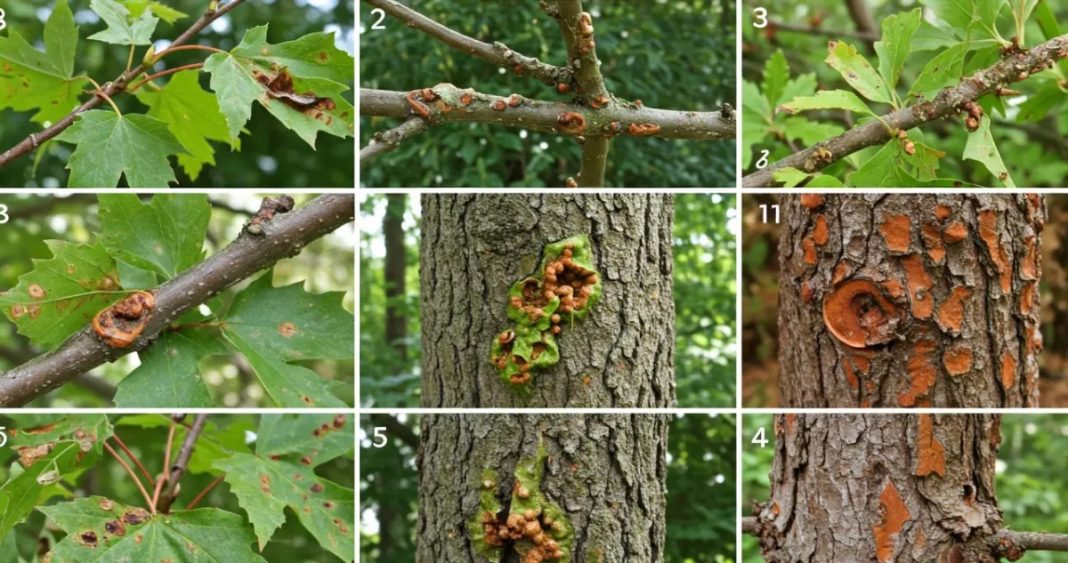
One of the earliest signs of a diseased tree is unusual leaf discoloration. While leaves naturally change color during the fall, yellowing, browning, or spotting during the growing season can indicate a problem.
Common causes include:
- Fungal infections
- Root damage
- Nutrient deficiencies
- Bacterial diseases
If leaves appear wilted despite adequate watering, the tree may be struggling with a disease that affects its vascular system.
What to Do:
Inspect the tree regularly and compare its appearance to nearby healthy trees of the same species. If symptoms persist, contact a professional arborist for an evaluation.
2. Dead or Dying Branches
Dead branches are often one of the most visible indicators that a tree is unhealthy. Diseased trees may experience branch dieback, where limbs gradually stop producing leaves and eventually die.
Warning signs include:
- Bare branches during the growing season
- Brittle limbs that snap easily
- Branches dropping unexpectedly
Dead branches can pose serious safety risks, especially during storms or high winds.
What to Do:
Prune affected branches as soon as possible. If multiple branches throughout the canopy are dying, a professional inspection is recommended to determine whether disease is spreading throughout the tree.
3. Cracks, Cankers, or Peeling Bark
Healthy bark acts as a tree’s protective barrier. When bark begins to peel, crack, or develop sunken lesions known as cankers, disease may be present beneath the surface.
Cankers often appear as:
- Dead, discoloured patches
- Oozing sap
- Sunken or cracked areas on the trunk
Many fungal and bacterial diseases attack trees through wounds in the bark, weakening the tree’s structural integrity.
What to Do:
Avoid further damage to the bark and monitor the affected area for any expansion. A certified tree care professional can identify the specific disease and recommend treatment options.
4. Fungal Growth Around the Tree
Mushrooms growing near the base of a tree or fungal growth on the trunk can signal internal decay. While not all fungi are harmful, certain species indicate that the tree’s wood is rotting from the inside.
Common signs include:
- Shelf-like fungi on the trunk
- Mushrooms around the root zone
- Soft or spongy wood
Internal decay can make trees unstable and significantly increase the risk of falling limbs or complete tree failure.
What to Do:
Have the tree inspected immediately. Internal decay often cannot be seen from the outside, and professional assessment is necessary to determine whether the tree can be saved.
5. Unusual Insect Activity
Diseased trees are often more vulnerable to insect infestations. If you notice an increase in pests such as borers, beetles, ants, or woodpeckers feeding on the tree, it may be a sign of underlying disease.
Look for:
- Small holes in the bark
- Sawdust-like material around the base
- Increased bird activity targeting the trunk
- Visible insect colonies
In many cases, insects attack weakened trees that are already stressed by disease.
What to Do:
Address the underlying health issue rather than focusing solely on pest control. A tree care specialist can diagnose the root cause and recommend effective treatment strategies.
Why Early Detection Matters
Tree diseases rarely improve on their own. Left untreated, they can spread throughout the tree, infect nearby vegetation, and create dangerous conditions for your property.
Regular inspections can help identify problems before they become costly or irreversible. If you notice any of the warning signs listed above, seeking professional help is the best way to protect your landscape investment.
For homeowners looking for expert Tree Service in Springfield, MO, professional arborists can provide disease diagnosis, pruning, treatment, and safe tree removal when necessary. Acting quickly can often mean the difference between saving a tree and losing it altogether.
Protect Your Trees and Your Property
Healthy trees contribute to the beauty, safety, and value of your home. By watching for signs such as discolored leaves, dead branches, bark damage, fungal growth, and unusual insect activity, you can catch tree diseases early and take the appropriate steps to protect your landscape.
When in doubt, consult a qualified tree care professional who can assess the situation and recommend the best course of action for your trees.