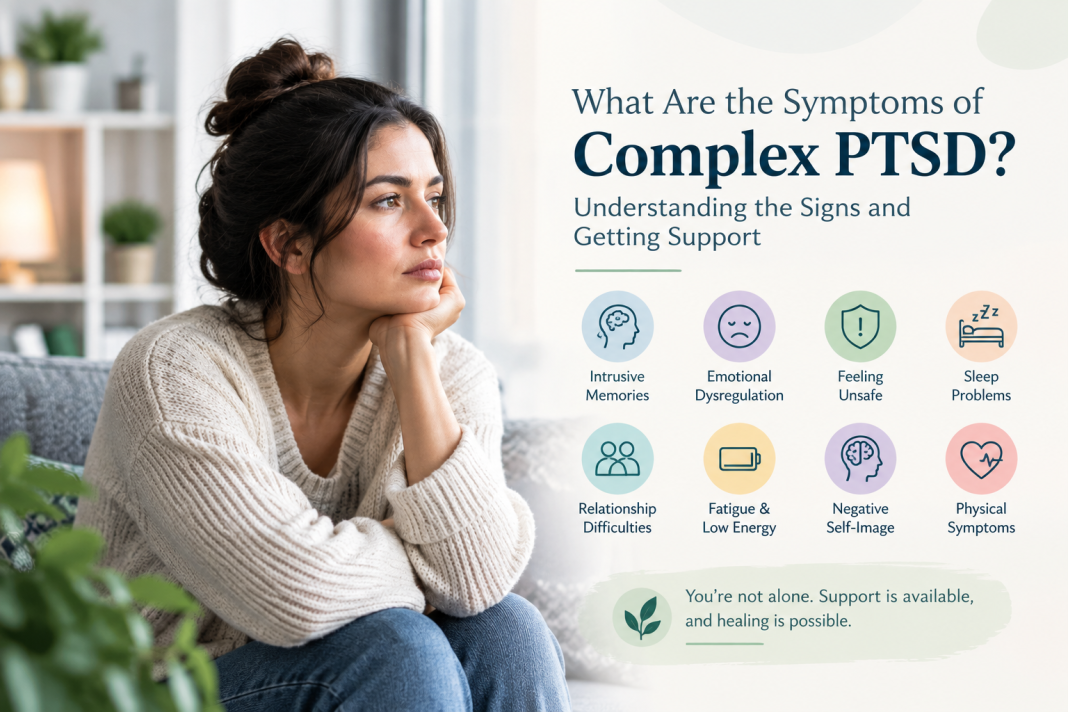

What Are the Symptoms of Complex PTSD? Understanding the Signs and Getting Support
Trauma can affect people in many different ways. While some individuals recover after a traumatic experience, others continue to experience symptoms that interfere with their emotions, relationships, sense of safety, and everyday life. When trauma is prolonged or repeated, the effects can sometimes be more complex and persistent.
Complex post-traumatic stress disorder (CPTSD) is a mental health condition that shares several features with post-traumatic stress disorder (PTSD) but can also involve additional difficulties with emotional regulation, self-perception, and relationships. Understanding the symptoms of complex PTSD can help people recognise when their experiences may warrant professional support.
Complex PTSD can develop following repeated or prolonged traumatic experiences. However, not everyone exposed to prolonged trauma develops CPTSD, and experiencing trauma does not automatically mean that someone has the condition. A qualified mental health professional is needed to assess symptoms and determine an appropriate diagnosis.
What Is Complex PTSD?
Complex PTSD, commonly abbreviated as CPTSD, is a trauma-related mental health condition. It can develop after exposure to traumatic experiences that are repeated, prolonged, or difficult to escape.
Examples can include prolonged childhood abuse or neglect, domestic violence, torture, war, or other situations involving ongoing or repeated trauma. However, the relationship between trauma type and CPTSD is not absolute. The World Health Organization recognises CPTSD within the ICD-11 classification system, and diagnosis depends on the person’s symptoms and their impact rather than simply the type of trauma experienced.
CPTSD includes the core symptoms associated with PTSD, such as re-experiencing trauma, avoidance, and a persistent sense of threat. It can also involve broader difficulties affecting emotional regulation, self-concept, and relationships.
What Are the Main Symptoms of Complex PTSD?
The symptoms of complex PTSD can vary from person to person. Some people may experience primarily emotional symptoms, while others may notice significant difficulties with relationships, sleep, concentration, or physical wellbeing.
The main symptom areas can be divided into PTSD-related symptoms and additional difficulties associated with complex trauma.
1. Re-Experiencing Traumatic Events
One of the most recognised signs of PTSD and CPTSD is re-experiencing aspects of the traumatic event.
This may happen through:
- Unwanted or intrusive memories
- Flashbacks
- Distressing dreams or nightmares
- Strong emotional reactions to reminders of trauma
- Physical reactions when something triggers a traumatic memory
- Feeling as though the traumatic experience is happening again
A trigger does not always have to be obvious. A sound, smell, location, conversation, facial expression, or particular situation can sometimes bring back distressing memories.
These experiences can feel extremely real and may cause fear, anxiety, physical tension, or a strong urge to escape.
2. Avoiding Trauma Reminders
Another common symptom involves avoiding people, places, conversations, activities, or situations associated with the traumatic experience.
Someone experiencing CPTSD may deliberately avoid:
- Talking about what happened
- Certain people or locations
- Particular social situations
- News or media related to trauma
- Memories and emotions associated with the experience
Avoidance can provide temporary relief, but extensive avoidance may gradually affect work, relationships, social activities, and quality of life.
For example, a person may avoid a particular place because it reminds them of the trauma. Over time, their world may become smaller as they continue avoiding anything that could trigger distress.
3. Feeling Constantly on Alert
CPTSD can involve a persistent sense of danger even when a person is currently safe.
This may cause someone to feel constantly “on edge” or prepared for something bad to happen.
Signs can include:
- Being easily startled
- Constantly scanning the environment
- Feeling unsafe around other people
- Irritability
- Difficulty relaxing
- Sleep difficulties
- Trouble concentrating
- Physical tension
- Strong reactions to unexpected sounds or movements
This heightened state of alertness can become exhausting. A person may find it difficult to switch off because their mind and body remain focused on detecting possible threats.
4. Difficulty Managing Emotions
One of the important differences between PTSD and complex PTSD is the broader impact CPTSD can have on emotional regulation.
A person may experience emotions that feel unusually intense or difficult to control. They may move quickly from calm to anger, fear, sadness, or distress.
Emotional regulation difficulties can include:
- Intense anger
- Frequent emotional overwhelm
- Anxiety
- Persistent sadness
- Difficulty calming down
- Emotional numbness
- Feeling disconnected from emotions
- Strong reactions to relatively minor situations
In some cases, people may suppress their emotions completely because expressing feelings previously felt unsafe.
Others may experience emotions so strongly that they struggle to understand or manage their reactions.
5. Feelings of Shame, Guilt, or Worthlessness
CPTSD can influence the way someone thinks about themselves.
A person may develop deeply negative beliefs such as:
- “I am not good enough.”
- “Something is wrong with me.”
- “I should have prevented what happened.”
- “I cannot trust myself.”
- “I am responsible for what happened.”
These thoughts can contribute to persistent shame, guilt, low self-esteem, and feelings of worthlessness.
It is important to remember that experiencing trauma is not the person’s fault. However, trauma can sometimes cause people to develop beliefs that unfairly place responsibility on themselves.
6. Negative Self-Image
Long-term trauma can affect a person’s sense of identity and self-worth.
Someone with CPTSD may have a consistently negative view of themselves or believe that they are permanently damaged because of what happened.
This can affect:
- Confidence
- Self-esteem
- Decision-making
- Social interaction
- Career choices
- Personal boundaries
- Intimate relationships
A person may also struggle to recognise their own strengths or accept positive feedback from others.
7. Difficulty Trusting Other People
Trust can become complicated after prolonged trauma, particularly when the trauma involved someone who was expected to provide care, safety, or protection.
A person with CPTSD may have difficulty believing that others are trustworthy.
They may:
- Expect people to hurt or betray them
- Have difficulty asking for help
- Feel uncomfortable becoming emotionally close to others
- Constantly analyse other people’s behaviour
- Avoid vulnerability
- Struggle to maintain friendships
- Find intimate relationships challenging
These reactions can be understandable responses to previous experiences rather than deliberate choices.
8. Relationship Difficulties
Complex PTSD can have a significant effect on relationships.
Some people may avoid close relationships completely because intimacy feels unsafe. Others may become highly dependent on relationships because they fear abandonment.
Relationship-related symptoms may include:
- Difficulty establishing boundaries
- Fear of rejection
- Fear of abandonment
- Difficulty communicating emotions
- Difficulty trusting partners
- Feeling unsafe during conflict
- Becoming emotionally detached
- Repeatedly entering unhealthy relationships
CPTSD does not mean that a person cannot have healthy relationships. With appropriate support and therapy, people can learn healthier ways to communicate, establish boundaries, manage emotional responses, and develop trust.
9. Dissociation and Feeling Disconnected
Some people experiencing complex trauma may experience dissociation.
Dissociation can involve feeling disconnected from yourself, your emotions, your surroundings, or the passage of time.
Examples can include:
- Feeling detached from your body
- Feeling as though you are observing yourself from outside
- Losing track of time
- Feeling emotionally numb
- Feeling that the world around you is unreal
- Having difficulty remembering certain experiences
Dissociation can be frightening, particularly when a person does not understand why it is happening.
If these experiences occur regularly or interfere with daily life, discussing them with a mental health professional can be important.
10. Sleep Problems
Sleep difficulties are common among people affected by trauma.
Someone with CPTSD may struggle with:
- Falling asleep
- Staying asleep
- Frequent nightmares
- Waking suddenly
- Feeling unsafe at night
- Waking up tired
- Irregular sleep patterns
Poor sleep can then make other symptoms harder to manage. Lack of sleep may contribute to irritability, difficulty concentrating, anxiety, and emotional exhaustion.
Creating a consistent bedtime routine can support general wellbeing, but persistent trauma-related sleep problems should be discussed with a healthcare professional.
11. Difficulty Concentrating and Remembering
Complex PTSD can affect attention and memory.
A person may find it difficult to concentrate on work, studies, conversations, or everyday tasks. They may become distracted easily or struggle to remember information.
These difficulties may be related to anxiety, poor sleep, dissociation, emotional distress, or constantly monitoring the environment for potential threats.
This does not mean that the person is becoming less capable. Trauma can affect cognitive functioning, particularly when someone is under prolonged stress.
12. Physical Symptoms of Complex PTSD
Although CPTSD is a mental health condition, trauma can also affect physical wellbeing.
Some people may experience:
- Muscle tension
- Headaches
- Fatigue
- Sleep problems
- Digestive symptoms
- Chronic pain
- Increased physical tension
- Changes in appetite
Healthdirect notes that complex PTSD can be associated with physical symptoms such as chronic pain, chronic fatigue, and irritable bowel syndrome.
Physical symptoms should not automatically be attributed to CPTSD, however. Persistent or unexplained physical symptoms should be assessed by a healthcare professional.
13. Emotional Numbness
Not everyone with CPTSD experiences overwhelming emotions. Some people experience the opposite: emotional numbness.
They may feel disconnected from:
- Happiness
- Sadness
- Anger
- Excitement
- Affection
- Other people
A person might describe feeling as though they are simply going through the motions of everyday life.
Emotional numbness can sometimes function as a protective response after prolonged emotional distress. Professional therapy can help people gradually understand and process these experiences.
14. Self-Harm or Suicidal Thoughts
Severe trauma-related distress can sometimes contribute to self-harm or suicidal thoughts.
This is a serious symptom that requires professional attention. Healthdirect identifies self-harm and suicidal thoughts among possible symptoms associated with complex PTSD.
If you or someone you know is experiencing suicidal thoughts or is in immediate danger in Australia, call 000 for emergency assistance. Lifeline can also be contacted on 13 11 14.
You do not need to wait until symptoms become severe before asking for help.
How Is Complex PTSD Diagnosed?
There is no simple online test that can confirm CPTSD.
A doctor or qualified mental health professional may ask about:
- Your traumatic experiences
- The symptoms you experience
- How long symptoms have been present
- How symptoms affect your everyday life
- Your relationships
- Your emotional wellbeing
- Other mental health concerns
CPTSD can sometimes overlap with conditions such as PTSD, depression, anxiety disorders, or borderline personality disorder, which is why professional assessment is important.
A diagnosis should be based on a comprehensive assessment rather than a checklist of individual symptoms.
How Is Complex PTSD Treated?
Treatment for CPTSD generally focuses on psychological therapy and helping the person develop a greater sense of safety, emotional stability, and control.
Depending on the individual’s circumstances, therapy may involve approaches such as:
- Trauma-focused cognitive behavioural therapy
- Cognitive behavioural therapy
- Eye movement desensitisation and reprocessing (EMDR)
- Dialectical behaviour therapy
- Other trauma-informed psychological approaches
Healthdirect notes that psychological therapy can help people understand how trauma affects their thoughts and body, manage traumatic memories, improve emotional responses, and develop healthier relationships.
Treatment should be individualised. Some people may need support with stabilisation and emotional regulation before working directly with traumatic memories.
When Should You Seek Professional Help?
Consider speaking with a doctor or mental health professional if trauma-related symptoms are:
- Affecting your work or studies
- Disrupting your relationships
- Preventing you from sleeping
- Causing persistent anxiety or depression
- Making you avoid everyday activities
- Affecting your ability to function
- Causing dissociation
- Leading to self-harm
- Making you feel unsafe
You do not need to have every symptom listed above to seek support.
Getting help early can make it easier to understand what you are experiencing and identify appropriate treatment options. Australian health guidance recommends speaking with a doctor or mental health professional when symptoms are causing significant distress or interfering with daily life.
Supporting Someone With Complex PTSD
If someone you care about is experiencing symptoms of CPTSD, patience and understanding can make a difference.
You can support them by:
- Listening without forcing them to discuss their trauma
- Respecting their boundaries
- Avoiding judgment
- Encouraging professional support
- Being patient when they become overwhelmed
- Offering practical help when appropriate
- Taking their concerns seriously
You do not need to become their therapist. Professional support is important, particularly when symptoms are severe.
Final Thoughts
The symptoms of complex PTSD can extend far beyond flashbacks or nightmares. People may experience emotional dysregulation, shame, negative self-beliefs, difficulty trusting others, relationship problems, dissociation, sleep difficulties, physical symptoms, and a persistent sense of danger.
These symptoms can be overwhelming, but they do not define a person’s identity or future. CPTSD is a recognised mental health condition, and effective psychological treatments and professional support are available.
If you recognise several of these signs in yourself, consider speaking with a qualified mental health professional rather than trying to diagnose yourself. A professional can help you understand your symptoms, explore possible causes, and develop an appropriate treatment plan.
Most importantly, experiencing trauma-related symptoms is not a sign of weakness. Seeking help can be an important step toward feeling safer, understanding your experiences, and rebuilding a healthier relationship with yourself and others.
If you’re experiencing several symptoms of complex PTSD and they are affecting your daily life, relationships, or emotional well-being, speaking with a qualified mental health professional can be an important first step. Services such as ExpertMinds can help people explore appropriate mental health support and understand what options may be available.