
|
Summary: Welded steel pipes, because of their low cost, easy access, and reliable performance, have become suitable for use in multiple industrial applications. The article provides an explanation of welded steel pipes, which includes details about their manufacturing process and their available pipe types and typical usage locations. The paper presents essential benefits and drawbacks with important factors that assist in selecting the appropriate piping system. |
Welded steel pipes play an important role in construction, infrastructure, and industrial systems. The pipes function as conduits for fluids while providing structural support and functioning as critical elements in major construction projects. Welded pipes provide cost benefits because they are more affordable than seamless pipes, and they come in multiple sizes, which customers can easily access.
The process of pipe production and the identification of their optimal usage locations assist in making proper selections for various operational requirements.
What Is a Welded Steel Pipe?
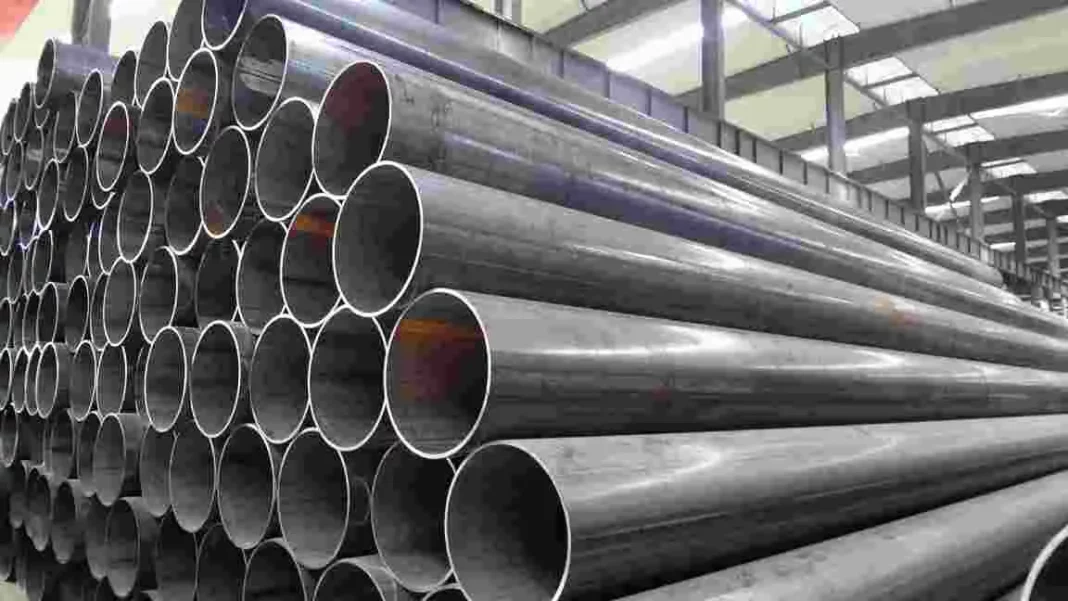
The manufacturing process for welded steel pipes entails the rolling of a steel plate or steel strips into a circular shape and then welding them together at the edges. The resulting product is strong and has various applications in industry.
The welded pipes have a seam running along their entire length, resulting from the welding used in joining both ends. The seamless pipes, on the other hand, do not have any such joint. The improvement in welding has ensured that these pipes can be used for both building and pressure resistance.
Types of Welded Steel Pipes
Welded steel pipes are classified based on their manufacturing method and the orientation of the weld seam.
ERW Pipes
The process of making Electric Resistance Welded pipes begins with heating the steel edges until they reach welding temperature, and then operators press the heated edges together to create a permanent joint. The pipes exhibit a smooth surface and maintain uniform wall thickness, which makes them appropriate for building construction, fence installation, and various engineering applications.
LSAW Pipes
The manufacturing process for Longitudinal Submerged Arc Welded pipes begins with bending steel plates and then welding the plates together at a straight joint. The pipes are typically employed in systems that transport oil, gas, and water through their large-diameter pipelines.
SSAW Pipes
The Spiral Submerged Arc Welded pipes are manufactured by spirally bending steel plates and then welding them. They can be used for building large infrastructure projects.
Rolled Welded Pipes
Rolled-welded pipes are created through the process of rolling steel sheets into cylindrical forms and then welding the resulting seams together. The pipes are designed for use in systems that need to have both large diameter pipes and specific pipe dimensions that do not follow standard sizes.
Manufacturing Process of Welded Steel Pipes
The manufacturing process of steel pipes starts with selecting steel plates or coils of high quality. These steel plates or coils are then cut to size.
The steel plates are rolled into a cylindrical shape using machinery. After rolling the steel plates into a cylindrical shape, the edges are aligned and welded. This is done using various steel pipe welding techniques, such as electric resistance welding and submerged arc welding.
The steel pipe is then given a heat treatment to enhance its mechanical properties. This is done to remove internal stress that may occur within the steel pipe. After this step, various tests are conducted on the steel pipe.
The steel pipe is then given a finish to make it ready for use in various applications.
Applications of Welded Steel Pipes
The multiple industries that depend on welded steel pipes because of their ability to function in diverse applications, while maintaining low operational costs.
The construction industry uses these materials for building structural frameworks, supporting columns, and structural supports. Their manufacturing process enables the creation of large-diameter products, which make them ideal for use in heavy-duty operations.
Welded pipes serve as the primary method for fluid transportation across extended distances in the oil and gas sector. LSAW and SSAW pipes, in particular, are preferred for pipeline systems.
Water distribution and sewage systems depend on welded pipes to achieve their required capacity for transporting fluids. The cost efficiency of the system makes it suitable for implementation in extensive infrastructure projects.
Welded steel pipes serve manufacturing needs because they provide strength and durability in machinery and equipment and processing systems.
Advantages of Welded Steel Pipes
The benefits associated with welded steel pipes are numerous, which explains why they are chosen as the best in serving different needs in different industries. The cost associated with the welded steel pipes is low compared to the seamless steel pipes in large diameters. The design of the system accommodates the budget constraints, which are created by financial constraints. The design comes in different sizes and thicknesses, which allows users to design different systems with different uses. The welded steel pipes can easily be modified to meet different needs. The welding technology used in steel pipes has made them strong and reliable to work efficiently in different conditions.
Limitations to Consider
While welded steel pipes offer many benefits, they also have certain limitations.
Weld seams create a slight decrease in strength for pipes that operate under extremely high-pressure conditions when compared to seamless pipes. The limitations of this system restrict its implementation in essential situations.
The system needs extra inspection procedures with testing requirements to confirm the weld quality in high-demand operational environments.
The carbon steel products follow the same pattern as other carbon steel products because they will develop corrosion problems without proper treatment and coating.
Choosing the Right Welded Steel Pipe
The selection process for welded steel pipes requires measurement of their diameter and wall thickness, their pressure capacity, and their ability to handle specific environmental conditions.
It also requires assessment of both industry standards and specifications that exist for the particular item being selected. The selection of experienced suppliers enables verification that the pipes will satisfy both technical specifications and project requirements.
Conclusion: Reliable Welded Steel Pipe Solutions for Industrial Applications
Welded steel pipes exist as a practical solution that people use throughout both structural and industrial settings. The materials prove cost-effective while being readily accessible and versatile enough to meet different project requirements.
B&W Pipe Company offers high-grade welded steel pipe products, which include rolled welded pipes designed for specific customer requirements. The correct product choice, with appropriate assistance, enables businesses to achieve dependable operation across multiple use cases.
FAQs
Q1: What Is A Welded Steel Pipe?
A1: A welded steel pipe is made by rolling steel into a cylindrical shape and welding the edges together to form a seam.
Q2: What Are The Main Types Of Welded Steel Pipes?
A2: The main types include ERW, LSAW, SSAW, and rolled welded pipes, each suited for different applications and sizes.
Q3: How Is A Welded Steel Pipe Manufactured?
A3: It is manufactured by rolling steel plates or strips into shape and welding the edges, followed by heat treatment and quality testing.
Q4: Where Are Welded Steel Pipes Used?
A4: They are used in construction, oil and gas, water systems, and manufacturing industries.
Q5: Are Welded Steel Pipes Strong?
A5: Yes, modern welding techniques produce strong and reliable pipes suitable for many structural and pressure applications.