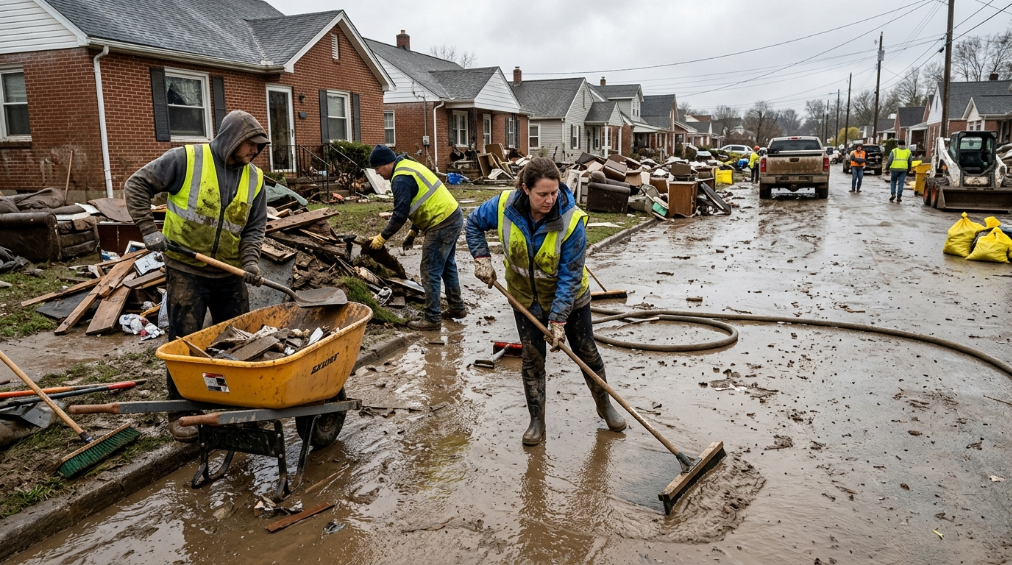

A flooded home can go from manageable to severely damaged in a surprisingly short time. Water can soak flooring, drywall, furniture, insulation, and personal belongings while you are still trying to figure out what happened. The first day matters because some damage becomes harder to repair the longer water remains inside.
You do not need to fix everything immediately. The priority is to keep people safe, stop additional water from entering when possible, document the damage, and begin removing standing water as soon as conditions allow. Making the right decisions during those first 24 hours can make the rest of the recovery much easier.
Make Sure the Home Is Safe Before Going Back Inside
The first concern after flooding is not cleanup. It is safety. Floodwater can hide electrical hazards, damaged flooring, contaminated materials, broken glass, and unstable parts of the building. Do not enter a flooded area if the water may have reached electrical outlets, appliances, electrical panels, or wiring. Leave the property and contact the appropriate utility or emergency professional when there is any doubt about electrical safety.
Also watch for sagging ceilings, damaged walls, strong gas smells, and areas where the structure appears unstable. A house can look fine from outside and still have serious hazards inside.
Stop the Source of the Water If You Can Do It Safely
Some floods come from outside, while others start with a burst pipe, failed appliance, blocked drain, or overflowing fixture. Identifying the source quickly can prevent more water from entering the property. If the problem is an indoor plumbing leak and the main water supply can be turned off safely, shutting it down may limit additional damage. Do not try to reach a valve through standing water when doing so could put you in contact with electricity.
For outside flooding, the situation may be different. If water is still rising because of a storm, drainage problem, or nearby waterway, getting out safely is more important than trying to stop the flooding yourself.
Take Photos Before Moving Damaged Items
Once the property is safe enough to enter, document what you see. Take wide photographs of each affected room, then take closer pictures of damaged flooring, walls, furniture, appliances, cabinets, and personal belongings. Try to capture water lines and the extent of the affected area. Photos taken from several angles can provide a much clearer record than a few close-up shots.
Keep damaged items in place when practical until they have been documented. When something must be moved for safety or to begin drying, take photographs first and make a simple note of where it was located.
Remove Standing Water as Quickly as Conditions Allow
Standing water continues to affect building materials the longer it remains. Flooring can absorb water, drywall can swell, and moisture can move into areas that are not immediately visible. The appropriate removal method depends on the amount and type of water involved. Small amounts of clean water may be manageable with suitable equipment, while larger floods often require stronger extraction equipment and professional handling.
Do not use ordinary household equipment in conditions where electrical contact is possible. Safety comes first, especially when water has reached outlets, cords, appliances, or electrical components.
Know What Kind of Floodwater Entered the Home
Not all floodwater should be treated the same way. Water from a clean plumbing supply is very different from water that has come through a sewer line, outside ground, or a flooded drainage system.
Outside floodwater can carry dirt, bacteria, chemicals, sewage, and other contaminants. That changes how affected flooring, drywall, furniture, and personal belongings should be handled.
When the source of the water is uncertain, treat it cautiously. Avoid unnecessary contact with the water and use appropriate protective measures. Contaminated materials may need to be removed rather than simply dried and cleaned.
Get Wet Materials Out of the Way
Once standing water has been addressed, focus on materials that are holding moisture. Wet rugs, soaked cardboard, waterlogged cushions, and other absorbent items can keep releasing moisture into the room. Some belongings may be worth saving, while others may already be too damaged to restore. Move salvageable items to a dry, safe area when doing so will not spread contamination or create a safety problem.
Do not automatically throw everything away. Some furniture and personal belongings can be cleaned and restored, depending on the type of water, how long they were exposed, and the material involved.
Be Careful With Wet Drywall, Insulation, and Flooring
Drywall often absorbs water quickly, especially near the bottom edge. Once it becomes swollen, soft, or badly contaminated, it may need to be removed. Insulation can also trap moisture and become difficult to dry completely. Carpet padding is another common problem because it can hold a surprising amount of water beneath the visible surface.
Flooring needs special attention as well. Wood may swell, laminate can separate, and moisture can become trapped beneath finished surfaces. Removing only the water you can see does not necessarily mean the materials underneath are dry.
Start Drying the Property, Not Just the Room
Opening doors and windows may help in some conditions, but drying a flooded house usually takes more than natural airflow. Moisture can remain inside walls, under floors, behind cabinets, and inside other enclosed spaces. Fans and dehumidifiers can help when used safely and when the building conditions allow them. The goal is to move moisture out of affected materials rather than simply making the room feel more comfortable.
Professional flood cleanup often includes moisture checks because visible dryness can be misleading. A floor, wall cavity, or cabinet base may still contain significant moisture even when the surface feels dry.
Check Areas That Do Not Look Wet
Flood damage is not always limited to the places where water is visibly standing. Water can travel along floors, under cabinets, beneath flooring, and into wall cavities. Look carefully around baseboards, closets, under sinks, behind appliances, and near floor transitions. Pay attention to swelling, discoloration, soft spots, peeling surfaces, and musty smells.
Checking these areas early can reveal problems before they become more difficult to address. A small amount of hidden moisture can continue affecting a material long after the visible water is gone.
Give Your Belongings a Quick Salvage Check
The first day is a good time to separate belongings into groups: items that are clearly damaged beyond recovery, items that may be salvageable, and items that are currently dry but were near the affected area.
Clothing, hard furniture, some household goods, and certain personal items may be cleanable depending on the water source and condition. Paper goods, electronics, mattresses, upholstered items, and porous materials may require a much closer assessment.
Avoid rushing to make final decisions based only on appearance. Some items may look ruined but respond well to proper cleaning, while others may look acceptable but have absorbed contaminated water.
Do Not Cover Up Damage Before It Is Assessed
It is tempting to paint over a water stain, place a new rug over a damaged floor, or cover a swollen wall. Those quick fixes can hide the signs that help identify how far the water traveled.
Flood damage needs to be addressed at the material level. Covering the visible problem does not remove moisture underneath it. Wait until affected areas have been properly evaluated and dried before making cosmetic repairs. Otherwise, new finishes may trap moisture and leave the underlying issue unresolved.
Watch for Changes During the First Day
Flood damage can change quickly. A wall that looked normal in the morning may begin swelling later. Flooring may buckle as it absorbs more moisture. A musty smell may become stronger as damp materials remain inside the home.
Walk through the affected areas periodically and note anything that changes. New stains, soft spots, odors, bubbling surfaces, or increased moisture are useful clues when deciding what needs further attention.
The first 24 hours are not about making the house look normal again. They are about understanding what happened and preventing the damage from spreading.
Know When Professional Help Is Needed
A professional assessment becomes especially important when flooding affects multiple rooms, contaminated water enters the property, water gets beneath flooring, drywall stays wet, or the source of the moisture is unclear.
Professionals can use moisture-measuring equipment and extraction tools that are not normally available to homeowners. They can also identify areas that appear dry but still contain trapped moisture.
This matters because successful restoration depends on more than removing visible water. The affected materials need to be cleaned, dried, and evaluated based on their actual condition.
Keep Records of Everything You Do
Keep photographs, receipts, notes, and a simple timeline of what happened. Record when the flooding began, when the water source was stopped, which rooms were affected, and what items were moved or discarded.
Write down the equipment or services used during the initial response. Keep copies of any estimates, inspection reports, and related documents in one place.
Good records make the recovery process easier to manage and give you a clear history of what happened to the property. They can also help when discussing the damage with your insurance company or restoration professionals.
What Not to Do After a Flood
Some cleanup mistakes can make the situation worse. Do not enter unsafe areas, operate electrical equipment in standing water, or remove materials without understanding whether the water was contaminated.
Do not assume a dry-looking surface is actually dry underneath. Avoid sealing, painting, or rebuilding damaged areas before moisture has been properly addressed.
Most importantly, do not wait several days simply because the floodwater is gone. Moisture can continue moving through building materials after the visible water disappears.
The First 24 Hours Set Up the Rest of the Recovery
The first day after a flood is about controlling the situation. Make the property safe, stop the source when possible, document the condition, remove standing water, separate salvageable belongings, and begin proper drying.
You do not need to restore the entire house in one day. What matters is preventing additional damage and getting a clear understanding of what has been affected.
A careful early response can protect materials that might otherwise be lost and can make the later repair process far more straightforward. The sooner hidden moisture and damaged materials are identified, the better the chance of restoring the property without unnecessary replacement.
Conclusion
A flooded home needs more than a quick mop-up. Water can move into places you cannot see, damage materials from underneath, and create new problems when it is left behind. The first 24 hours should focus on safety, documentation, water removal, drying, and identifying materials that can still be saved.
Acting quickly does not mean rushing blindly. It means knowing what to address first and when professional help is necessary. Once the immediate water is controlled, a proper inspection can reveal the full extent of the damage and help guide the next phase of remediation, which refers to the process of removing or correcting a harmful condition.