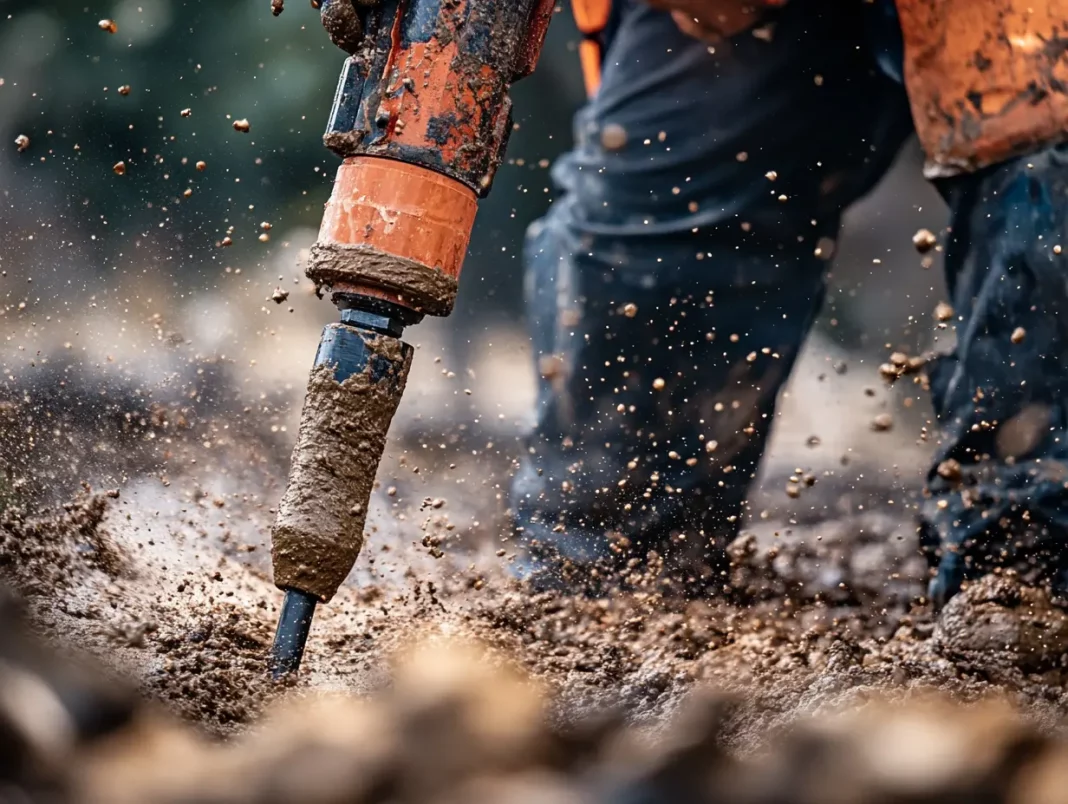

When you watch a drilling rig in action, whether it’s carving its way through shale in West Texas or navigating brittle formations offshore, you’re watching more than steel and torque at work. You’re seeing a carefully balanced chemical and mechanical dance where drilling fluids play lead.
For those outside the industry, drilling fluids sometimes get reduced to a single phrase: mud. In reality, this substance, often called drilling mud, is a highly engineered blend of water, chemicals, and minerals that keeps the entire drilling operation alive. And within that blend, drilling fluid additives are the unsung heroes: tiny components that transform basic fluids into intelligent, performance-driven solutions.
At Mudsmith, we’ve lived and breathed drilling fluids for decades. What most people call “mud” is anything but simple, it’s a precision tool engineered to respond to extreme conditions deep underground.
Let’s pull back the curtain.
What Are Drilling Fluids?
At its core, a drilling fluid is any liquid used in the drilling process for oil and gas wells. It circulates down the drill pipe, up the annulus between drill string and borehole, and back to the surface. But beyond that simple cycle lies a complex purpose:
- Transporting cuttings out of the hole
- Cooling and lubricating the drill bit and string
- Supporting wellbore integrity and preventing collapse
- Balancing formation pressures to avoid blowouts
- Controlling formation damage to protect reservoir permeability
Drilling fluids are the lifeblood of the wellbore — and every function it must perform is mission-critical.
Unlike water or oil, drilling fluids must be tailored to specific geological and operational conditions. That’s where expertise — and additives — matter.
The Evolution of Drilling Mud
In the early days of drilling, mud really was mud: water mixed with soil. Basic and functional for shallow wells, but inadequate as engineers pushed deeper and formations became more demanding.
Today’s drilling mud is a highly engineered fluid system. The base can be:
- Water-based mud (WBM): Economical, environmentally friendly, widely used
- Oil-based mud (OBM): Excellent for shale inhibition and high-temperature environments
- Synthetic-based mud (SBM): Combines the performance of OBM with lower environmental risk
Each base system has unique physical and chemical properties. But the magic, the performance, comes from what’s added to it.
Why Drilling Fluid Additives Matter
Additives are the secret sauce of drilling fluids. They enable a basic fluid to fight the downhole obstacles that would otherwise stall or derail a project.
Every well is a puzzle, and additives are the pieces that let engineers fit the fluid to the formation.
Some drilling fluid additives are designed to influence physical properties like viscosity and density. Others are engineered to interact chemically with the rock and cuttings. Here are the major categories:
1. Weighting Agents
Weighting agents, like barite, increase fluid density. Why does density matter?
Underground pressures vary dramatically. If fluid is too light, formation fluids can rush into the wellbore, causing a blowout. Too heavy, and the pressure fractures the formation, leading to lost circulation.
Barite is the industry standard because it’s dense, chemically inert, and economical. It allows precise control over hydrostatic pressure — without compromising fluid stability.
2. Viscosifiers
Viscosity is how “thick” the fluid is — its resistance to flow. Viscosifiers determine how effectively the fluid carries cuttings from the bit up to the surface.
Additives like clays and polymers are used to build viscosity. But there’s a balance: too viscous and the pumps strain; too thin and cuttings settle, leading to stuck pipe.
A smart drilling fluid system dynamically balances viscosity as conditions change downhole.
3. Fluid Loss Control Agents
When drilling fluids interact with permeable formations, fluid can seep off into the rock, called filtrate loss. Excessive loss leads to wellbore instability and formation damage.
Fluid loss control additives, such as starches, lignites, and synthetic polymers, create a thin filter cake on the borehole wall. That cake is critical: it seals pores without restricting drilling progress.
4. Shale and Clay Stabilizers
Shales are notorious. When exposed to water, they swell, slough, and collapse. That spells trouble.
Shale stabilizers, often amines, potassium salts, or other organic additives, modify the interaction between the fluid and clay minerals. They protect the integrity of the borehole and reduce costly drilling pauses.
5. Lubricants
Drilling torque and drag are real, especially in extended reach wells where friction can sap horsepower. Lubricants, from simple oils to engineered surfactants, reduce friction between the drill string and formation, improving drilling rates and reducing wear.
6. pH Control and Corrosion Inhibitors
The downhole environment can be highly acidic or alkaline and corrosive to metal components. Drilling fluid chemistry must be controlled so that:
- The pH supports other additive functions
- Steel tubulars and tools are protected from corrosion
Corrosion inhibitors and pH buffers do this quietly — but very importantly.
Performance vs. Environment: The Balancing Act
Historically, some drilling fluid systems delivered performance at the cost of environmental impact. Oil-based muds, for instance, offered rock stability and lubrication but posed disposal challenges.
That’s changing fast.
The industry — guided by regulators, operators, and technology providers like Mudsmith — is moving toward:
- Environmentally acceptable base fluids
- Biodegradable additives
- Performance without compromise
This evolution isn’t about “greenwashing.” It’s about responsible engineering that aligns drilling performance with environmental stewardship.
How Engineers Design a Drilling Fluid System
Designing a drilling fluid isn’t random. It’s a science, almost an art. Engineers consider:
- Subsurface geology: shale content, sand, pressure gradients
- Well profile: depth, angle, anti-kick requirements
- Temperature and pressure: downhole conditions
- Regulatory limits: discharge and disposal constraints
- Cost effectiveness: performance vs. budget
Based on these factors, a fluid engineer selects:
- A base fluid
- The right combination of additives
- Real-time modifications based on drilling data
It’s not a “set it and forget it” operation. As the drill bit moves, so does the fluid strategy.
Field Challenges That Depend on Smart Fluids
Let’s be honest: nothing in drilling ever goes exactly as planned. But a well-designed drilling fluid system minimizes risk and maximizes response.
For example:
- Differential sticking: Happens when the drill string becomes embedded in the filter cake. Fluid engineers tweak fluid density and cake properties to reduce this risk.
- Lost circulation: When fluids escape into fractures, additives called lost circulation materials (LCMs) are pumped to bridge and seal the loss zone.
- Cuttings buildup: When mud isn’t carrying cuttings efficiently, trip times increase, and downhole tools are stressed. Viscosifiers and flow rate adjustments help keep cuttings entrained.
With the right additives and monitoring, these issues become manageable — not career-ending.
The Future of Drilling Fluids and Additives
We’re not in a static industry. The world’s energy demands, sustainability goals, and drilling complexity are advancing in tandem.
Where are drilling fluids headed?
Smart Additives
Next-generation polymers and nanoparticles that respond to temperature, pressure, and chemistry in real time.
Reduced Environmental Footprint
Low-toxicity, biodegradable systems that meet stringent discharge standards without sacrificing performance.
Data-Driven Fluid Management
Sensors, real-time analysis, and adaptive systems that let engineers fine-tune fluids as conditions change downhole.
Every innovation, at the end of the day, circles back to one question:
How can we drill safer, faster, and more responsibly?
For companies like Mudsmith, that question shapes every formula, test, and fluid pumped into a well.
Drilling Fluids Are More Than Mud — They Are the Life of the Well
When you strip away the noise of rigs, pipe, and machinery, the real hero of drilling is the fluid flowing silently through the system. From drilling fluids to drilling mud and the vast array of drilling fluid additives, this complex blend carries multiple responsibilities:
- Pressure control
- Wellbore stability
- Cuttings transport
- Chemical protection
- Environmental compliance
It’s a fine balance between chemistry and physics — and getting it right saves time, money, and ultimately protects people and the environment.
At Mudsmith, understanding this balance isn’t just technical know-how — it’s a core philosophy. The fluids we engineer aren’t just liquids. They’re solutions crafted for the complex challenges of modern drilling.
In the end, every successful well is a story of precision — and nowhere is that precision more evident than in the drilling fluid circulating quietly behind the scenes.



