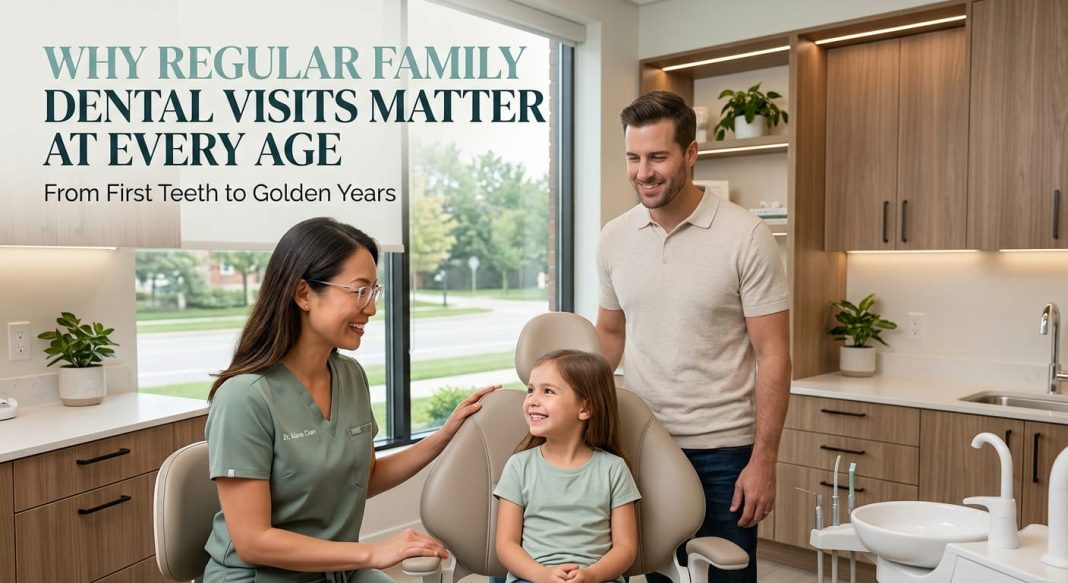

Maintaining healthy teeth and gums requires consistent care throughout life. From children’s first dental visits to preventive checkups for adults and older individuals, routine dental care helps identify potential problems before they become more serious. Making dental appointments a regular part of family healthcare can support healthier smiles, improve oral hygiene habits, and reduce the risk of preventable dental problems.
Why Are Regular Dental Checkups Important?
Dental checkups allow a dentist to examine the teeth, gums, and other oral tissues for signs of decay, gum disease, and other concerns. Some dental problems develop gradually without causing noticeable pain, which means they may go undetected without a professional examination.
During a routine visit, the dentist may recommend a professional cleaning, assess existing restorations, and discuss any symptoms or changes in oral health. The frequency of visits depends on individual risk factors and dental needs rather than a single schedule that suits everyone.
Regular appointments also provide an opportunity to ask questions about brushing techniques, flossing, diet, and other habits that affect oral health.
Dental Care for Children
Early dental visits help children become familiar with the dental environment and establish healthy habits from a young age. A dentist can monitor tooth development, identify early signs of decay, and provide guidance on brushing with fluoride toothpaste.
Parents can support children’s oral health by supervising brushing, limiting frequent sugary snacks and drinks, and encouraging regular dental appointments. Depending on the child’s needs, preventive treatments such as fluoride applications or dental sealants may also be recommended.
Creating positive dental experiences early can help children become more comfortable with routine care as they grow.
Maintaining Oral Health During the Teenage Years
Teenagers experience changes in their teeth, eating habits, and daily routines that can affect oral health. Frequent snacking, sugary beverages, inconsistent brushing, and orthodontic treatment can create additional challenges for keeping teeth clean.
Routine dental visits help monitor developing oral health concerns and provide guidance on maintaining hygiene around braces or clear aligners. Teenagers who participate in contact sports should also ask about properly fitted mouthguards to help reduce the risk of dental injuries.
Encouraging teenagers to take responsibility for their daily oral care can help establish habits that continue into adulthood.
Why Adults Should Continue Regular Dental Visits
Adults may face problems such as cavities, gum inflammation, worn enamel, and damage to older fillings or crowns. Even people who brush and floss consistently can develop dental concerns that require professional assessment.
Regular checkups help identify these issues and determine whether preventive care or treatment is needed. Dentists can also provide advice on teeth grinding, sensitivity, tobacco use, and dietary habits that may affect oral health.
Addressing small problems early can sometimes prevent the need for more extensive restorative treatment later.
Dental Care for Older Adults
As people age, maintaining oral health may become more challenging because of dry mouth, gum recession, medication-related changes, or difficulty cleaning the teeth. Existing crowns, bridges, dentures, and other restorations may also require monitoring.
Older adults can benefit from personalized advice on cleaning natural teeth and dental appliances, managing dry mouth, and identifying changes that need professional attention. Maintaining oral health remains important even when some or all natural teeth have been lost.
Regular dental evaluations can help support comfort, chewing function, and overall quality of life.
Building Healthy Dental Habits as a Family
Families can make oral hygiene easier by establishing consistent routines. Brush twice daily with fluoride toothpaste, clean between the teeth every day, and limit frequent consumption of sugary foods and drinks. Drinking water regularly can also help maintain a comfortable oral environment.
Parents and caregivers can encourage younger family members by brushing together, choosing age-appropriate dental products, and scheduling appointments before problems arise. Keeping up with preventive care helps everyone understand that dental health is an ongoing responsibility rather than something to address only when pain develops.
When Should You Schedule a Dental Appointment?
Routine appointments are important even when no symptoms are present. However, persistent tooth pain, bleeding gums, swelling, a broken tooth, or sudden changes in oral health should prompt an earlier evaluation.
Every family member has different dental needs, so a personalized schedule is often the most practical approach. Explore available family dentistry services to learn more about preventive care and maintaining healthy smiles at every stage of life.
Regular dental visits, combined with good daily habits, can help families reduce preventable oral health problems and protect their smiles for years to come.



