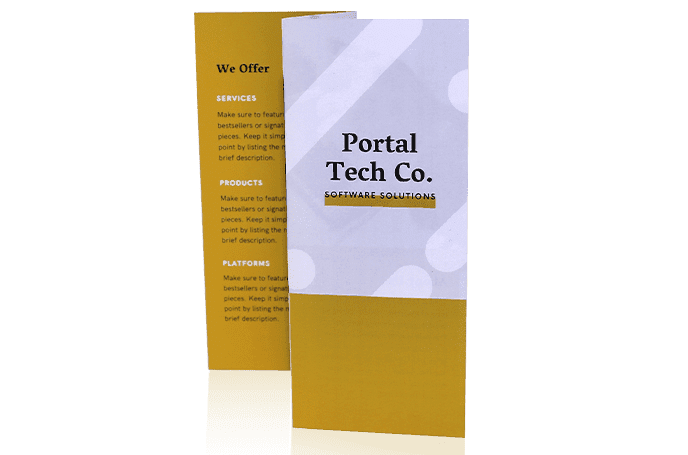

Brochures might seem old-school nowadays, but they work harder than ever when done right. Whether at a trade show, mailing information to potential clients, or including one in a product box, well-designed business brochures give your audience something real to hold, read, and remember.
They tell your story, highlight what makes your business different, and encourage people to take the next step. But there’s a fine line between a brochure that informs—and one that ends up in the recycling bin.
To help you stay on the right side of that line, we’ve made six common mistakes to avoid when creating your next business brochure. These lessons also apply to print items like candle labels and packaging inserts.
1. Trying to Say Everything at Once
Your brochure isn’t your website. It doesn’t need to include your full company history, every single service, and five customer testimonials.
The mistake: Overloading your brochure with information makes it crowded and overwhelming. Readers don’t know where to look or what to focus on.
What to do instead:
Pick a clear purpose. Are you introducing your brand, promoting a new product line, or outlining services? Stick to one goal. Then, organize the content into bite-sized sections with clear headers.
Think of your brochure like a conversation starter—not a full pitch deck.
2. Ignoring Your Target Audience
Designing a brochure without considering who it’s for is like writing a letter without an address. You may have great content, but it won’t get results if it doesn’t connect with the reader.
The mistake: Use generic language, bland visuals, or copy that doesn’t speak to your audience’s needs or preferences.
What to do instead:
Start with your audience in mind. Are they first-time customers? Wholesale buyers? Event attendees? Tailor your message, tone, and visuals to what matters most to them.
For example, if you’re creating brochures for your handmade candle business, you’ll want a softer, sensory-driven tone—similar to what you’d use on your candle labels. It all has to feel cohesive.
3. Skipping the Call to Action (CTA)
A brochure without a next step is a missed opportunity. You’ve captured attention—but now what?
The mistake: forgetting to tell the reader what to do next. This leaves them guessing or, worse, losing interest.
What to do instead:
Include a clear and compelling CTA. Use language like:
- “Visit our website to shop the full collection.”
- “Book a free consultation today.”
- “Scan the QR code for your exclusive discount.”
Make sure it’s easy to find and visually distinct—whether on the front panel, back page, or centered in the layout. If you’re including a brochure in product shipments, match the CTA to the setting. A QR code leading to product care tips or a review page is a perfect fit.
4. Using Low-Quality Images or Graphics
Visuals do most of the heavy lifting in a brochure. The best-written copy can’t compete with poor photo resolution or off-brand design.
The mistake: Using stretched, pixelated, or generic stock images that cheapen your brand.
What to do instead:
Invest in high-quality product photography and professional design. If you use brand elements on your candle labels, carry that style into your brochures—fonts, colors, textures, etc.
Stick to 300 DPI images for printing, and make sure your layout leaves enough room for each image to breathe. Don’t crowd the visuals; let them shine.
5. Choosing the Wrong Brochure Format
Not all brochures are created equal. A trifold may work for some industries, but others benefit from a more visual layout or more space to tell a story.
The mistake: Automatically defaulting to the standard trifold without considering your content or audience.
What to do instead:
Choose a format that fits your message. Some popular options include:
- Half-fold: Great for storytelling or step-by-step breakdowns
- Z-fold: Ideal for event schedules or process overview
- Gatefold: Adds a premium, surprise-and-delight effect
Match the format to your brand personality. A luxurious candle company, for instance, might use a gatefold brochure with elegant product imagery and rich textures—mirroring the look and feel of their candle labels.
6. Forgetting Print Quality and Sustainability
A great design can still fall flat if the paper feels flimsy, the ink bleeds, or the folds aren’t crisp. The physical feel of your brochure matters—just as much as the content inside.
The mistake: Cutting corners on printing or choosing materials that don’t align with your brand’s sustainability goals.
What to do instead:
Choose a trusted print partner like EnvironPrint that offers high-quality, eco-conscious options. Use recycled or FSC-certified paper, soy-based inks, and finishes that match your brand.
If your company promotes clean ingredients or plastic-free packaging—as many candle brands do—your print materials need to walk the same talk.
Bonus Tip: Make It Packable
Brochures aren’t just for trade shows. Many businesses include them in e-commerce shipments, pop-up displays, or product bundles.
So, make sure your brochure fits your packaging. If you use custom boxes or envelopes, test different sizes to see what feels right. Depending on your product, a flat 4×6 insert might be better than a folded piece.
And if you already use candle labels, stickers, or thank-you cards in your packaging, your brochure can tie everything together with a unifying message or seasonal promo.
Conclusion
A well-designed brochure does more than inform—it inspires. It helps customers understand what you do, why you do it, and how they can be part of your story. But to do that well, you must avoid the common missteps: cluttered content, poor visuals, weak CTAs, and off-brand design. It should feel as intentional as your product packaging and as polished as your candle labels.
Need help creating beautifully printed, sustainable brochures that reflect your brand inside and out? Explore EnvironPrint’s brochure options and bring your story to life—on paper and in hand.