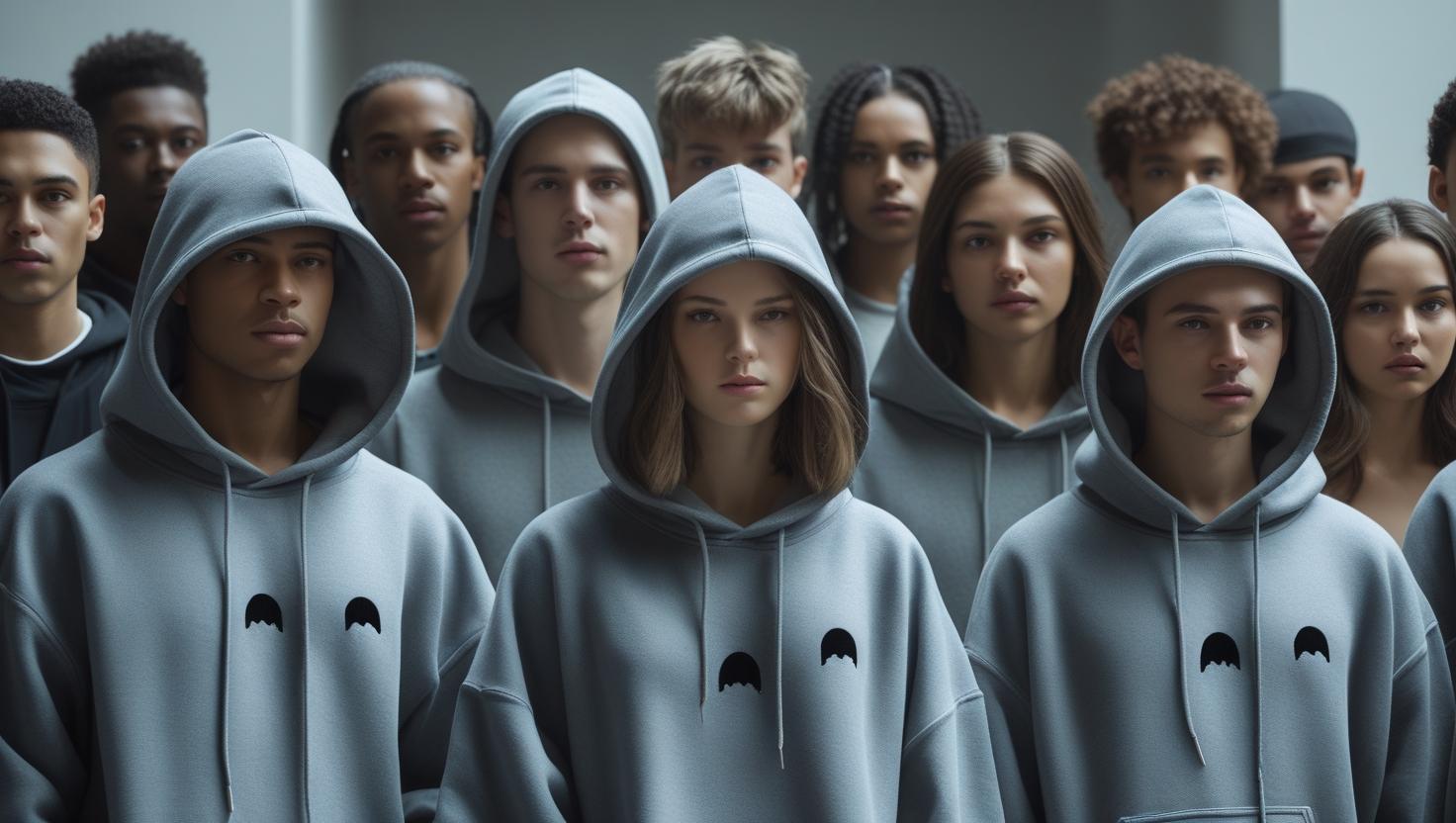

In an increasingly digital and often overwhelming world, the way we dress has evolved far beyond mere aesthetics. Fashion has become a potent language, a non-verbal medium through which we communicate our identities, beliefs, and even our innermost feelings. This shift has given rise to phenomena like “emotional streetwear” and “slogan-based fashion,” where clothing serves as a canvas for personal narratives. At the heart of this movement, resonating profoundly with a generation yearning for authenticity and connection, stands the Lonely Ghost Hoodie. This article explores how this seemingly simple garment transcends its fabric, becoming a powerful tool for self-expression, fostering understanding, and building a sense of community among a generation eager to wear their feelings on their sleeve.
Chapter 1: The Rise of Emotional Streetwear & Slogan-Based Fashion
For decades, fashion was largely dominated by overt branding, status symbols, or abstract artistic expressions. However, the last decade has witnessed a significant pivot. Consumers, especially younger generations, are seeking more than just logos; they want clothing that reflects their values, speaks to their experiences, and allows for genuine self-expression.
- Beyond Logos: This evolution signals a departure from purely aesthetic or brand-driven consumption. While brand recognition remains important, the emphasis has shifted towards the message, the sentiment, or the subtle nod that a garment conveys. Slogan-based fashion, in particular, thrives on this. It’s direct, impactful, and often deeply personal.
- The Authenticity Drive: This trend is intrinsically linked to a broader societal push for authenticity and transparency. In an age saturated with curated online personas, there’s a growing desire for realness, for genuine human connection, and for acknowledging shared vulnerabilities. Fashion, in this context, becomes a tangible manifestation of this desire.
- Democratization of Expression: Clothing offers an accessible way for individuals to participate in public dialogue. A slogan on a hoodie can be a protest, a confession, a silent plea, or a shared understanding, allowing wearers to communicate without uttering a single word. It transforms the wearer into a walking billboard for their inner world.
Chapter 2: The Lonely Ghost Philosophy – Understated Vulnerability
Lonely Ghost masterfully encapsulates the essence of emotional streetwear. Unlike brands that rely on bold graphics or aggressive statements, Lonely Ghost’s strength lies in its profound simplicity and understated vulnerability.
- Brand Ethos: The brand’s core message is often conveyed through short, impactful phrases like “I Love You, Say It Back,” “Text Me When You Get Home,” or the very name “Lonely Ghost” itself. These phrases carry a surprising emotional weight, touching upon universal feelings of longing, connection, modern anxieties, and the quiet beauty of introspection. They resonate because they articulate feelings many experience but may not always voice.
- Minimalist Aesthetics: The brand’s design philosophy complements its messaging perfectly. Typically featuring muted, earthy tones (like charcoal grey, dusty pink, or classic black and white) and simple, clean fonts, the aesthetic ensures that the message takes center stage. There are no distracting elements; the focus remains squarely on the emotional resonance of the text. This minimalism allows the wearer to integrate the piece effortlessly into their existing wardrobe, letting the statement speak for itself.
- Relatability: The power of Lonely Ghost stems from its relatability. The phrases are not abstract or overtly political; they speak to everyday human experiences and emotions, often evoking a sense of shared vulnerability. This makes the garments feel intimate and personal, fostering a bond between the brand, its message, and the individual.
Chapter 3: Gen Z and the Openness Revolution
The particular appeal of the Lonely Ghost Hoodie to younger generations, especially Gen Z, is no accident. This demographic is characterized by a unique relationship with self-expression, mental health, and social connection.
- Mental Health Awareness: Gen Z is notably more open and proactive in discussing mental health, anxiety, and vulnerability than previous generations. They challenge stigmas, seek support, and use their platforms to destigmatize conversations around emotional well-being. Clothing that subtly nods to these inner experiences aligns perfectly with this openness.
- Social Media Influence: While social media can often present idealized versions of reality, it has also become a powerful tool for shared experiences and authentic self-expression. Platforms allow for the rapid dissemination of trends like “emotional streetwear,” and enable individuals to find communities centered around shared interests and feelings. A specific Ghost Hoodie shared online can go viral, fostering an instant sense of recognition and belonging.
- Fashion as an Outlet: For Gen Z, fashion is a primary form of self-expression. Wearing a Lonely Ghost piece becomes a non-verbal way to signal one’s inner world, to initiate conversations, or to find solidarity with others who “get it.” It’s a quiet declaration of identity that can be both personal and universally understood.
Chapter 4: The Lonely Ghost Hoodie as a Community Beacon
Beyond individual expression, the Lonely Ghost Hoodie serves as a powerful beacon for community building, fostering a sense of shared experience among its wearers.
- Shared Identity: When someone spots another person wearing a Lonely Ghost item, especially one with a recognizable slogan, there’s an almost immediate, unspoken connection. It’s a subtle nod of recognition, a shared understanding of the brand’s ethos and the emotions it represents. This creates a sense of belonging to a larger, like-minded community.
- Subtle Nod vs. Overt Statement: The power of a simple, often understated phrase on a hoodie is that it can convey a complex emotional state without being overly dramatic or confrontational. It’s an invitation for connection, rather than a demand. This subtlety is key to its appeal for a generation that values authenticity but also maintains a degree of digital-age cool.
- Breaking the Ice: In a world where genuine connection can sometimes feel elusive, wearing a piece of “emotional streetwear” can serve as an unexpected conversation starter. A shared appreciation for a slogan can break the ice between strangers, leading to discussions about personal feelings, shared experiences, or even mental health. This transforms a piece of clothing into a catalyst for real-world interaction.
- Online-to-Offline Connection: The brand’s strong online presence, fueled by viral phrases and engaged social media communities, seamlessly translates into real-world recognition. Fans connect online, reinforcing the brand’s message, and then recognize each other offline, further solidifying the sense of community.
Conclusion
The Lonely Ghost Hoodie is more than just a piece of clothing; it’s a profound cultural artifact of its time. It masterfully encapsulates the shift towards “emotional streetwear,” allowing a generation to wear their feelings, share their vulnerabilities, and connect with others through style. In an increasingly complex and digitally-driven world, this iconic garment stands as a quiet yet powerful reminder that authentic self-expression can foster genuine community and understanding. It’s a testament to how clothing can transcend its utilitarian purpose, becoming a beacon of shared human experience and emotional solidarity.