

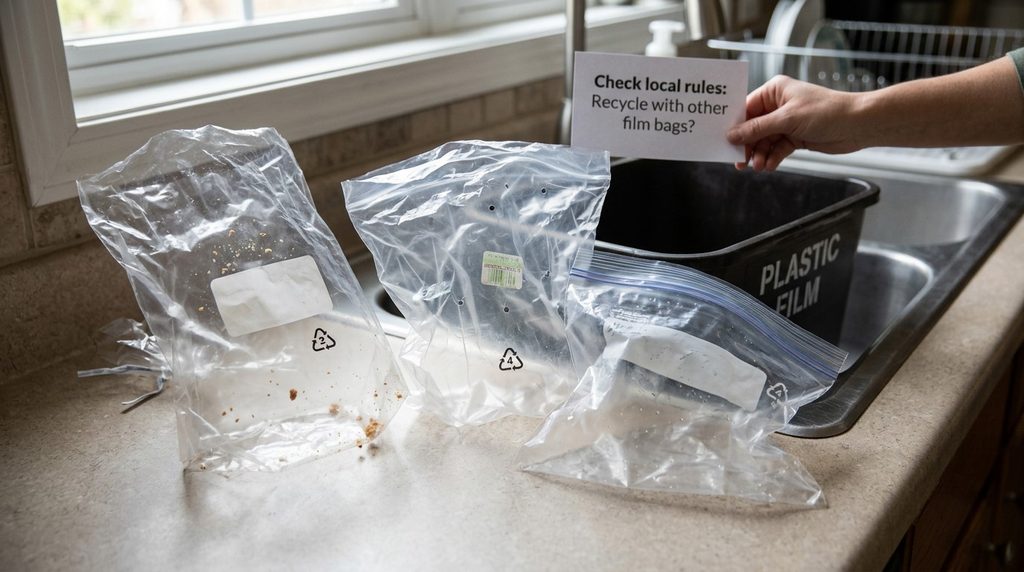
Some of the most common plastic in your kitchen never comes from the checkout line. It arrives wrapped around a loaf of bread, holding apples from the produce aisle, or sealing last night’s leftovers. People often wonder whether these bags count. The short answer is yes, in most cases. The longer answer depends on how clean they are and what else is attached. This plastic bag recycling guide covers each type, what to remove first, and which look-alikes to keep out of the bin.
Why these bags usually qualify
Most bread bags, produce bags, and zip-top bags are made from polyethylene, the same soft, stretchy plastic used in grocery sacks. Polyethylene film carries resin code #2 or #4, and it melts cleanly into pellets that manufacturers can use again. That shared material is the reason plastic bag recycling programs accept far more than the bags you carry groceries home in.
There is one condition. These bags must go to a store drop-off bin or another dedicated film collection site, never into a curbside cart. Curbside sorting equipment is built for bottles, cans, and paper. Thin bags tangle in the machinery and force the lines to stop, so plastic bag recycling relies on separate collection to work.
Bread bags
Bread bags are some of the easiest items to recycle. They are almost always plain polyethylene, and they come out of the pantry fairly clean. To prepare them for plastic bag recycling:
- Shake out every crumb over the sink or trash.
- Remove the twist tie or the small plastic clip. Both are different materials, and the clip is a rigid plastic that does not belong with film.
- Make sure the bag is completely dry before you add it to your collection.
Watch for exceptions. Some bakery bags combine paper with a clear plastic window, and some specialty bread comes in a stiff, crinkly wrapper. Neither fits plastic bag recycling. If the bag stretches when you pull it, it is almost certainly accepted. If it crinkles and tears in a straight line, put it in the trash.
Produce bags
The thin bags on rolls in the produce section are a strong fit for plastic bag recycling. They are lightweight polyethylene and rarely hold anything messy. Still, a little care goes a long way.
Peel off any price stickers or paper labels before the bags go into plastic bag recycling. Let damp bags dry fully, since produce often goes into the bag wet from misters. Wipe away any soil left from root vegetables. A bag that held mushrooms or leafy greens can trap moisture, so turn it inside out if needed.
Not every bag in the produce department is the same, though. Many bags of pre-washed salad, shredded lettuce, and frozen vegetables use crinkly plastic or layered film that recyclers cannot process. Those bags usually belong in the trash, even though they sit near the produce bags in the store. When in doubt, try the stretch test or check the package for printed recycling instructions. Separating these two kinds of bags is one of the simplest ways to protect plastic bag recycling quality.
Zip-top bags
Resealable zip-top bags raise the most questions. The good news is that the bag itself is typically polyethylene, and many store drop-off programs accept it. That makes zip-top bags part of plastic bag recycling as long as you prepare them properly.
For plastic bag recycling, start by emptying the bag completely. Wash out any food residue with soap and water, then let the bag dry inside and out. A zip-top bag that held raw meat, oily foods, or sauces needs a thorough rinse, and if it stays greasy after washing, it should go in the trash. Food residue is one of the main causes of rejected film.
Pay attention to the closure. The flexible zipper track molded into the bag is usually fine. A hard plastic slider, the small piece you pull across the top, is a different material. Cut it off or remove it before the bag goes into your collection. Small rigid pieces can damage recycling equipment and lower the quality of plastic bag recycling streams.
Consider reuse before plastic bag recycling, too. A clean zip-top bag can store snacks, hold small parts, or carry toiletries several times before it reaches the bin. Reusing a bag a few times and then recycling it gives you the most value from the plastic.
Other kitchen film you can add
While you are sorting, look for other polyethylene film that plastic bag recycling programs often take. The plastic overwrap on packs of paper towels and toilet paper usually qualifies. So do bags from ice, newspaper sleeves, and the stretchy wrap around cases of bottled water. Cereal box liners are less consistent. Some are polyethylene and pass the stretch test, while others are stiffer blends that tear. Test each one before adding it.
Gathering all of this film in the same collection bag makes each trip to the store more worthwhile. One full bag of mixed, clean film does more for plastic bag recycling than several half-empty bags dropped off separately.
A quick checklist before drop-off
Run through this checklist each time you gather bags for plastic bag recycling:
- The bag is clean, with no crumbs, food, or grease.
- The bag is completely dry.
- Twist ties, plastic clips, and hard sliders are removed.
- Paper labels, price stickers, and receipts are gone.
- The bag passes the stretch test.
- The bag is not a multi-layer pouch with a shiny or foil lining.
If a bag fails any of these checks and cannot be fixed, throw it away. A smaller pile of clean film helps plastic bag recycling more than a large pile of mixed material.
Look-alikes that do not belong
Some packages look like bread or produce bags but contain materials that cannot go through plastic bag recycling. Keep these out of drop-off bins:
- Frozen food bags, including frozen fruit and vegetables
- Pre-washed salad and leafy green bags that crinkle
- Bags with a metallic or foil interior, such as those for chips or coffee
- Compostable or plant-based bags, which melt differently from polyethylene
- Bags with paper layers or paper windows
These items are designed for shelf life or strength, and their mix of materials blocks plastic bag recycling. Putting them in the bin can lower the value of a whole bale of otherwise clean film.
Why clean film matters so much
In plastic bag recycling, recyclers never use your bags as they are. They shred the film, wash it, dry it, and melt it into small pellets. Food and moisture spoil that process. Grease leaves stains and odors in the pellets. Water causes bubbles and weak spots when the plastic melts. Paper burns or clumps. When a recycler finds too much contamination, it may reject the whole bale, and good film goes to a landfill along with the bad.
Clean film, on the other hand, becomes useful products. Recycled polyethylene goes into composite lumber for decks and benches, stormwater management systems, construction materials, and new plastic film. Recycling flexible plastic film also saves an estimated 8 to 23 percent of greenhouse gas emissions compared with making new film, according to published research. Each clean bag you return supports that outcome, which is why plastic bag recycling rules focus so heavily on preparation.
Building an easy routine at home
The best plastic bag recycling habits are the ones you barely notice. Keep a single collection bag in a handy spot, such as under the sink or on a pantry hook. Each time you finish a loaf of bread or unpack produce, shake the bag out, check that it is dry, and add it to the collection. Wash zip-top bags at the same time you do the dishes and let them dry on a rack.
When the collection bag fills up, tie it shut and keep it in your car so plastic bag recycling fits into trips you already make. Drop it off the next time you run errands near a participating store. For most households, one trip every few weeks is enough to handle everything the kitchen produces.
Recycle your kitchen bags with Plastic Film Recycling
Bread bags, produce bags, and zip-top bags can almost always be recycled when they are clean, dry, and free of clips, labels, and hard sliders. The look-alikes, such as frozen food bags and foil-lined pouches, belong in the trash. Plastic Film Recycling helps you get the details right. Our recycling guide shows which bags and wraps are accepted, and our map tool helps you find store drop-off locations near you. Visit Plastic Film Recycling to check your items, locate a bin, and make plastic bag recycling a simple part of your kitchen routine.


