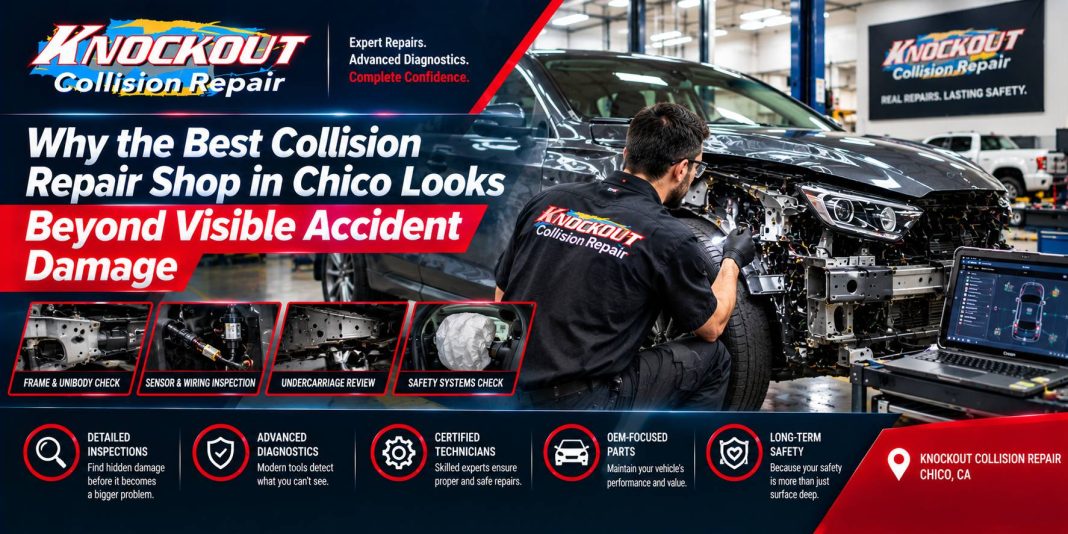

A damaged bumper or scraped door may look like the main problem after a crash, but the damage a driver can see does not always show what happened underneath. A strong hit can affect mounting points, body alignment, paint layers, or parts behind the panel even when the exterior damage seems limited.
That is why collision repair in Chico, CA should begin with a careful inspection instead of jumping straight to cosmetic work. The repair plan has to follow the damage, not only the part that looks worst in the parking lot. This covers hidden collision damage, frame checks, paint matching, body repair, and the steps that bring the vehicle back together correctly.
Visible Damage Does Not Always Tell the Full Story
A dented fender gives the repair shop an obvious place to start. What it does not show is whether the force reached brackets, suspension mounting areas, or nearby structural sections.
Small gaps around a hood, trunk, or door can also point to alignment issues. A panel may still open and close, but uneven spacing can show that something shifted during the crash.
An experienced auto body shop in Chico drivers use should inspect the surrounding area before deciding that a panel repair alone will solve the problem. That extra check can prevent a vehicle from leaving the shop with hidden damage still present.
Structural Checks Come Before Cosmetic Repair
Paint and bodywork get most of the attention because customers can see the result. Structural measurements need to come earlier.
A collision can affect the frame or unibody even when the vehicle does not look badly damaged. Proper accident repair may therefore involve measuring the structure and checking whether factory alignment points remain where they should be.
Knockout Collision Repair provides frame and unibody repair as part of its collision services in Chico. That type of work gives technicians a way to address damage beneath the exterior before refinishing begins.
Repair order matters here. Straightening or structural correction after paintwork would create more work, so the shop needs to identify those issues first.
Paint Matching Has to Follow the Repair Area
Replacing or repairing a damaged panel solves only part of the job. The finish still has to work with the rest of the vehicle.
Factory paint can change in appearance over time because of age, sunlight, previous repairs, and normal wear. Matching only the original color code may not be enough.
Computerized paint matching gives technicians another reference when blending the repaired area with nearby panels. A well-planned collision repair in Chico, CA process should consider the existing finish rather than treating paint as a simple final coat.
Knockout Collision Repair also handles auto body painting and computerized color matching, which keeps the repair and refinishing stages connected instead of sending the vehicle through unrelated processes.
OEM Parts Can Affect Fit After a Collision
Part choice also influences the finished repair. A replacement bumper, lamp assembly, hood, or body panel still has to fit the surrounding parts correctly.
OEM parts follow the vehicle manufacturer’s original specifications. Depending on the repair and insurance approval, they may support more predictable fit and attachment points.
That does not mean every job automatically uses the same part type. The repair estimate, insurer, vehicle age, part availability, and owner’s choices can all affect the final decision.
The best collision repair shop in Chico should explain what parts are being considered and why, rather than leaving that detail until installation begins.
Towing and Insurance Support Can Reduce Gaps in the Repair Process
A badly damaged vehicle may not be safe to drive to a shop. Towing then becomes part of the repair process rather than a separate inconvenience.
Insurance paperwork can also slow the job if the damage estimate changes after panels come off. Hidden damage sometimes becomes visible only after disassembly, which may require additional documentation or insurer approval.
An auto body shop in Chico vehicle owners choose after an accident should be prepared for those changes. Keeping towing, damage assessment, and insurance communication connected can reduce delays between the crash and the actual repair work.
Good Accident Repair Follows the Damage From the Inside Out
The most reliable repair sequence usually starts beneath the surface. Technicians inspect the vehicle, identify structural or hidden damage, repair what affects fit and alignment, then move into bodywork and refinishing.
That approach is especially important when accident repair involves more than a scraped bumper or shallow dent. Exterior damage may be the first clue, not the whole repair list.
A shop that looks only at what is immediately visible may miss the reason a panel no longer lines up correctly or why a replacement part does not sit as expected.
Choosing Collision Repair in Chico, CA With the Full Repair in Mind
Good collision repair in Chico, CA should restore more than appearance. Structural alignment, panel fit, paint matching, part selection, and hidden damage all deserve attention before the vehicle goes back on the road.
Drivers comparing shops should look past the first estimate and ask how the repair team checks what cannot be seen from outside. The best collision repair shop in Chico is the one that follows the damage through each stage instead of treating every collision as a cosmetic repair.