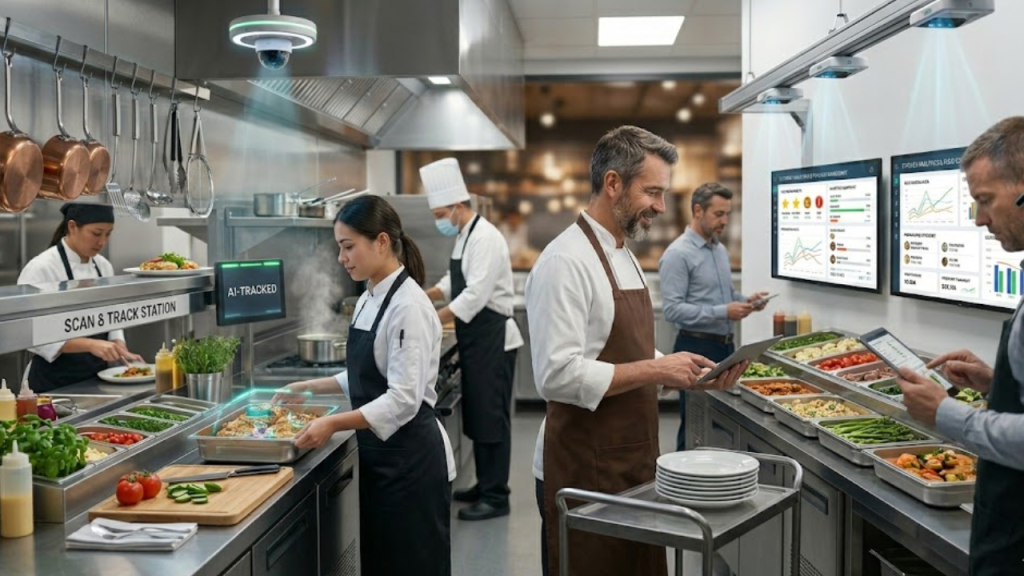
Food costs are one of the biggest challenges in large-scale foodservice operations. From universities and hotels to corporate dining and fast-casual restaurants, commercial kitchens lose money every day through overproduction, inaccurate forecasting, and manual tracking errors.
Many kitchens still rely on spreadsheets, paper logs, and visual estimates to decide how much food to prepare. While these methods may seem manageable during busy service hours, they often lead to unnecessary waste and rising operational costs.
This is where commercial kitchen analytics software is changing the industry.
By replacing guesswork with real-time data, modern kitchen analytics tools help operators understand exactly what is being produced, served, consumed, donated, or wasted. The result is better planning, lower food costs, and more efficient kitchen operations.
Why Traditional Kitchen Tracking Falls Short
Manual tracking systems were never designed for today’s high-volume kitchens.
A dining hall serving thousands of meals each week cannot accurately monitor production through clipboards and visual checks alone. Data gets missed, numbers are estimated, and reporting becomes inconsistent between shifts.
Over time, these small inaccuracies create major financial problems:
- Excess food is prepared “just in case.”
- Inventory ordering becomes unreliable
- Waste increases across multiple stations
- Labor time is spent on manual logs instead of operations
Most importantly, kitchen teams often do not have accurate data to improve future planning.
Without visibility into what was actually consumed, managers are forced to rely on assumptions.
How Commercial Kitchen Analytics Software Works
This software automates food tracking throughout the entire service cycle.
Solutions like Metafoodx
Use AI-powered scanners to capture production and waste data in seconds without disrupting kitchen workflows.
Tracking Food Before Service
Before service begins, kitchen staff place prepared pans or dishes on a scanner for a few seconds. The system automatically identifies the menu item and records important details such as:
- Food type
- Net weight
- Temperature
- Production quantity
There is no need for manual data entry or additional paperwork.
Tracking Leftovers After Service
After service, returning trays are scanned again. The software tracks what food was:
- Consumed
- Reused
- Donated
- Composted
- Thrown away
This creates a complete picture of kitchen performance from preparation to plate.
Because the process is automated, staff can continue working normally without spending extra time on reporting tasks.
Reducing Overproduction With Accurate Data
One of the biggest ways this software cuts food costs is by reducing overproduction.
Many kitchens intentionally prepare more food than necessary because running out feels risky. However, consistent over-prepping leads to large amounts of waste over time.
With accurate production and consumption data, managers can make smarter decisions about future meal planning.
Instead of asking:
“How much do we usually make?”
Teams can now ask:
“How much did guests actually consume during similar services?”
That level of precision improves forecasting and reduces unnecessary food preparation.
The improvements come from data visibility, not from reducing menu quality or portion sizes.
Better Forecasting Improves Inventory Management
Accurate food tracking also improves inventory planning.
The software helps operators understand real consumption trends across different meals, stations, and service periods. This makes it easier to:
- Order the right quantities
- Reduce excess inventory
- Prevent ingredient shortages
- Improve purchasing decisions
Over time, the software identifies patterns that manual tracking often misses.
For example:
- Certain menu items may consistently generate leftovers
- Specific days may have higher demand spikes
- Seasonal trends may affect production needs
These insights help kitchens forecast more reliably and control costs more effectively.
Lower Waste Supports Sustainability Goals
Reducing food waste is not only a financial priority but also an environmental one.
Many universities, hotels, and corporate dining programs now have sustainability targets related to food waste reduction. This software provides the measurable data needed to track progress accurately.
By understanding exactly where waste occurs, kitchens can take practical steps to improve efficiency without compromising guest satisfaction.
For large operations, even small reductions in overproduction can create substantial long-term savings.
Why Adoption Matters in Busy Kitchens
The best kitchen technology is useless if staff avoid using it.
One reason platforms like Metafoodx are gaining traction is that they fit naturally into existing kitchen workflows. The system is designed for busy environments where speed and simplicity matter.
Features such as:
- Two-second scans
- Automatic item recognition
- No manual logging
- Minimal staff training
make adoption much easier for operational teams.
Instead of adding complexity, the software removes administrative burden from kitchen staff.
Conclusion
Commercial kitchens can no longer rely on estimates and paper logs to control costs effectively.
Commercial kitchen analytics software gives operators real-time visibility into production, waste, and consumption patterns that were previously impossible to track accurately.
By automating food tracking and improving forecasting, platforms like Metafoodx help kitchens:
- Reduce waste
- Lower food costs
- Improve operational efficiency
- Support sustainability initiatives
- Make data-driven decisions with confidence
As foodservice operations continue to grow in scale and complexity, accurate kitchen analytics is quickly becoming essential rather than optional.