
Workplace safety has moved beyond periodic inspections and manual compliance checks. Organizations today need continuous visibility into potential hazards, unsafe behaviors, and PPE compliance. This is where artificial intelligence is transforming the way safety teams monitor and manage workplace risks. AI PPE Detection Software uses computer vision and intelligent monitoring to identify whether workers are wearing required protective equipment and alert safety teams when violations occur.
A zero-accident workplace is an ambitious goal, but technology can help organizations move closer to it by identifying risks earlier and encouraging safer behavior. When combined with an AI Hazard Detection System, Copilot AI Solution, Safety Drills Software, and EHS Management Software, AI can create a more proactive and connected approach to occupational health and safety.
What Is AI PPE Detection Software?
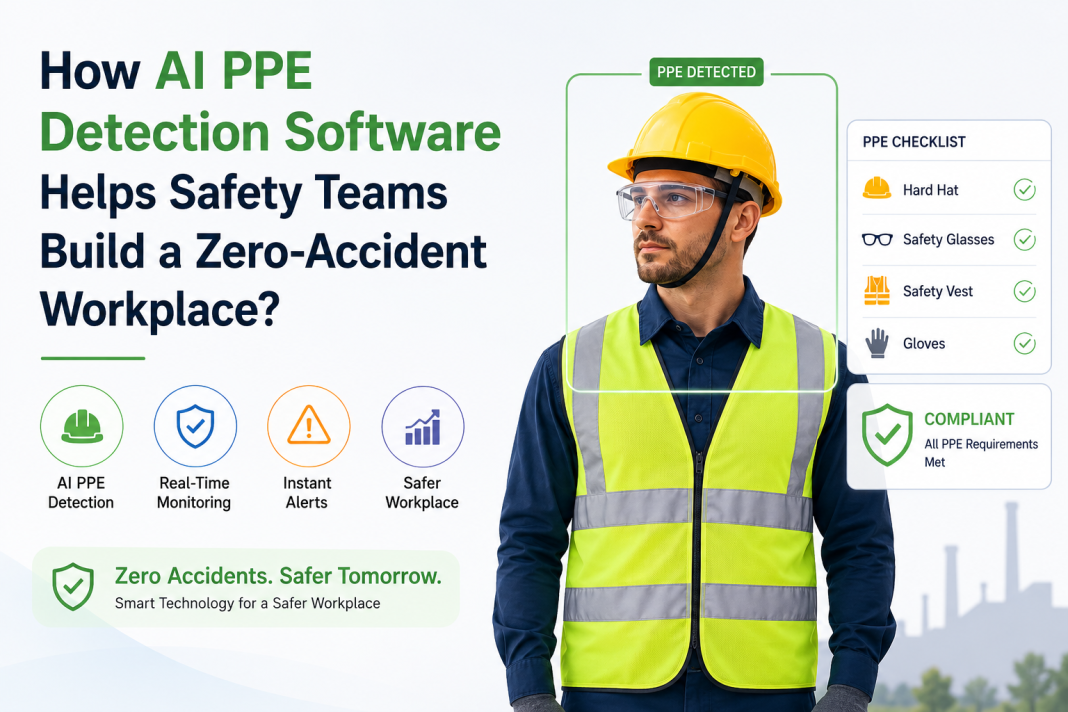
AI PPE Detection Software is an intelligent safety solution that uses computer vision and AI algorithms to recognize personal protective equipment such as helmets, safety vests, gloves, goggles, masks, and protective footwear.
Instead of relying exclusively on supervisors to identify every PPE violation, AI-powered systems can analyze camera feeds and detect missing or incorrectly worn equipment. Depending on the implementation, the system can generate alerts that help safety personnel respond quickly.
This makes PPE monitoring more consistent, particularly in busy industrial environments where manual observation can be difficult.
Why PPE Compliance Matters for Workplace Safety?
Personal protective equipment provides an important layer of protection against workplace hazards. However, simply providing PPE does not guarantee that employees will use it correctly.
Workers may forget their equipment, wear it incorrectly, or remove it temporarily because of discomfort or inconvenience. In high-risk environments, even a brief lapse can expose employees to preventable dangers.
Traditional PPE inspections also have limitations. Supervisors cannot continuously observe every employee, every work zone, and every shift. AI-powered monitoring addresses this visibility gap by providing an additional layer of automated observation.
The objective is not to replace safety professionals. Instead, it helps them focus their time and expertise on higher-value prevention and intervention activities.
1. Detects PPE Violations in Real Time:
One of the biggest advantages of AI PPE detection is the ability to identify PPE-related issues quickly.
For example, an AI system may detect that a worker has entered a designated area without a helmet or high-visibility vest. The system can flag the event for review or trigger an immediate notification based on organizational safety rules.
Real-time detection gives safety teams an opportunity to address unsafe conditions before they contribute to an incident.
This changes the safety approach from reactive investigation to proactive prevention.
2. Strengthens Safety Compliance:
Maintaining PPE compliance across large facilities can be challenging. Different work areas may require different types of protective equipment, making manual enforcement more complicated.
AI-powered detection can support standardized monitoring across multiple locations and shifts. Safety teams can use collected data to identify recurring compliance issues and determine where additional training or supervision is needed.
Rather than simply recording that a violation happened, organizations can start identifying patterns behind repeated violations.
3. Supports a Proactive Safety Culture:
Technology alone cannot create a safe workplace. A strong safety culture depends on employee awareness, leadership involvement, training, communication, and accountability.
AI can support these efforts by providing objective information about recurring safety behaviors.
For instance, if PPE violations repeatedly occur in a particular work area, managers can investigate whether the issue is caused by insufficient training, unclear PPE requirements, poor signage, equipment availability, or workflow challenges.
This data-driven approach helps safety teams address underlying causes rather than repeatedly correcting the same behavior.
4. Connects PPE Monitoring With Hazard Detection:
PPE compliance is only one part of workplace safety. Employees may still be exposed to hazards involving machinery, unsafe distances, restricted areas, spills, smoke, fire, or other environmental risks.
An AI Hazard Detection System can complement PPE monitoring by helping identify hazardous conditions and unsafe activities.
Together, these technologies can provide a broader view of workplace risk. Instead of looking at PPE compliance in isolation, safety teams can connect worker behavior with environmental conditions and operational risks.
This creates a more comprehensive prevention strategy.
5. Helps Safety Teams Respond Faster:
When safety teams have access to timely information, they can prioritize their response more effectively.
AI-driven systems can help highlight events that require attention rather than forcing managers to manually review hours of footage or conduct repetitive checks.
This can be especially useful in large facilities, construction sites, warehouses, manufacturing plants, logistics operations, and other environments where numerous safety activities occur simultaneously.
Faster identification can support faster intervention, which is an important component of incident prevention.
6. Enables Smarter Safety Decisions With AI:
Modern organizations are increasingly using AI as an assistant for workplace safety management.
A Copilot AI Solution can help transform safety data into actionable insights by supporting tasks such as identifying recurring issues, summarizing incidents, highlighting compliance trends, and helping teams prioritize follow-up actions.
For safety professionals, the value of AI is not simply automation. It is the ability to turn large amounts of operational data into information that can support better decisions.
Instead of spending excessive time collecting and sorting information, safety teams can dedicate more attention to prevention programs and employee engagement.
7. Improves Emergency Preparedness:
Accident prevention should be supported by strong emergency preparedness. Even organizations with robust controls need to prepare employees for unexpected situations.
Safety Drills Software can help organizations plan, schedule, track, and evaluate safety drills. When drill information is combined with other safety data, organizations can gain a clearer picture of preparedness across departments and locations.
For example, repeated drill performance gaps may indicate a need for additional training, improved communication, or changes to emergency procedures.
AI can further support this process by helping identify trends and areas requiring improvement.
8. Integrates Safety Data Into EHS Management:
A modern EHS Management Software platform can bring together information from inspections, incidents, corrective actions, training, audits, observations, and compliance activities.
Integrating AI-powered PPE monitoring into a broader EHS environment can provide safety teams with a centralized view of workplace performance.
This makes it easier to move from isolated safety events toward a connected risk-management strategy.
The organization can analyze which locations have frequent PPE violations, which hazards occur most often, where training gaps exist, and which corrective actions remain unresolved.
Building a Zero-Accident Mindset With AI
It is important to recognize that no technology can guarantee zero accidents. Workplace incidents can result from complex combinations of human, environmental, equipment, and organizational factors.
However, AI can help organizations reduce preventable risks by improving visibility, speeding up response, supporting compliance, and identifying patterns that might otherwise remain unnoticed.
The most effective strategy combines technology with strong leadership, employee participation, comprehensive training, regular inspections, effective procedures, and continuous improvement.
AI should therefore be viewed as a safety enabler—not a replacement for human judgment.
Top 5 Signs Your Tree Is Diseased (And What to Do About It)
Conclusion
Building a zero-accident workplace requires more than reacting to incidents after they occur. Safety teams need tools that help them identify risks, monitor compliance, understand patterns, and act before problems escalate.
AI PPE Detection Software brings intelligent, automated PPE monitoring into the workplace, helping organizations strengthen compliance and improve risk visibility. When integrated with an AI Hazard Detection System, Copilot AI Solution, Safety Drills Software, and EHS Management Software, it can become part of a connected safety ecosystem designed around prevention.
For organizations looking to make workplace safety more proactive, AI offers an opportunity to move from manual monitoring toward smarter, data-driven risk management—helping safety teams create safer environments and steadily work toward a zero-accident culture.