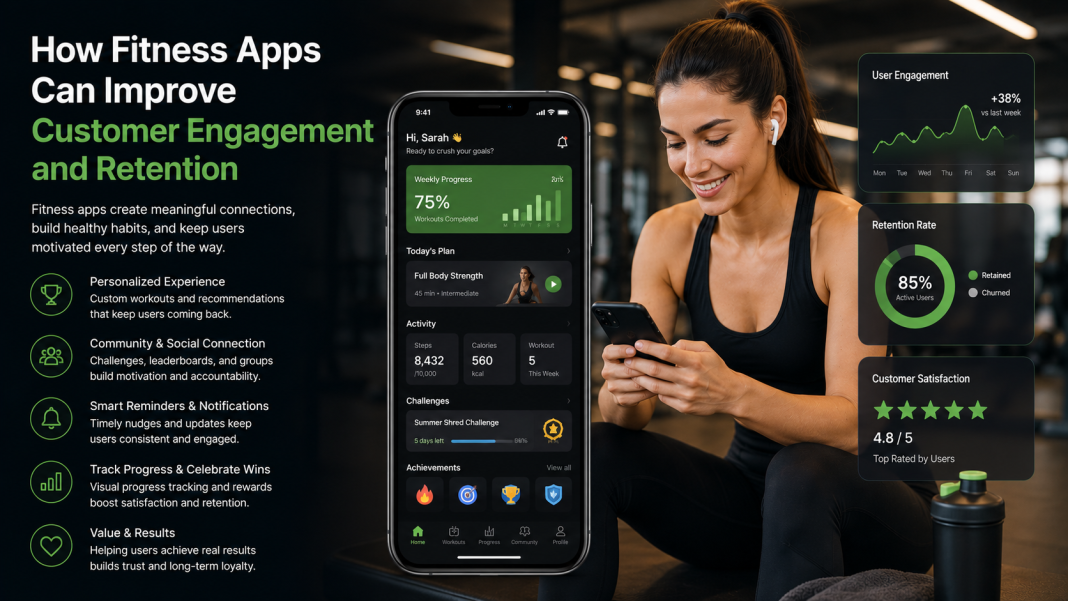

Dominique Osei had built one of the most respected boutique fitness studios in Accra over seven years. Her Pilates and functional training concept had a waiting list for peak class times, a loyal core of members who had been attending for four or more years, and a net promoter score that any fitness brand would consider exceptional. What she couldn’t crack was the new member retention problem. Roughly 60% of members who joined through the introductory package, which she offered to attract new clients, did not convert to a full membership at the end of the first month. They came to four or five classes, experienced the quality of the instruction, and then stopped returning. Exit surveys produced familiar answers: too busy, the timing doesn’t work, life got in the way. Dominique had heard those answers enough times to know they were accurate descriptions of why people stopped coming and not explanations of what her studio could have done differently. What the surveys didn’t capture was the moment when the decision not to continue had actually been made, which was usually somewhere in the first two weeks when the introductory period still had weeks to run and the habit of coming hadn’t formed yet. She engaged a Fitness App Development Service to build a member engagement application for the studio, not to replace the in-person experience but to extend the relationship between the physical sessions in ways that the in-person experience couldn’t do by itself. Within eight months, her introductory-to-full-membership conversion rate had moved from 40% to 67%, and her 12-month member retention had improved by 19 percentage points. The application hadn’t changed the quality of the classes. It had changed what happened between the classes, which turned out to be where most of the retention problem actually lived.
The Engagement Gap Between Physical Sessions
Fitness businesses that rely on in-person attendance as their sole engagement mechanism have a structural vulnerability: the relationship between the business and the member exists only when the member is physically present. Between sessions, the member’s engagement with the business is zero, which means the business has no mechanism for reinforcing the habit during the period when the habit is most fragile.
For a new member who is in the early weeks of building a fitness routine, the period between sessions is the period of highest dropout risk. The soreness from the first session has subsided. The immediate satisfaction of having exercised has faded. The competing demands of daily life that didn’t pause to accommodate a new fitness habit are still present. The business whose member is experiencing this period without any form of engagement or support has no ability to intervene before the member quietly decides that this week is too busy and next week turns into next month turns into cancellation.
Mobile applications extend the fitness business’s relationship with the member into that vulnerable between-session period in ways that were previously impractical. A brief progress update notification that arrives two days after a session, acknowledging the effort and showing progress toward a milestone, reminds the member of the commitment they have made and of the progress they would sacrifice by not returning. A curated short recovery or mobility session delivered through the application two days after a high-intensity class gives the member something to do with the fitness relationship on days they can’t make it to the studio. A pre-class notification the morning of a booked session that confirms the booking and adds a small motivational element makes the class feel more committed to in a way that simply having the booking in a calendar doesn’t.
None of those touchpoints require significant time from the studio’s staff. They require a well-designed application that delivers them at the right moment, with the right content, in a way that feels personal rather than automated.
Personalization as a Retention Mechanism
The fitness businesses building the strongest member retention through mobile applications in 2026 are those that have connected their application to the member’s actual progress data rather than delivering generic content to everyone in the same format. A member who has been attending consistently for three months has a different engagement profile from one who is in their first two weeks, and an application that treats them identically is failing to use the most valuable information it has about what each member needs.
Progress milestones calibrated to the individual member’s journey, not to the studio’s standard class count markers, create personalized moments of recognition that build the member’s sense of investment in their progress. A member who attends her 20th session receives a recognition that her specific milestone is acknowledged, which creates a loss aversion effect: the 20 sessions she has invested in become a reason to continue that an equivalent member who is unaware of her milestone count doesn’t have access to.
Personalized class recommendations that learn from the member’s attendance history, surfacing classes they haven’t tried that match their demonstrated preferences rather than classes the studio needs to fill, create discovery within the member’s relationship with the studio that sustains interest past the initial repertoire of classes they came for. A member who has been attending only morning Pilates sessions and discovers through an application recommendation that she enjoys the evening functional training class has effectively doubled the number of class formats she is engaged with, which dramatically increases the probability that scheduling conflicts will be resolved by attending a different class rather than not attending at all.
Habit Formation and Behavioral Design
The most effective fitness retention applications are those whose design reflects an understanding of how habits actually form rather than how fitness brands wish habits would form. The intention to exercise is not the habit of exercising. The habit of exercising is the behavior that persists without requiring deliberate motivation to initiate, which typically takes considerably longer to establish than the six to eight weeks that most introductory membership models provide before asking for a renewal commitment.
Streak mechanics that reward consecutive weeks of attendance create a forward-looking motivation structure that complements the backward-looking motivation of progress tracking. A member who has attended for eight consecutive weeks has an established streak whose value increases with each session: breaking a nine-week streak feels worse than breaking a two-week streak, which means the nine-week member has more internal motivation to maintain attendance than the two-week member has. Designing streak mechanics that reset at the weekly rather than daily level accommodates the reality of members whose schedules mean they can attend three times in one week and once in another without breaking the pattern that the habit is being built around.
Booking commitment features that allow members to schedule their next session immediately after completing the current one, while they are in the post-exercise state of positive affect that makes the next session feel achievable, capture a commitment at the moment when it is most likely to be kept. The member who books Tuesday’s class on Sunday morning, without the immediate motivational momentum of a completed workout, is making a more uncertain commitment than the member who books Tuesday’s class on Sunday evening ten minutes after finishing Sunday’s session.
Social Features and Community as Infrastructure
Dominique’s studio had built genuine community over seven years, and that community was one of the strongest retention mechanisms the studio had. Members who had friends at the studio didn’t just attend for the classes. They attended for the people, which is a substantially more resilient motivation than any individual’s relationship with exercise in the abstract.
Mobile applications extend that community beyond the physical space of the studio in ways that strengthen the social bonds rather than substituting a digital interaction for a physical one. A challenge feature that runs between groups of members over a period of weeks, tracking attendance or specific fitness metrics, creates shared engagement around a defined goal that generates interactions between members who might otherwise only see each other in class. A social feed where members share achievements, encourage each other after difficult sessions, and celebrate milestones creates a community texture that persists between visits to the studio.
The social features that work best for retention are those that create lightweight, low-obligation connections rather than those that require members to actively participate in a social platform they didn’t join the fitness studio to use. A notification that a friend from the studio has just booked the same class for Thursday is a social nudge that increases the probability that the recipient confirms their own attendance without requiring either member to engage with a social feed.
Gamification That Serves the Fitness Goal
Gamification in fitness retention applications fails when the game mechanics are disconnected from the fitness behavior they are intended to reinforce. A points system that rewards scanning a QR code at the studio entrance creates a motivation to scan but not necessarily a motivation to attend in a way that produces fitness adaptation. A challenge structure that rewards the highest number of classes attended in a month creates a motivation to attend frequently in a period, which can lead to overtraining and injury for members who respond to competitive incentives more strongly than their fitness level supports.
Gamification that serves the fitness goal creates mechanics where the game reward is aligned with the training behavior that produces results. A challenge that rewards consistent weekly attendance over a four-week period, regardless of how many sessions per week the member can manage, reinforces the habit-building behavior rather than the attendance volume. A badge system that recognizes improvement in measurable fitness metrics, attendance at a new class format, or completion of a progressive challenge series reinforces the behaviors that produce fitness progress rather than the behaviors that maximize points accumulation.
The Investment That Scales With the Business
For studio owners and fitness business operators evaluating the build investment, understanding custom workout and training app development cost in the context of their specific business model is more useful than industry benchmarks that don’t account for the specific feature set that drives their retention metrics. A branded studio application with booking integration, progress tracking, member communication features, and community elements is a different scope from a standalone workout programming application with AI-powered adaptive training and biomechanical analysis.
The appropriate investment question is not what fitness applications cost in general but what the specific capabilities that would address the specific retention gaps in the specific business would cost to build, and how that investment compares to the revenue impact of the retention improvement those capabilities are designed to produce. Dominique’s 19-point improvement in 12-month retention, applied to her membership base at her average monthly membership value, produced an annualized revenue impact that covered the application’s development cost several times over in the first year of operation. That ratio, which is not guaranteed for every studio but is achievable for any studio whose retention gap is structural rather than product-related, is the business case for the investment.
The member who stayed because the application kept her engaged between sessions, who recommended the studio to two colleagues because she was enthusiastic enough about her progress to talk about it, and who is now in her third year of membership without having seriously considered canceling: she is the return on the investment that no benchmark can capture but that every fitness business operator recognizes immediately as the outcome the business exists to produce. Dominique has 47 members who fit that description because of the application, by her own rough count. She would have 47 fewer without it.