
Granite countertops bring natural patterns and useful durability to many kitchens. However, even a hard stone surface needs regular care to maintain its appearance. Food spills, cooking oils, harsh cleaning chemicals, and heavy cookware can affect the finish over time. Therefore, we should follow a sensible cleaning routine rather than assume granite requires no attention. Understanding the right products, sealing needs, and cleaning methods can help protect a kitchen countertop through years of everyday use.
Understanding Granite Countertop Care
Granite is a natural stone, and its mineral composition varies from slab to slab. Therefore, some granite surfaces absorb liquids more readily than others. The finish and any applied sealer can also influence cleaning requirements.
Homeowners often ask, how do you clean granite countertops without damaging the surface? The safest general approach involves suitable stone cleaners, soft cloths, prompt spill removal, and following the supplier’s care instructions. However, we should avoid assuming that all granite varieties need exactly the same maintenance.
For homeowners in Milwaukee, WI, United States, a simple daily cleaning routine can help preserve a countertop’s appearance without requiring complicated treatments.
Build a Simple Daily Cleaning Routine
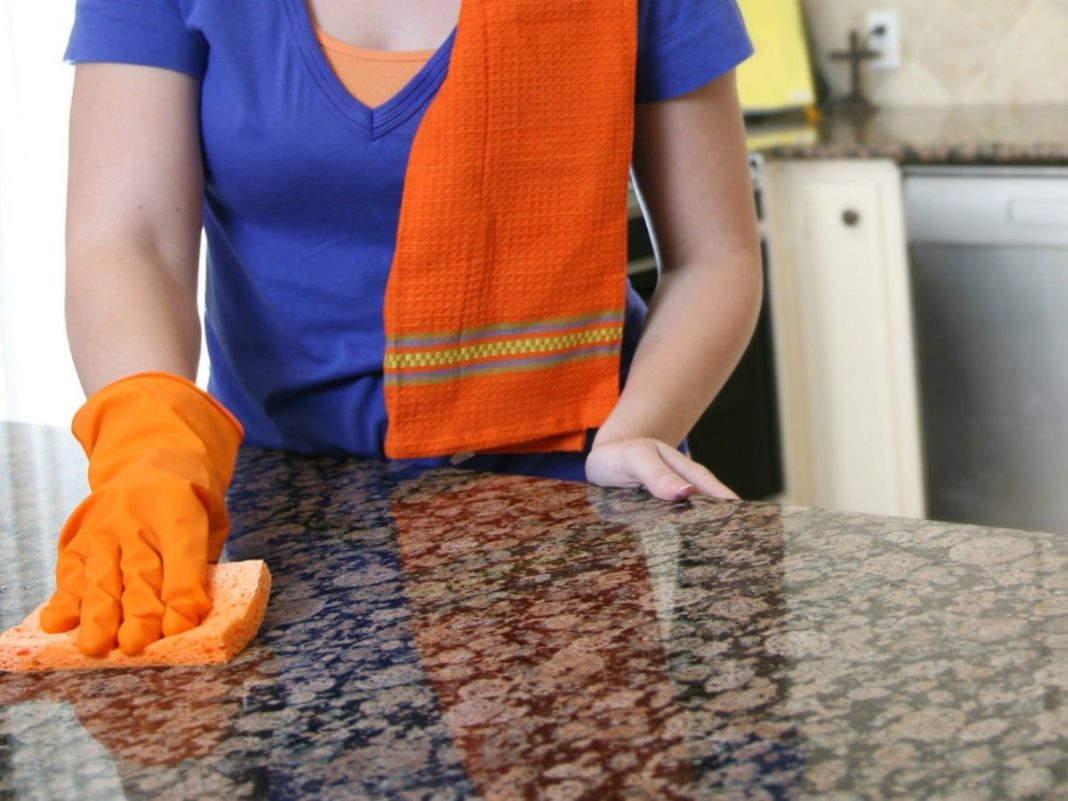
Daily cleaning should remove food particles and spills without damaging the countertop finish. Therefore, we should begin with a soft microfiber cloth and a cleaner suitable for natural stone.
However, using large amounts of cleaning product is rarely necessary. A gentle approach can remove ordinary cooking residue while limiting unnecessary exposure to chemicals.
Remove Loose Food and Dust
We should wipe away crumbs before applying a cleaning solution. This helps prevent hard particles from dragging across the surface.
Meanwhile, a soft cloth works well around most countertop edges. We should avoid using rough scouring tools unless the stone-care instructions specifically allow them.
Use Suitable Cleaning Products
A pH-neutral cleaner intended for natural stone is generally a practical option. However, product compatibility should be checked against the countertop finish and sealer.
We should follow the product label and avoid mixing chemicals. Strong cleaning agents may affect some stone treatments or finishes.
Dry the Surface After Cleaning
Water can leave visible marks, especially on darker polished granite. Therefore, drying with a clean cloth can improve the finished appearance.
However, occasional water spots do not automatically mean the stone has suffered permanent damage.
Understand Why Certain Cleaning Products Cause Problems
Some household cleaners contain acids, strong alkalis, or abrasive ingredients. Although granite is generally more resistant to acids than marble, harsh products may still affect sealers or certain mineral components.
Therefore, we should avoid using vinegar, abrasive powders, and aggressive cleaning products without confirming their suitability.
Avoid Unnecessary Acidic Cleaners
Vinegar and lemon juice often appear in homemade cleaning advice. However, natural stone suppliers may discourage their use because they can affect certain finishes or sealers.
We should choose products intended for the countertop material rather than rely on general household cleaning recipes.
Be Careful With Abrasive Pads
Rough pads and brushes may scratch some finishes or damage surface treatments. Therefore, microfiber cloths and nonabrasive cleaning tools are usually preferable.
If a stain does not respond to normal cleaning, we should identify the substance before applying stronger products.
Handle Common Kitchen Spills Correctly
Different spills require different responses. However, prompt attention helps reduce the chance of a liquid reaching more absorbent areas of the stone.
We should keep a clean cloth nearby during cooking and food preparation.
Cooking Oil and Grease
Oil can create dark spots if it enters porous stone. Therefore, we should wipe spills quickly and clean the affected area with an appropriate product.
However, rubbing an oily stain with strong chemicals may create additional problems. Persistent staining may require a stone-specific treatment.
Coffee, Tea, and Wine
Colored liquids can leave marks on some granite varieties. Therefore, we should remove them promptly rather than allow them to sit overnight.
If a mark remains, we should ask a suitable stone-care professional about treatment options.
Water Around the Sink
Sink areas experience frequent splashes and standing moisture. Therefore, wiping the surface and checking sealant joints can support regular maintenance.
However, water near the sink may also affect cabinets and surrounding materials. We should address leaks rather than treating only the countertop.
Understand Granite Sealing Requirements
Granite sealing needs vary by slab. Some varieties absorb very little water, while others benefit from an appropriate penetrating sealer.
Therefore, we should ask the supplier or installer about the specific stone rather than follow a fixed sealing schedule for every granite countertop.
What a Sealer Can Do
A suitable sealer may reduce the rate at which liquids enter the stone. However, sealing does not make granite completely stainproof.
We should continue removing spills promptly even after applying a sealer.
When to Consider Resealing
A professional may assess the stone’s absorption and current protection. However, we should avoid applying additional sealer simply because a calendar date has arrived.
The correct approach depends on the stone, existing treatment, and product instructions.
Clean Granite Countertop Edges Carefully
Countertop edges experience contact from hands, dishes, utensils, and cleaning tools. Therefore, their shape and finish can influence everyday maintenance.
Different granite countertop edges may have practical differences. For example, simple eased profiles can be straightforward to wipe, while more decorative shapes contain additional surfaces that deserve attention.
However, edge selection should also consider appearance, comfort, and fabrication requirements.
Eased and Straight Edges
An eased edge creates a simple, clean profile. It can complement modern cabinets and may be easy to maintain.
However, even a small edge can chip after strong impact. We should avoid striking it with heavy cookware.
Rounded Edges
Rounded profiles may provide a softer appearance. They can also reduce some sharp corners.
However, routine cleaning remains necessary around the countertop perimeter and backsplash connection.
Decorative Edge Profiles
More detailed edges can complement traditional kitchens. However, grooves and curves may require closer attention during cleaning.
We should use a soft cloth to remove grease and dust from these areas.
Prevent Scratches and Impact Damage
Granite generally provides strong scratch resistance. However, it is not completely damage-proof.
Therefore, we should use cutting boards and avoid dragging heavy metal items across the surface. These habits also protect knives and help maintain a cleaner food preparation area.
Use Cutting Boards
Cutting directly on granite is unnecessary. Although many granite varieties resist scratching, knife blades may become dull against hard stone.
We should use suitable boards for food preparation.
Protect Countertop Corners
Corners can chip after direct impact. Therefore, we should handle heavy cookware carefully near exposed edges.
A damaged corner may require professional repair depending on the size and condition.
Manage Heat During Cooking
Granite generally handles ordinary kitchen heat better than many resin-based surfaces. However, thermal shock and concentrated heat can still create risks in some situations.
Therefore, trivets and protective pads remain sensible choices for hot cookware.
Avoid Sudden Temperature Changes
Placing extremely hot items on a cold stone surface may create temperature stress. Although damage is not inevitable, we should avoid unnecessary exposure.
Protective pads provide a simple precaution without affecting daily cooking.
Understand Granite Cleaning Around Appliances
Cooking areas often collect oil, steam, and food residue. Therefore, the countertop beside a range may need more frequent attention than areas used mainly for serving.
However, we should avoid allowing grease to build up before cleaning.
Clean Around the Range
A soft cloth and suitable cleaner can help remove ordinary cooking residue. Meanwhile, stubborn buildup may need a product approved for granite.
We should keep chemicals away from food and follow their instructions.
Check Backsplash Joints
The joint between the countertop and backsplash can collect moisture and dirt. Therefore, we should inspect it periodically.
Damaged sealant may require professional attention, especially around sinks.
Know When a Granite Problem Needs Professional Help
Not every mark represents a permanent stain. Some may involve residue, mineral deposits, or an issue with the sealer.
However, attempting aggressive cleaning without identifying the problem can worsen the appearance.
We should seek appropriate advice for deep stains, chips, cracks, or damaged finishes.
Recognize Surface Problems
A rough patch, persistent dark mark, or loose seam may require more than routine cleaning. Therefore, we should document the condition and ask about the correct repair approach.
The solution depends on the actual cause.
Consider Granite Care Before Buying New Countertops
Homeowners choosing granite kitchen countertops should understand the selected stone’s maintenance needs before installation.
Different slabs may vary in appearance, absorption, and finish. Therefore, comparing actual materials can help establish realistic expectations.
For kitchen renovations in Milwaukee, WI, United States, asking about care instructions during the selection process can make future maintenance easier.
Compare Finishes and Colors
Dark polished granite may show fingerprints or water marks more noticeably. Meanwhile, some lighter patterns can make small crumbs less visible.
However, appearance alone does not determine maintenance needs. We should review the specific material.
Common Granite Cleaning Mistakes
One mistake is assuming all-purpose cleaners are suitable for every stone surface. Another involves leaving oil or colored liquids on the countertop for long periods.
Homeowners may also apply sealer too frequently or use abrasive tools on stubborn marks. Therefore, we should follow stone-specific care guidance instead of relying on random cleaning tips.
Final Thoughts
Granite can remain an attractive and useful kitchen surface when we follow appropriate maintenance practices. However, regular cleaning, careful handling, and material-specific care matter.
For homeowners in Milwaukee, WI, United States, understanding the stone’s finish, sealing needs, and cleaning requirements can make everyday upkeep simpler. With sensible habits, granite countertops can continue supporting busy kitchens for many years.