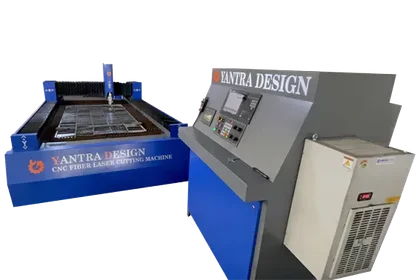

A CNC fiber laser cutting machine is an advanced metal cutting system that combines computer numerical control with fiber laser technology to produce accurate, clean, and repeatable cuts. It is widely used in modern fabrication and manufacturing because it can process different types of metal with high precision while reducing manual intervention and material waste.
For businesses looking to improve cutting productivity, understanding how the technology works and what factors influence its performance can help in selecting the right machine.
What is a CNC Fiber Laser Cutting Machine?
A CNC fiber laser cutting machine uses a high-power fiber laser to generate a concentrated beam of light capable of cutting metal sheets, plates, and other suitable materials. The CNC controller guides the laser head according to a programmed design, allowing complex shapes and precise dimensions to be produced automatically.
Compared with conventional cutting methods, fiber laser technology offers fast processing, narrow kerfs, and excellent repeatability. This makes it suitable for both simple profiles and detailed component designs.
How Does Fiber Laser Cutting Work?
The process starts with a digital drawing or CAD design that is converted into machine-readable instructions. The material is positioned on the cutting bed, and the CNC system controls the movement of the laser head.
The laser beam is focused onto a small area of the material, generating sufficient heat to melt or vaporize the metal. An assist gas helps remove the molten material from the cutting zone, producing the required profile.
Cutting parameters such as laser power, speed, focus position, and gas pressure can be adjusted according to the material and thickness.
Key Benefits of CNC Fiber Laser Cutting
High Cutting Precision
The concentrated laser beam enables accurate cutting and helps produce intricate profiles with consistent dimensions. This is particularly useful when components have tight dimensional requirements.
Faster Production
Automated CNC movement and high cutting speeds can reduce processing time, especially for repetitive production. Faster cycle times can help manufacturers handle larger production volumes efficiently.
Reduced Material Waste
The narrow laser kerf allows components to be nested closely on a sheet. Better material utilization can reduce scrap and contribute to lower manufacturing costs.
Consistent Quality
Once the cutting program and parameters are established, the machine can reproduce the same design repeatedly. This helps maintain consistency across batches.
Flexible Manufacturing
A CNC fiber laser cutting machine can produce different component shapes by simply changing the digital program. This makes it useful for both customized orders and regular production.
What to Consider Before Choosing a Machine?
Fiber laser cutting is used across numerous industries, including sheet metal fabrication, automotive components, electrical equipment, machinery manufacturing, construction, architectural metalwork, and industrial engineering.
It can be used to produce brackets, panels, machine components, enclosures, structural parts, and customized metal profiles.
Before investing, manufacturers should evaluate laser power, maximum cutting thickness, working area, cutting speed, positioning accuracy, CNC control system, automation, and material compatibility.
Production volume is equally important. A machine intended for continuous industrial production may require higher automation and power than equipment used for occasional fabrication.
Conclusion
A CNC fiber laser cutting machine can help manufacturers achieve greater precision, faster production, consistent quality, and improved material utilization. Choosing the right machine requires a careful assessment of material types, thickness, component size, production volume, and desired automation.
When machine capabilities are matched to actual production requirements, fiber laser technology can become an effective solution for improving efficiency and maintaining high-quality metal fabrication.



