
|
Summary: The proper cup wheel selection holds equal significance to the operational skills of the surface grinder. Different wheels serve distinct purposes because they match different materials and various grinding stages which range between heavy stock removal and fine finishing. The use of an incorrect wheel results in surface damage and decreased productivity while it also reduces the lifespan of the equipment. Grinding performance achieves its desired level of control through the proper selection of wheel type and grit and bond materials used with the work surface. |
In fabrication and surface prep, results depend on more than just skill. The tools you choose shape speed, finish quality, and even jobsite safety. Cup wheels are a good example. They look simple, but using the wrong type can slow production, damage materials, and wear out equipment faster than expected.
That’s why shops that handle concrete, stone, or engineered surfaces take wheel selection seriously. The right match keeps operations smooth. The wrong one creates friction.
At Tait Sales & Consulting, LLC, cup wheels are selected and supplied with real-world fabrication needs in mind. Their range supports different materials, grinding stages, and jobsite demands, helping crews work efficiently without guesswork.
Why Cup Wheel Choice Matters More Than Most Shops Think
Surface grinding is rarely a one-step process. Each phase, leveling, shaping, smoothing, or finishing, requires a different level of aggression. A wheel designed for heavy stock removal won’t produce a clean finish. A finishing wheel won’t cut through coatings efficiently.
Using the wrong wheel leads to three common problems:
Surface damage
Aggressive segments on delicate materials can leave deep scoring or chips that require rework.
Lost productivity
A wheel that’s too fine for the task forces extra passes, slowing workflow and increasing labor time.
Premature wear
Mismatch between bond hardness and surface type causes glazing or rapid segment loss.
When you match the wheel to the surface from the start, grinding becomes controlled instead of corrective.
Understanding Cup Wheel Types
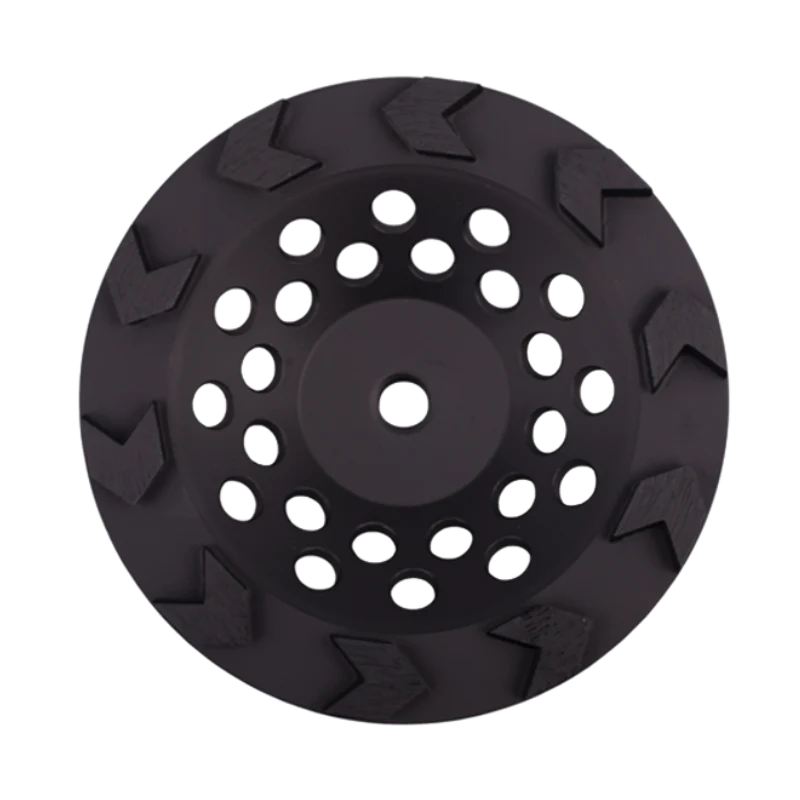
Cup wheels differ in segment layout, bonding, and grit. Each variation changes how the wheel interacts with the material.
Single-Row Wheels — Fast Material Removal
Single-row segment wheels are built for aggressive grinding. With fewer segments making contact, pressure is concentrated, which increases cutting speed. These work well when removing coatings, flattening uneven slabs, or preparing rough concrete.
Typical use cases
- First grinding pass
- Removing adhesives or paint
- Leveling high spots
They’re efficient but leave a rougher surface, so they’re usually followed by a smoother wheel.
Double-Row Wheels — Balanced Cutting and Control
Double-row designs increase surface contact. More segments distribute pressure evenly, which stabilizes grinding and reduces swirl marks.
These are often chosen for general-purpose grinding where both speed and surface consistency matter.
Best suited for
- Intermediate grinding stages
- Concrete prep before polishing
- Shops handling varied materials daily
They last longer than single-row wheels because wear is spread across more segments.
Turbo Cup Wheels — Speed With Cooling
Turbo-style wheels feature serrated or spiral segment patterns that improve airflow. This helps reduce heat buildup during grinding, which protects both the wheel and the surface.
They’re especially useful when working continuously or grinding dense materials that generate friction quickly.
Resin or Fine-Finish Wheels — Surface Refinement
When the goal shifts from removal to refinement, resin-bond or fine-grit cup wheels take over. These remove minimal material while smoothing scratches left by earlier passes.
They’re often used on:
- Marble
- Polished stone
- Decorative concrete
Instead of cutting aggressively, they refine the surface gradually.
Bond Hardness and Surface Compatibility
The bond holds abrasive particles in place. Choosing the right bond matters as much as selecting the right grit.
Soft Bond Wheels
Release worn diamonds quickly, exposing fresh cutting edges. Ideal for hard materials like granite or cured concrete.
Hard Bond Wheels
Hold diamonds longer, making them suitable for softer or abrasive surfaces that would otherwise wear out a soft bond too fast.
A simple rule many fabricators follow:
Hard surface → soft bond
Soft surface → hard bond
Matching the bond to the material keeps cutting consistent and extends wheel life.
Practical Surface Matching Guide
Different materials respond differently to grinding pressure. Here’s how wheel selection typically aligns with surface type.
Concrete
Start with an aggressive segmented or turbo wheel for leveling. Switch to medium grit for smoothing once the surface is flat.
Granite or Engineered Stone
Use high-quality diamond segments with controlled aggression. Too coarse a wheel can chip edges or leave deep marks.
Marble or Softer Stone
Choose finer grits and smoother segment designs. These materials scratch more easily and require gentler grinding.
Coated Surfaces
Adhesives, epoxy, and paint respond best to spaced segments that clear debris quickly. Tight segment spacing can clog and slow cutting.
Signs You’re Using the Wrong Wheel
Even experienced crews occasionally run the wrong setup. These warning signs usually appear early:
- Grinding feels slow despite pressure
- The wheel overheats quickly
- Surface shows deep gouges
- Segments glaze instead of cutting
- Excess vibration during operation
When these show up, switching wheels often solves the problem faster than adjusting technique.
Maintenance Habits That Extend Wheel Life
Cup wheels are durable, but consistent care keeps them performing properly.
Daily checks
- Inspect segments for uneven wear
- Remove embedded debris
- Confirm the arbor fit is secure
Weekly checks
- Clean dust buildup from the body
- Verify segment integrity
- Check for hairline cracks
Proper storage also matters. Keeping wheels dry and protected prevents corrosion and preserves bonding strength.
Workflow Efficiency Starts With Tool Matching
Grinding shouldn’t feel unpredictable. When wheel selection matches material and task, operators spend less time correcting results and more time completing jobs. That translates directly into:
- Faster turnaround
- Lower tooling costs
- Reduced operator fatigue
- More consistent finishes
Support Makes Selection Easier
Cup wheels aren’t one-size-fits-all tools. Shops handling multiple materials often keep several wheel types on hand so they can switch quickly between tasks. Working with a supplier who understands fabrication workflows simplifies that process.
Teams that choose wheels based on real application guidance, not guesswork, typically see smoother operations and fewer delays.
Conclusion: The Right Wheel Changes Everything
Surface grinding is one of those processes where small decisions have large effects. Choosing the correct cup wheel determines how fast material comes off, how smooth the finish looks, and how long your tooling lasts.
If grinding feels slower than it should or finishes aren’t consistent, the issue may not be technique. It may be the wheel.
Matching cup wheel type, grit, and bond to the surface keeps fabrication predictable, efficient, and safe. And when your tools work with you instead of against you, every job runs smoother from first pass to final finish. Shop now from Tait Sales & Consulting, LLC.
FAQs
1. Why does cup wheel selection matter so much?
The specific properties of each wheel make it suitable for particular surface materials and different levels of surface aggressiveness. The wrong choice can lead to poor finishes, wasted time, and faster tool wear.
2. What’s the difference between single-row and double-row cup wheels?
Single-row wheels remove material faster and are more aggressive. Double-row wheels provide better control and a smoother result for general grinding tasks.
3. How do I choose the right bond for my material?
The bond should match the surface hardness. Use a soft bond for hard materials like granite or cured concrete, and a hard bond for softer or abrasive surfaces.
4. What are the signs I’m using the wrong wheel?
Dedicated wheels produce slow cutting results while they also create excessive heat and deep gouges, and make wheels lose their segments, and they produce strong vibrations.
5. Can one cup wheel handle all grinding jobs?
The process of surface grinding requires multiple grinding stages. Most shops need several wheel types to handle leveling, smoothing, and finishing efficiently.