

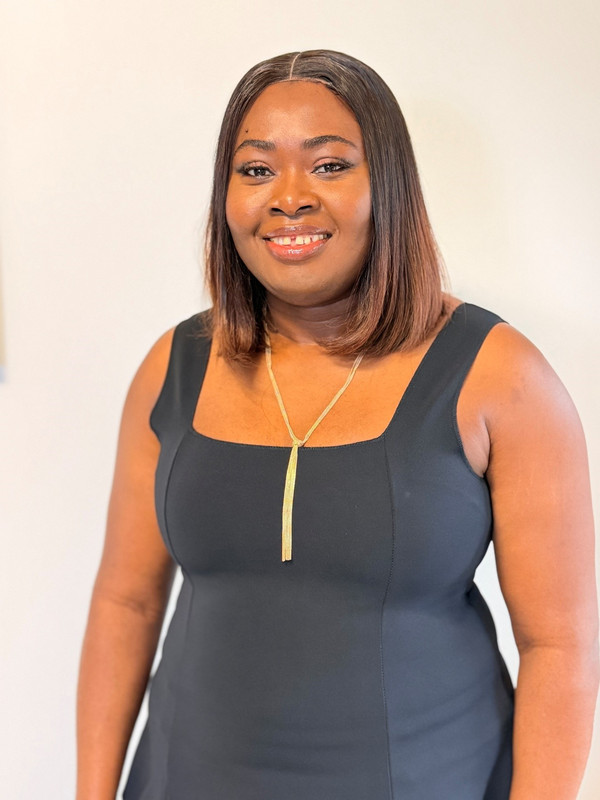
When Chinasa Ude Imo arrived in Sierra Leone in 2014 with the African Union’s Ebola response mission, the virus was already moving faster than anyone could count it. Her title was Humanitarian Affairs and Communications Officer — on paper a job about managing information, in the field a harder thing: standing in the gap between what the health teams were announcing and what frightened communities actually believed. Rumours travelled faster than any ambulance. Families hid relatives who had fallen ill. Burial teams were turned back at the edge of villages by people convinced they were the ones spreading the disease. By the time the outbreak was contained, more than eleven thousand people across West Africa had died.
Imo returns to those months often, because six years later she watched many of the same countries meet COVID-19 and respond with a speed that startled most of the observers who had spent 2014 describing the continent as unprepared. That shift was real. It was also earned, the hard way.
Learning in real time, from Ebola to COVID-19
What stays with her about Ebola is how much of the response had to be improvised. There was no agreed structure connecting the ministry of health to transport, to security, to the chiefs who actually held authority in the places the teams were trying to reach. Decisions that should have taken an afternoon took a week. Information would sit in one office while the people who needed it waited in another. Communities were treated as an obstacle to be managed rather than a partner to work with — which is precisely why so many of them stopped cooperating. The lesson underneath all of it was almost embarrassingly simple. An outbreak is never just a medical emergency. It arrives as a logistical and political and social crisis at the same time, and it will not wait politely for each system to catch up.
By the time COVID-19 came, a great deal of that painful knowledge had hardened into something permanent. The public health emergency operations centres that many African countries built or strengthened after Ebola became the rooms where the pandemic response was actually run. The Africa Centres for Disease Control and Prevention, established in 2017 because the gaps Ebola had exposed were too dangerous to leave open, finally gave the continent a coordinating body of its own. Countries that had once waited for direction from outside began sharing data across their borders and pooling resources that were never plentiful to begin with.
Coordination is the infrastructure that matters
The point Imo presses on anyone willing to listen is this. The most valuable thing a country can build before an emergency is not a stockpile or a new wing on a hospital. It is the ability to get very different parts of a government working from the same plan. When an outbreak hits, health workers matter — but so does the transport ministry keeping supply lines open, the education sector making sober decisions about schools, finance officials releasing money before the paperwork is perfect, and security services protecting movement rather than obstructing it. When those people sit in separate buildings guarding separate budgets, the response splinters. When they sit around one table with someone clearly in charge, it holds.
Imo saw the absence of that in Sierra Leone, and the presence of it later, watching incident management systems in countries like Rwanda and Senegal bring several ministries under a single operational roof, so that a decision taken in the morning could be acted on that same day. Neither country is wealthy. What they had was a structure agreed in advance and, just as importantly, trusted by the people expected to use it. Coordination of that kind is a discipline — rehearsed in the quiet years, or gone without in the loud ones.
Governance decides the outcome
None of it works without the politics underneath. The machinery of outbreak response sits on top of decisions about who holds authority, how money moves, and whether ordinary people trust the institutions giving them instructions. Years after Sierra Leone, Imo worked with the Nigeria Centre for Disease Control on risk communication during a hepatitis E outbreak in Borno State, writing the fact sheets, the guidance and the training materials before they were needed in the field. It taught her the same thing from the other direction: a message only lands if the messenger is trusted, and that trust cannot be manufactured in the middle of a crisis. Where the link between health authorities and communities is weak, even well-funded systems stumble. Where it is strong, very modest resources stretch remarkably far.
What the rest of the world can take from it
Policymakers elsewhere still tend to file all of this under “regional experience,” as though it were a story about somewhere far away with no lessons for them. Imo pushes back on that, gently but firmly. Build the coordination architecture in the calm, not the storm — the operations centres, command structures and cross-sector plans have to exist and be exercised before the day anyone reaches for them. Treat community engagement as part of the response rather than a courtesy bolted on at the end, because outbreaks are stopped in neighbourhoods and villages long before they are stopped in hospitals. And take regional cooperation seriously, because a virus has never once respected a border, and the continental institutions Africa built out of the Ebola years are a model other regions still managing their emergencies one country at a time would do well to study.
For Imo, this is not a story of a continent catching up. It is the story of a continent that absorbed a devastating lesson and built something out of it that the rest of the world could learn from. There will be another outbreak. It is already taking shape somewhere, in a place none of us is watching closely enough. The only real question is whether the coordination it demands will have been built beforehand, or assembled once again while people are already dying. Imo knows which of those saves lives. She was there for both.


