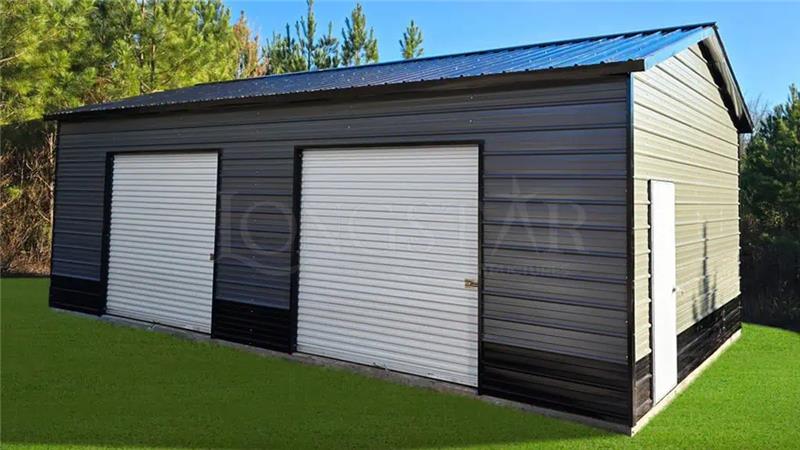

I’ve put up metal shops, RV storage, metal garages, and ag buildings all over the place, and the permit part is where good projects get stuck for weeks. Not because it’s “hard.” Because somebody’s missing one sheet, one stamp, or one detail the county wants in black and white.
Georgia metal buildings is not one-size-fits-all. Every county and city has their own quirks. Still, the paperwork and inspection flow follow the same bones almost everywhere.
Do you even need a permit for a metal building in Georgia?
Most of the time, yes.
If it’s a permanent steel structure on a slab or footings, and it’s got real use (shop, storage, business, conditioned space), plan on permitting. Even “just a metal garage” usually triggers it.
Where folks get surprised:
- Electrical almost always triggers a permit/inspection, even if the building itself is “ag.”
- Concrete and anchors are structural, so that’s inspected.
- Bigger buildings can trigger stormwater or fire reviews depending on location and use.
Call the local building department before you buy the kit. Ten minutes there can save a month later.
First stop: zoning and setbacks (don’t skip this)
This is the fastest way to get shut down before you start.
What zoning usually checks:
- Setbacks from property lines
- Building height limits
- Use (personal shop vs commercial vs ag)
- Lot coverage
- Driveway access (sometimes handled by the county road folks)
If you’re doing RV storage or a big shop near a neighbor, setbacks and drainage are the usual arguments. Handle it on paper up front, not after the slab is poured.
The core document stack most Georgia permit offices want
Here’s the “common pile” that gets you through most counters.
Permit documents checklist (print this)
| Document | What it proves | Who usually provides it |
| Building permit application | Basic project info | Owner/GC |
| Site plan | Setbacks, footprint, driveway, utilities | Owner/surveyor/drafter |
| Engineered building drawings | Structural design + bracing | Metal building supplier/engineer |
| Foundation/slab plan | Footings, rebar, thickness, anchors | Engineer/GC/concrete sub |
| Wind design info | How it’s designed for your site | Engineer |
| Calcs/letters (if requested) | Backup for design assumptions | Engineer |
| Truss/joist sheets (if applicable) | Component approvals | Supplier |
| Energy forms (if conditioned) | Insulation/efficiency compliance | Designer/GC |
| MEP plans (if needed) | Electrical/plumbing/HVAC scope | Electrician/plumber/HVAC |
| Contractor license/insurance (varies) | Who’s doing the work | Trades/GC |
| Soil report (sometimes) | Bearing capacity, fill conditions | Geotech (if required) |
If your building package seller can’t produce stamped engineered drawings that match your exact size and options (doors, lean-tos, canopies), you’re gonna feel it at plan review.
Site plan: what the permit tech is actually looking for
A “site plan” doesn’t have to be fancy, but it has to be clear.
Most offices want:
- Property lines and setback distances
- Building footprint dimensions
- Driveway location and access
- Septic field/well locations (if applicable)
- Existing structures
- Drainage direction or swales (sometimes simple arrows are enough)
- North arrow + scale
Real-world tip: if you’re adding a lean-to later, put it on the site plan now. I’ve seen folks get forced into a second permit cycle because the “future” lean-to wasn’t shown.
Engineered drawings: the stuff that trips people up
Engineered drawings should match the building you’re actually installing. Sounds obvious. It isn’t.
Common mismatch problems:
- Door sizes moved “in the field” but drawings never updated
- Added a lean-to/canopy after ordering
- Eave height changed
- Frame spacing adjusted
- Different panel system than the drawings show
If the plan reviewer catches a mismatch, it’s a correction letter and another round. If the inspector catches it later, it’s worse.
Foundation/anchor bolt package: where inspections start getting serious
This is where I see the most jobsite drama.
Your slab/foundation plan needs to show:
- Thickened edges/turn-downs (if designed)
- Rebar size and spacing
- Vapor barrier (when required)
- Anchor bolt size, spacing, embedment
- Base plate details (sometimes)
- Door header thickening (for big openings, if designed)
If you’re doing a monolithic slab, don’t assume “4-inch slab” is enough just because it’s a metal garage. Door openings, column loads, and lift equipment can change the whole thing.
Stormwater and land disturbance: when it shows up in Georgia
Not every metal building triggers stormwater paperwork, but once you start clearing and grading, it can.
Things that tend to bring stormwater into the chat:
- Large disturbed area
- New driveway/culvert
- Steep lots
- Work near creeks or ditches
- Larger commercial sites
Even if it’s “just a shop,” erosion control is still a real-world requirement. Inspectors don’t like muddy runoff leaving the property. Neither do neighbors.
Fire marshal review: when you should expect it
Some jurisdictions kick plans to the fire marshal depending on:
- Commercial use
- Assembly/public occupancy
- High square footage
- Special hazards (welding, paint booth, flammables)
- Sprinkler requirements (building/use dependent)
If you’re doing a business shop, ask early if fire review is part of plan review. Don’t wait until your steel is sitting on the ground.
Typical Georgia inspection flow for a metal building
Every county labels steps a little different, but the order below is what most jobs follow.
The “normal” inspection sequence
- Footing / foundation inspection
Forms, rebar, trench depth, soil conditions (before concrete) - Slab / vapor barrier / reinforcement inspection (if split)
Vapor barrier, wire/rebar, thickened edges, embeds - Anchor bolts / embed inspection (often part of slab)
Bolt spacing, projection, embedment, templates/layout - Framing/erection inspection (varies by jurisdiction)
Columns, rafters, bracing, connections - Rough electrical / plumbing / HVAC (if applicable)
Before insulation or interior finishes - Insulation / energy inspection (if conditioned)
Roof/wall insulation values, sealing details - Final building + final trades
Doors, exits, electrical final, grading/drainage touch-ups
Some places want an inspection when the steel frame is up but before skin. Some don’t. Ask your inspector how they want it.
What inspectors focus on with metal buildings (the real hot buttons)
Inspectors usually zoom in on:
- Anchor bolt placement and embedment
- Bracing installed per plans (don’t “save it for later”)
- Proper fasteners and spacing on roof/walls
- Flashing, closures, and weather sealing around openings
- Egress doors (especially for shops people work in)
- Electrical grounding/bonding
If your crew says “we always do it this way,” that’s fine… as long as “this way” matches the stamped plans.
Special inspections: do you need them?
Sometimes, yes. It depends on the jurisdiction and the design.
Examples of what can trigger special inspections:
- High occupancy commercial structures
- Certain structural connections
- Welding requirements
- Specific engineered components
If the plans call for it, it’s not optional. Budget for it early so you’re not scrambling mid-erection.
The fastest way to avoid permit delays (a simple pre-submittal check)
Before you submit, lay the set out and confirm:
- Site plan footprint matches the engineered drawings
- Address and parcel info are correct everywhere
- Door schedule matches what you ordered
- Foundation plan matches the anchor bolt plan
- Wind design info is included (and site-specific)
- Any add-ons (lean-to, canopy, mezzanine) are shown and engineered
Most plan review “corrections” are just mismatches and missing sheets.
Quick “permit packet” checklist you can hand your supplier/GC
- Site plan with setbacks + driveway + utilities shown
- Stamped engineered building drawings (exact options)
- Foundation/slab plan with anchors and reinforcement
- Wind design data for the site address
- Energy compliance docs (if conditioned)
- Electrical/plumbing/HVAC drawings (if required)
- Contractor info (license/insurance), if your area asks for it
- Stormwater/erosion control plan (if land disturbance triggers it)
If you want, tell me your building use (shop, RV storage, metal garage, small warehouse), approximate size, and whether it’s city or county jurisdiction in Georgia. Longstar Steel will tailor the checklist to what typically gets asked for that type of project.