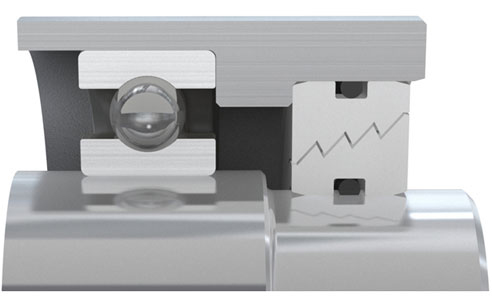

Non-contact labyrinth seals are workhorses in rotating equipment. They are recognized for their reliability and longevity that surpasses that of conventional contact seals, all the while minimizing the total costs of ownership. While they offer desirable benefits, these robust sealing solutions still require proper attention to work optimally throughout their service life.
This article explores the failure modes of labyrinth seals, strategies to prevent them, and essential enhancement techniques to implement. Understanding the factors that affect seal performance means the difference between seamless industrial operations and costly unplanned downtime.
Identifying Critical Operational Challenges
Before improving seal performance, it’s essential to recognize signs of inefficiency or failure. To prevent major mechanical issues down the line, technicians must be on the lookout for the following problems in labyrinth seals:
1.Excessive Leakage
Although the design of labyrinth seals allows minimal controlled leakage, a sudden increase in leakage rates signals seal deterioration. Common causes include:
- Misalignment
- Thermal expansion that increases gaps between components
- Seal tooth erosion after exposure to debris
When leakage rates rise, equipment works harder and consumes more energy to maintain its output, thereby accelerating mechanical wear.
2. Contamination Ingress
External impurities that enter the seal area can damage bearings, reduce lubrication effectiveness, and cause premature component failure. This issue often happens when the labyrinth design and clearances fail to account for operating conditions. It may also occur when pressure differentials across the seal reverse or become unstable.
3. Pressure Imbalances
Disruptions in the pressure differential across seals cause uneven distribution of force across the labyrinth teeth. This may result from fluctuating process conditions, incorrect installation, malfunctioning valves, load changes, or seal deterioration. As a result, the seals weaken, increasing the risk of mechanical failure, leaks, and contamination.
Installation Best Practices
Now that we’ve discussed the operational issues with labyrinth seals, it’s crucial to note that these can be traced back to improper installation. Achieving the correct spacing between rotating and stationary components directly impacts the equipment’s functionality. Technicians must be mindful of these factors during installation:
- Strictly Adhere to Measurements
When installing labyrinth seals, technicians must use precision measurement tools to ensure the radial and axial clearances match the specified tolerances. Avoid deviating from the design specifications, as even slight deviations can compromise the seal’s effectiveness.
- Ensure Proper Alignment and Concentricity
Misalignment can cause the rotor to rub on the seal teeth during operation, defeating the purpose of a non-contact design and potentially accelerating wear. Similarly, if the seal housing isn’t concentric with the shaft, the spaces will vary around the circumference and may create leakage paths.
- Consider Temperature Shifts
Seals and rotating equipment experience different thermal expansion rates during operation. Installation clearances must account for these changes to ensure these components maintain proper gaps at operating temperature.
To address these thermal effects, it’s essential to select materials with compatible expansion rates and verify the expected thermal movement. It’s also good practice to perform “cold” and “hot” alignment checks to confirm the seal geometry functions excellently under the actual operating conditions.
Effective Monitoring Strategies To Utilize
Proactively monitoring seal conditions enables maintenance to shift from reactive troubleshooting to predictive optimization. By tracking performance indicators, operators can more effectively detect signs of inefficiency and avert costly failures. These include:
- Leakage Rate Monitoring
This strategy provides the most direct indication of seal health. Establishing baseline leakage rates during commissioning and tracking trends over time reveals gradual wear patterns. Sudden changes warrant immediate investigation, while gradual increases help schedule maintenance during planned outages.
- Vibration Analysis
Sudden or persistent changes in vibration signatures may indicate rotor-to-seal contact, uneven clearances, or misalignment. Vibration analysis enables operators to diagnose the problem and determine the correct troubleshooting approach.
- Temperature Monitoring
Unusual temperature fluctuations near seal housings indicate friction, flow disturbances, or spacing issues, all of which often precede degradation. Temperature monitoring helps prevent it early on and is particularly useful during startup and shutdown.
- Pressure Rating Analysis
Monitoring pressure across the seal stages helps verify whether the labyrinth is functioning as designed. Each tooth in the seal should create a measurable pressure drop. Pressure profiles that deviate from design values may indicate clearance deviations, tooth damage, or problems with auxiliary systems.
Exploring Retrofit Opportunities
Beyond monitoring, many facilities using old equipment with contact seals are considering retrofitting to labyrinth sealing solutions. The benefits go beyond eliminating seal wear. Decreased friction losses result in measurable energy savings, while extended seal life significantly minimizes both maintenance costs and unplanned downtime.
Successful retrofits require careful engineering analysis to ensure the new labyrinth seal design integrates properly with the equipment. The evaluation encompasses factors like available axial space, shaft deflection characteristics, and compatibility with existing systems. In many cases, retrofit investments pay off quickly through reduced maintenance intervals and improved equipment availability.
Advanced Sealing Technologies To Consider
Enhancing labyrinth seals isn’t limited to retrofitting. As engineers continue to upgrade sealing technologies, one innovation that emerged is hybrid seal design. It combines labyrinth seals with brush seals or compliant foil elements, providing robust sealing while maintaining non-contact operation. These modern configurations excel in applications with large pressure differentials or where minimal leakage is critical.
Digital advancements in seal technologies are also reshaping the way we manage sealing systems in critical rotating equipment. Engineers now integrate smart sensors that continuously monitor gaps, temperatures, and pressures. These sophisticated components feed data to predictive algorithms that forecast maintenance needs and optimize operating parameters in real-time.
Conclusion
Non-contact labyrinth seals deliver exceptional performance when properly installed, monitored, and maintained. Maintenance teams can maximize seal reliability and equipment uptime by understanding failure modes, implementing rigorous installation procedures, and adopting proactive monitoring strategies. It also pays off to stay updated on technological advances.
Overall, the key is treating labyrinth seals not as passive components but as critical systems deserving of ongoing attention and optimization. The reward is years of trouble-free operation and significant cost savings across the equipment lifecycle.



