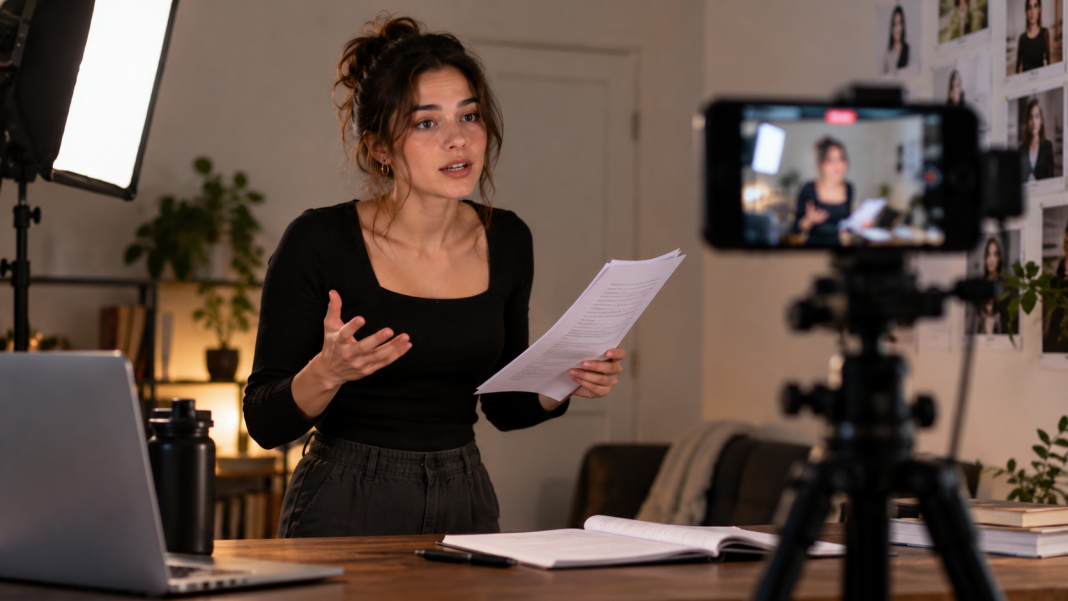

Self tape auditions have become an important part of the casting process for film, television and commercial projects. For actors seeking professional opportunities, understanding how to prepare an effective self tape can make the audition process more manageable. At W Talent NYC, a New York City talent and modelling agency, the wider world of talent representation and casting highlights the importance of presenting skills professionally. From lighting and camera framing to dialogue delivery and character preparation, several factors can help actors create a clear and convincing audition.
s interpretation, delivery and suitability for a role before deciding who should move forward.
Although recording an audition at home may seem straightforward, producing an effective self tape requires preparation. Actors need to understand the brief, make thoughtful performance choices and present their work clearly on camera. A successful audition is not necessarily the one with the most expensive equipment or elaborate setup. It is the one that allows the performance to come through without unnecessary distractions.
Understand the Audition Brief Before Recording
Preparation begins with reading the casting instructions carefully. An audition brief may include the character description, script pages, recording format, deadline, framing requirements and submission instructions. Missing a small detail can affect how professionally the audition is presented.
Actors should first identify what the scene requires and what the character wants to achieve. Understanding the situation, relationships and emotional context makes it easier to deliver a believable performance rather than simply reciting lines.
It is also useful to identify the key moments in the scene. Where does the character’s intention change? What information are they trying to communicate? Are they hiding something, asking for reassurance or reacting to unexpected news?
These questions help actors develop a clear interpretation of the material. The objective is not to create an unnecessarily complicated backstory, but to understand the circumstances well enough to make specific and convincing choices.
Choose a Quiet Space With Suitable Lighting
The recording environment can influence how easily casting professionals follow a performance. A quiet room with a simple background is generally more effective than a busy space with distracting objects, movement or background noise.
Natural light from a window can work well when it illuminates the actor’s face evenly. If natural light is unavailable or inconsistent, a soft LED light positioned near the camera can provide a more controlled result. Actors should avoid strong backlighting, which can leave their faces underexposed.
The background should remain unobtrusive. A plain wall or neutral backdrop usually works well because it keeps attention on the actor rather than the surroundings.
Before recording, check for interruptions from phones, notifications, household noise and other people. Even a short audition benefits from an environment where the actor can concentrate fully on the scene.
Position the Camera and Check the Framing
A clear image helps casting directors observe facial expressions and physical reactions. For most self tape auditions, a smartphone or camera positioned at approximately eye level is sufficient, provided the image remains stable and in focus.
The required framing depends on the casting instructions. A medium close up may be appropriate for a dialogue scene, while a wider frame may be necessary when the character’s physical movement is important. Actors should follow the specified format rather than assume that one framing style suits every audition.
A tripod or stable support can prevent distracting camera movement. The lens should be clean, and the recording should be checked for focus, exposure and picture quality before the final take.
Actors should also confirm whether the casting team requires landscape or portrait orientation. Following these technical details demonstrates attention to the brief and makes the submission easier to review.
Focus on Natural Dialogue Delivery
One of the most common challenges in a self tape audition is making scripted dialogue sound natural. Actors who concentrate too heavily on remembering lines may deliver them mechanically, with limited attention to the character’s circumstances.
Learning the dialogue well enough to understand its meaning can free up attention for listening, reactions and intention. Rather than focusing exclusively on the words, actors should consider what each line is meant to accomplish within the scene.
Pacing matters too. Real conversations include pauses, changes in thought and moments when a person reacts before responding. Allowing these moments to develop naturally can make a performance feel more believable.
However, natural delivery does not mean ignoring the script or improvising without permission. Actors should respect the written material and the director’s intended tone while finding a truthful way to communicate the character’s thoughts.
Work Effectively With a Reader
Many self tape auditions require another person to read the dialogue opposite the actor. This person is commonly called a reader. Their role is to provide the other character’s lines so the actor can respond within the scene.
A reader should be clear, consistent and appropriately paced. They do not need to deliver an elaborate performance, as the focus should remain on the actor being considered for the role.
Actors should avoid looking directly into the camera when the scene requires them to speak to another character, unless the instructions specifically request direct address. The reader can usually sit or stand close to the camera, just outside the frame, helping the actor maintain a natural eyeline.
Good listening is just as important as speaking. The character’s response should be influenced by what the other person says, rather than appearing like a memorised line delivered at a predetermined moment.
Make Clear and Believable Performance Choices
Casting directors often review many submissions for the same role. A performance with a clear understanding of the character can help communicate the actor’s suitability without relying on exaggerated expressions or unnecessary movement.
Before recording, actors should consider the character’s objective, immediate circumstances and relationship with the other person. These elements provide a foundation for making specific choices about tone, energy and behaviour.
It is worth exploring different interpretations during rehearsal. A scene might work with restrained frustration rather than visible anger, or with uncertainty rather than immediate confidence. Testing alternatives can help actors discover which approach best serves the material.
Once a choice feels appropriate, the performance should remain grounded in the scene. Overacting can make ordinary situations feel artificial, while an overly cautious delivery may obscure the character’s intentions. The aim is to respond truthfully within the circumstances established by the script.
Review Each Take Without Overanalysing
Recording multiple takes can help actors improve their performance, but endless repetition may create unnecessary tension. A practical approach is to record a few considered versions, each with a clear intention.
When reviewing a recording, actors should assess both technical quality and performance. Can the dialogue be heard clearly? Is the framing correct? Does the scene feel connected, and are the character’s intentions understandable?
It can also help to watch the audition once without pausing after every line. This gives a better sense of the overall performance and whether the scene holds together naturally.
Actors should avoid judging themselves solely on appearance or minor imperfections. A useful review focuses on whether the performance communicates the character and follows the casting requirements. If a specific issue needs attention, another take can address it directly.
Follow Submission Instructions Carefully
Even a strong performance can be undermined by an incomplete or incorrectly submitted audition. Casting teams may specify file formats, naming conventions, slate requirements, upload platforms and submission deadlines.
A slate is a brief introduction that may include an actor’s name and other requested information. Some auditions require it at the beginning, while others request a separate recording or do not require one at all. Actors should follow the instructions provided for each project.
Before submitting, check that the video plays correctly, the audio is clear and the file has uploaded successfully. The file name should follow the requested format, and any additional materials should be included only when required.
Professional presentation also involves respecting deadlines and communicating clearly if a genuine technical issue arises. These practical details help casting teams review submissions efficiently.
Build Confidence Through Consistent Practice
Self tape skills improve with experience. Actors who regularly practise recording scenes can become more comfortable with framing, lighting, dialogue delivery and reviewing their own performances.
Short practice sessions are often more useful than trying to perfect every technical detail at once. An actor might focus on listening and reactions in one session, then work on camera framing or vocal clarity in another.
Watching professional performances can also provide ideas about pacing, subtle expressions and character development. The purpose is to learn from effective techniques rather than imitate another actor’s style.
Feedback from a trusted acting coach, teacher or experienced colleague can reveal habits that may be difficult to notice independently. Over time, this combination of preparation, practice and constructive feedback can make the audition process more manageable.
Final Thoughts
Improving self tape audition skills involves more than learning how to record a video. Actors need to interpret the material carefully, make believable performance choices and create a recording that meets the casting requirements.
A quiet environment, clear lighting, appropriate framing and understandable audio provide a solid technical foundation. Strong preparation, attentive listening and natural dialogue delivery allow the performance to remain at the centre of the audition.
With consistent practice and a thoughtful approach to feedback, actors can develop a more reliable self tape process and present their work with greater confidence.
About W Talent NYC
W Talent NYC is a New York City talent and modelling agency representing actors, models and real people across the entertainment industry. The agency focuses on talent representation and professional opportunities across different areas of the industry, connecting individuals with potential opportunities in acting, modelling and commercial projects.