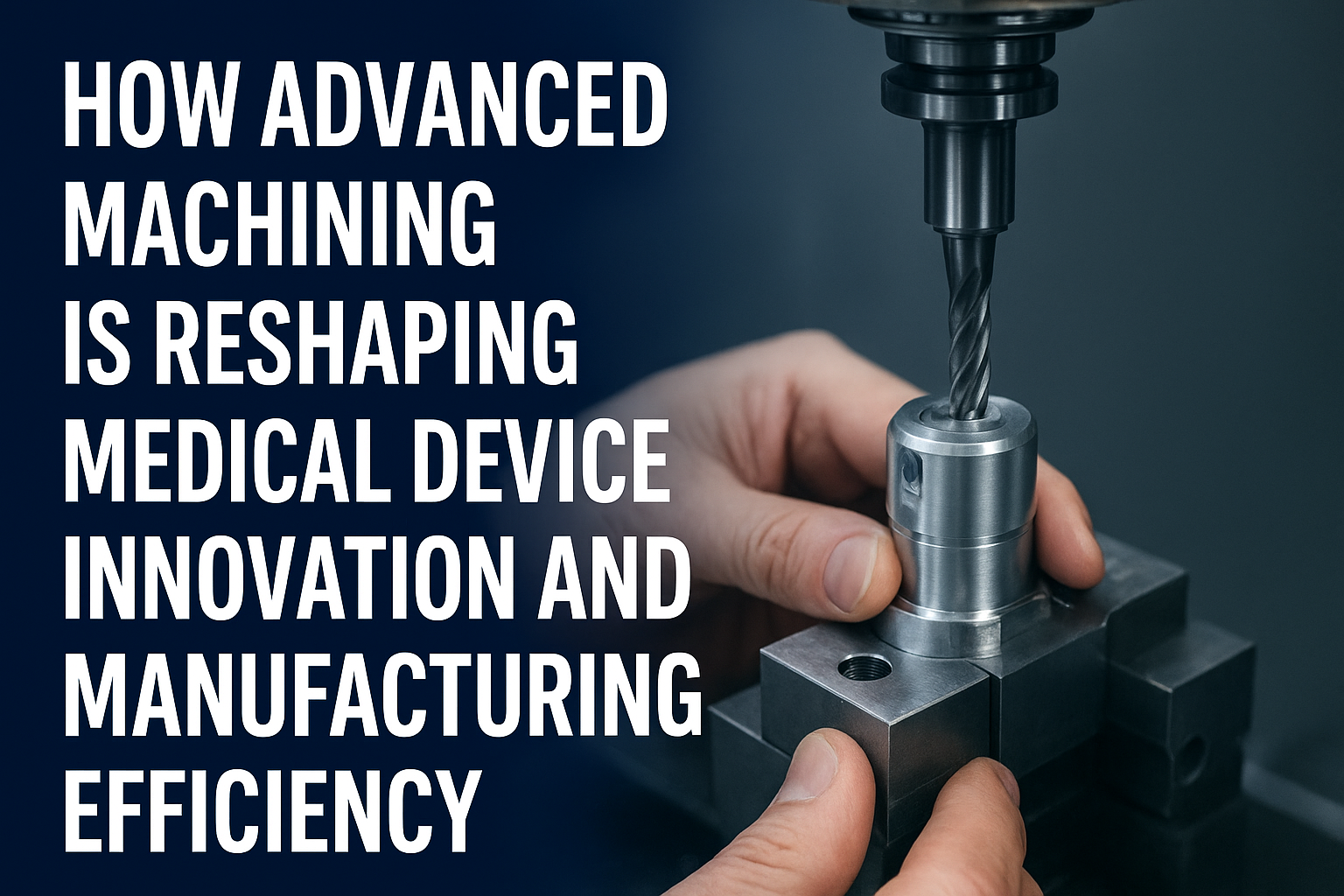

In the high-stakes world of business, competitive advantage is often found not just in a great idea, but in the ability to execute it flawlessly and efficiently. Nowhere is this truer than in the manufacturing sector, where the capabilities on the factory floor directly dictate what is possible in the design lab. For industries like medical devices, this relationship is paramount.
This article explores how advanced manufacturing methodologies, specifically state-of-the-art 5 axis machining services, have become a strategic linchpin. They are empowering medical device component manufacturers to break through previous limitations, accelerating innovation while simultaneously driving down costs and streamlining production.
The Business Imperative: Beyond Simple Manufacturing
For decades, manufacturing was often viewed as a cost center. Today, forward-thinking companies see it as a core component of their innovation engine. The ability to rapidly prototype, iterate, and produce complex components with extreme reliability is a powerful business strategy. This is especially critical in the medical field, where:
- Regulatory Hurdles: Parts must be produced with impeccable traceability and quality control.
- Design Complexity: Devices are becoming smaller, more complex, and more personalized.
- Time-to-Market: Speed in development and production can save lives and capture market share.
This trifecta of challenges demands a manufacturing partner that is more than a shop—it demands a technological innovator.
5-Axis Machining: The Engine of Design Freedom and Efficiency
At the forefront of this manufacturing revolution are 5 axis machining services. Unlike traditional 3-axis machines that move a tool in three linear directions (X, Y, Z), 5-axis machines can rotate the cutting tool and/or the workpiece on two additional axes simultaneously.
This capability is not merely a technical upgrade; it’s a business game-changer. Here’s how:
- Reduced Setups, Increased Accuracy: Complex parts that once required multiple fixtures and setups across several machines can now be completed in a single clamping. This dramatically reduces lead times and, more importantly, eliminates the cumulative error that can occur between setups. For a surgical robot component, this means higher inherent accuracy and reliability.
- Unlocking Complex Geometries: 5-axis technology allows machinists to approach a part from any direction. This makes it possible to create the intricate, organic shapes often found in modern medical implants (like custom knee or hip joints) and complex surgical instrument housings that are ergonomic and functional.
- Superior Surface Finishes: The ability to maintain an optimal cutting position and use shorter tools reduces vibration and allows for better surface finishes directly from the machine. This minimizes or even eliminates the need for manual polishing—a significant cost and time savings.
Companies like Falcon CNC Swiss leverage this technology to help their clients transition prototypes into high-volume production seamlessly. By investing in advanced 5 axis machining services, they provide a tangible business advantage: agility.
The Critical Role of Specialized Medical Device Component Manufacturers
Turning a biomedical engineer’s design into a safe, effective, and mass-producible component requires a specialized partner. This is where expert medical device component manufacturers prove their worth. Their role extends far beyond cutting metal or molding plastic.
Their strategic value lies in their ecosystem of capabilities:
- Material Expertise: They possess deep knowledge of biocompatible materials such as medical-grade titanium, stainless steel (e.g., 316L), PEEK, and Cobalt-Chrome, understanding how to machine them without compromising their structural or biological properties.
- Regulatory Compliance: They operate facilities and documentation systems that comply with ISO 13485:2016, a critical quality standard for medical devices. This ensures every part produced is traceable and meets stringent regulatory requirements, which is non-negotiable for FDA or CE mark approvals.
- Value-Engineering Partnership: A top-tier manufacturer doesn’t just follow a print; they collaborate. They perform Design for Manufacturability (DFM) analysis, suggesting subtle design changes that can enhance performance, reduce cost, or simplify assembly without compromising the device’s intent.
A manufacturer like Falcon CNC Swiss, which specializes in this arena, acts as an extension of a client’s R&D and production teams. They de-risk the manufacturing process, allowing device OEMs to focus on their core competencies: research, clinical trials, and marketing.
A Converged Advantage: Real-World Business Outcomes
When sophisticated 5 axis machining services are applied by dedicated medical device component manufacturers, the business outcomes are profound:
- Accelerated Innovation Cycles: Rapid prototyping and the ability to machine complex geometries mean design iterations happen in days, not weeks. This gets innovative products to patients faster.
- Cost-Effectiveness at Scale: While the initial investment in 5-axis technology is high, the per-part cost and total production time for complex components are significantly lower. Reduced setups, less manual labor, and minimized scrap rates contribute to a healthier bottom line.
- Enhanced Product Performance: The precision and accuracy achievable translate directly into medical devices that are more reliable, effective, and safer for end-users.
Conclusion: Investing in Precision is Investing in Growth
For business leaders and entrepreneurs, the message is clear: the capabilities of your manufacturing partners are a direct reflection of your company’s potential for innovation and growth. In sectors where precision, reliability, and complexity are paramount, partnering with a firm that offers advanced 5 axis machining services and has a proven track record as a leading medical device component manufacturer is not a procurement decision—it is a strategic one.
Firms like Falcon CNC Swiss exemplify this new era of manufacturing partnership. They provide the technological firepower and industry-specific expertise that allows businesses to push the boundaries of the possible, turning groundbreaking ideas into commercial realities that drive revenue and, in the case of medical devices, improve lives. In the modern economy, precision isn’t just a metric; it’s a strategy.