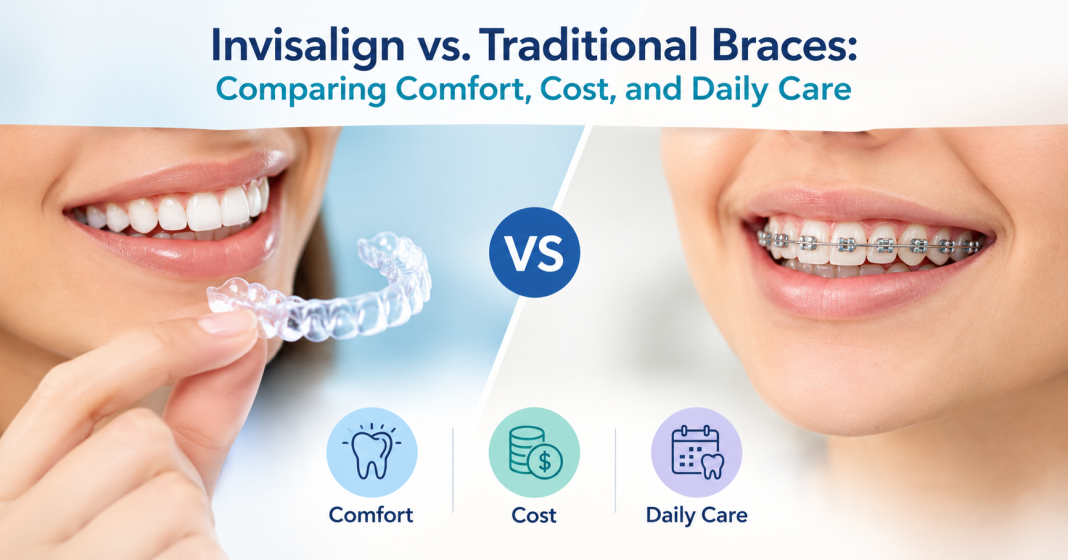

Straightening teeth can improve smile appearance, correct certain bite problems, and make oral hygiene easier in some cases. Two common orthodontic options are clear aligners, such as Invisalign, and traditional braces. Both gradually move teeth into better positions, but they differ in appearance, maintenance, comfort, and suitability for different orthodontic needs.
Understanding these differences can help patients prepare for a dental consultation and choose an option that fits their oral health needs and daily routine.
1. How Invisalign and Traditional Braces Work
Invisalign uses a series of custom-made, transparent plastic aligners that gradually move teeth according to an individualized treatment plan. Each set is worn for a prescribed period before being replaced with the next set. Because the aligners are removable, patients can take them out for meals and oral hygiene.
Traditional braces use brackets attached to the teeth and connected by wires. These components apply controlled pressure to guide teeth into their intended positions over time. Adjustments are made during follow-up appointments to keep treatment progressing.
Both approaches rely on carefully planned tooth movement. The right option depends on factors such as tooth alignment, bite problems, treatment goals, and the complexity of the case.
2. Comparing Appearance and Comfort
Appearance is an important consideration for many people, especially adults who prefer a less noticeable orthodontic treatment.
Invisalign aligners are transparent and fit closely over the teeth, making them less noticeable than conventional metal braces. Their smooth surfaces may also reduce irritation to the cheeks and lips associated with brackets and wires.
Traditional braces are more visible, although ceramic braces may offer a less noticeable alternative in some cases. Brackets and wires can cause temporary irritation, particularly after placement or adjustment. Both braces and clear aligners can create pressure or soreness as teeth begin to move.
Patients should remember that comfort varies from person to person. Clear aligners may be more discreet, but they still require consistent wear and can cause temporary tightness when switching to a new set.
3. Which Option Is More Effective?
Neither treatment is automatically better for every patient. Traditional braces can address a broad range of alignment and bite concerns, including some complex cases that may be more difficult to manage with clear aligners.
Invisalign can be effective for many cases involving mild to moderate crowding, gaps, and selected bite problems. Some more complex cases can also be treated with aligners, depending on the individual’s needs and the treatment plan.
A dental professional must evaluate the teeth, gums, bite, and overall oral health before recommending treatment. The most appropriate option is the one that can achieve the desired result safely and predictably.
Patients considering Invisalign treatment in Atlanta can learn more about how clear aligners work and the types of alignment concerns they may address.
4. Understanding the Cost of Treatment
The cost of orthodontic treatment varies depending on the complexity of the case, the expected treatment duration, the provider’s fees, and the follow-up care required.
Invisalign costs may depend on the number of aligners needed, whether refinements are necessary, and how much tooth movement is required. Traditional braces costs can vary based on the type of brackets used, treatment length, and the adjustments involved.
Insurance benefits may cover part of orthodontic treatment for eligible patients, although coverage limits and eligibility requirements differ between plans. Some dental practices also offer financing arrangements or payment plans.
Before starting treatment, ask for a written estimate that explains the total expected cost, what’s included, and whether retainers or additional appointments are charged separately. Comparing treatment plans on these terms can help avoid unexpected expenses.
5. Daily Eating and Oral Hygiene
One of the main differences between these treatments is how they affect everyday habits.
With Invisalign, aligners are removed before eating and drinking anything other than water. Patients should brush their teeth or rinse as appropriate before putting the aligners back in, following their dental professional’s instructions. The trays also need regular cleaning.
Traditional braces remain attached to the teeth throughout treatment. Patients may need to avoid hard, sticky, or chewy foods that could damage brackets or wires. Cleaning requires additional attention because food particles and plaque can accumulate around orthodontic components.
Both options require good oral hygiene. Brushing carefully, cleaning between teeth, and attending recommended dental appointments help reduce the risk of cavities and gum inflammation during treatment.
6. How Treatment Duration Can Differ
Treatment duration depends on the amount and type of tooth movement needed. Some straightforward cases may take less time, while complex alignment or bite concerns can require a longer course of treatment.
Invisalign treatment often involves changing aligners according to a prescribed schedule and attending periodic checkups. Wearing the trays for the recommended number of hours each day is essential. Removing them too frequently can delay progress.
Traditional braces apply continuous pressure, but treatment still requires regular adjustments and monitoring. Broken brackets, missed appointments, or other complications may affect the timeline.
Patients should be cautious about choosing an orthodontic option based only on advertised treatment times. A personalized assessment provides a more realistic estimate of how long treatment may take.
7. The Importance of Follow-Up Care
Regular follow-up appointments help ensure that teeth are moving as planned and that any concerns are addressed promptly.
For Invisalign, appointments may be used to assess aligner fit, monitor tooth movement, and determine whether refinements are needed. Patients should contact their dental professional if an aligner becomes damaged or no longer fits properly.
For traditional braces, appointments allow the provider to make adjustments and check the condition of brackets and wires. Patients should report persistent discomfort, broken components, or changes in their bite.
After either treatment, retainers are usually necessary to help maintain the new tooth positions. Teeth can shift over time, so following the prescribed retention plan is an important part of protecting the results.
For a more detailed comparison of treatment features, read this overview of Invisalign versus traditional braces.
8. How to Decide Which Treatment Is Right for You
Choosing between Invisalign and traditional braces involves more than comparing appearance and price. Consider the following factors when discussing treatment options:
- Orthodontic needs: Determine whether the treatment can address your specific alignment and bite concerns.
- Lifestyle: Consider whether removable aligners fit your daily routine and whether you can wear them consistently.
- Oral hygiene: Think about the time and care required to clean your teeth during treatment.
- Budget: Compare the full treatment cost, payment arrangements, insurance benefits, and retainer expenses.
- Follow-up appointments: Understand how often visits are needed and what monitoring involves.
- Long-term maintenance: Ask about retainers and the steps needed to maintain your results.
A dental professional can explain the advantages and limitations of each approach after examining your teeth and discussing your goals.
Frequently Asked Questions
Is Invisalign more comfortable than traditional braces?
Invisalign’s smooth plastic trays may cause less irritation to the cheeks and lips than brackets and wires. However, both treatments can cause temporary pressure or soreness as teeth move.
Can Invisalign fix crowded teeth?
Invisalign can correct many cases of crowding, depending on their severity and the overall bite. A dental professional must determine whether aligners are suitable for the individual case.
Are traditional braces faster than Invisalign?
Neither option is consistently faster for everyone. Treatment time depends on the complexity of the case, the planned tooth movements, and how well the patient follows treatment instructions.
Is Invisalign more expensive than braces?
The cost varies by case and provider. Comparing written estimates, included services, insurance coverage, and retainer costs is the best way to understand the financial difference.
Can I eat normally with Invisalign?
Aligners are removed for meals, so there are generally fewer food restrictions. Patients should follow instructions about cleaning their teeth and aligners before putting the trays back in.
Do I need retainers after treatment?
Yes, retainers are generally recommended after both Invisalign and braces to help prevent teeth from shifting back toward their previous positions.
Conclusion
Invisalign and traditional braces can both improve tooth alignment, but each has different advantages and practical considerations. Clear aligners offer a discreet, removable option, while traditional braces can provide effective treatment for a broad range of orthodontic concerns.
The best choice depends on individual dental needs, treatment goals, budget, and daily habits. A professional assessment can help determine which approach is most appropriate and establish a realistic plan for achieving and maintaining a healthy smile.