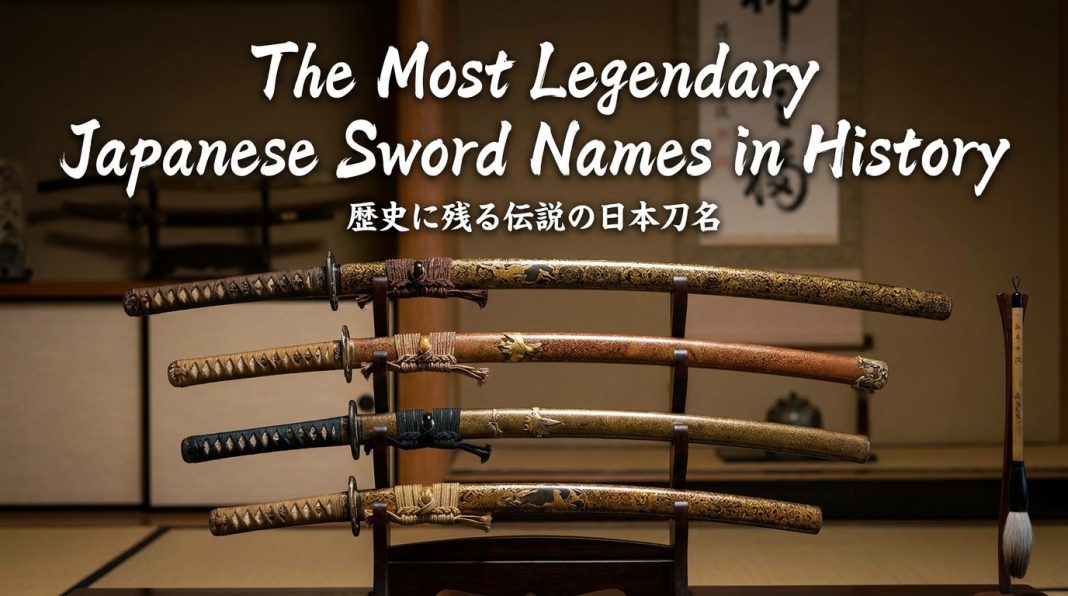

When you need to find the perfect japanese sword names, the process often feels frustrating. You sit at your desk, building a samurai character for your novel or rolling up a new fighter for a tabletop game. You map out the stats, the armor, and the backstory perfectly. But when it comes to the weapon, your mind goes completely blank. Giving a master-crafted katana a generic, boring title ruins the immersion instantly. You want a name that sounds sharp, holds real history, and commands respect the second it hits the page.
A blade in Japan was never just a piece of sharp metal. It was a living entity carrying the soul of the smith who hammered it and the blood of the battles it survived. I am going to walk you through the most famous historical blades, from the flawless works of Masamune to the bloodthirsty reputation of Muramasa, so you can pick a name that cuts deep.
What makes historical japanese sword names so important?
Historical japanese sword names are so important because they act as a permanent record of the blade’s personality, its creator, and the specific violent events it survived. You didn’t just slap a cool-sounding label on a weapon. If a blade successfully cut through a legendary helmet or saved a warlord’s life, it earned a title reflecting that exact split-second moment in time.
Look at the Honjo Masamune. Goro Nyudo Masamune crafted this masterpiece in the 13th century, and it eventually became the ultimate symbol of the Tokugawa shogunate. The name itself comes from Honjo Shigenaga, a fierce general who claimed the sword in battle after his enemy nearly split his iron helmet in half with it. Shigenaga survived the blow, killed the attacker, and took the sword as a prize. The blade changed hands for centuries before vanishing after World War II, making it one of history’s greatest lost treasures. When you hear a name like that, you instantly respect the weight of its history.
Which mythical swords shaped Japanese history?
Mythical swords shaped Japanese history by acting as direct links between the Shinto gods and the imperial family. These are not just campfire stories. They are deeply rooted in the political and spiritual foundation of the entire country. The imperial regalia still relies on these weapons today.
Kusanagi-no-Tsurugi
This translates to the “Grass-Cutting Sword.” According to myth, the storm god Susanoo pulled this blade directly from the tail of a massive eight-headed serpent named Yamata no Orochi. Today, it remains one of the Three Sacred Treasures of Japan. You won’t find it sitting in a glass case at a public museum. Shinto priests guard it heavily at the Atsuta Shrine, and no public eyes have seen the actual steel for centuries.
Totsuka-no-Tsurugi
This is a broader term for a sword that measures ten fist-breadths long, but it is most famously tied to the blade Susanoo used to chop that eight-headed serpent into pieces. It sounds heavy, brutal, and ancient. It is the perfect inspiration for a massive, two-handed weapon in a fantasy setting.
Why are Muramasa blades considered cursed?
Muramasa blades are considered cursed because an unusually high number of Tokugawa Ieyasu’s family members died or suffered severe injuries from them. Ieyasu’s grandfather was killed by a Muramasa blade. His father survived a violent attack by one. Ieyasu himself cut his own hand badly on a Muramasa spear.
Because of this string of bad luck, the Shogun outright banned them. Naturally, that ban only fueled the dark legend. People started believing Sengo Muramasa forged his swords with a frantic, bloodthirsty spirit. Folklore stated that if you drew a Muramasa from its scabbard, it would refuse to return until it tasted blood, even if it had to drink from its owner. Naming a weapon in the style of Muramasa instantly gives your story an edge of danger, dark magic, and rebellion.
How do Yokai and mythology influence sword naming?
Yokai and mythology influence naming because many famous blades earned their titles after supposedly slaying demons, ghosts, or giant mythical beasts. The Japanese folklore landscape is packed with monsters, and the weapons used to hunt them became just as famous as the heroes who swung them.
Dojigiri Yasutsuna
This name translates to the “Demon Cutter.” The warrior Minamoto no Yorimitsu used it to chop the head off Shuten-doji, a terrifying demon king who terrorized the capital. The name is blunt, violent, and leaves zero doubt about what the weapon is built to do.
Nikkari Aoe
Also known as “The Smiling Sword.” The story goes that a samurai was walking at night when a grinning female ghost approached him. He swung his blade, slicing the ghost in half. The next morning, he found a stone lantern cut cleanly in two where the ghost had stood. It’s a creepy, highly memorable name that works beautifully for a ghost-hunting character.
What role do the elements play in forging a katana’s identity?
The natural elements play a massive role in naming because the forging process itself relies entirely on the violent combination of fire, water, earth, and wind. Smiths respected nature, and they often named their best works after thunderstorms, ocean waves, or winter nights.
Take the famous sword Raikiri, which translates to “Lightning Cutter.” The samurai Tachibana Dousetsu was sitting under a tree during a heavy storm when a lightning bolt struck him. He drew his sword and supposedly sliced the lightning bolt in half, surviving the strike but losing the use of his legs. The sword was forever known as the blade that cut thunder. If you want your weapon to feel fast, volatile, and lethal, leaning into elemental kanji is the smartest route.
How do you choose authentic japanese sword names for your characters?
You choose authentic names by combining the sword’s physical traits, the smith’s name, or the elements of nature it represents. It’s all about mixing and matching the right kanji. You don’t want a random string of letters; you want a title that makes sense grammatically and culturally.
If you want a sword that feels fast and lethal, you might use kanji for lightning (Rai) or wind (Kaze). You then combine that with a classic suffix like “-maru” or “-kiri” (cutter). For example, Heshikiri Hasebe translates roughly to “Forceful Cutter Hasebe.” It earned its name when the warlord Oda Nobunaga used it to smash entirely through a wooden cabinet to execute a man hiding underneath. It wasn’t a clean cut; it was brute force.
If you need to browse hundreds of accurate kanji combinations and historical references, checking out a dedicated database of japanese sword names gives you a massive advantage. You can filter by element, specific meaning, and historical era to match your exact writing or gaming needs perfectly without making rookie translation mistakes.
What are the best kanji suffixes for a katana?
The best kanji suffixes for a katana usually describe the physical action the blade performs or personify the weapon as a living companion rather than a dead tool. Here are the three most common suffixes you see in history.
-maru (丸)
This translates to “circle” or “perfection,” but it was traditionally used for boys’ names and merchant ships. When applied to a sword, it treats the weapon like a loyal, living companion. A great example is Kogitsunemaru, which means “Little Fox.”
-kiri (切)
This means “cutter” or “slayer.” You use this suffix when the weapon has a specific, highly violent purpose. Yagen Toshiro was named this because the blade was so sharp and sturdy it supposedly cut straight through a solid iron mortar (a yagen) without chipping.
-mitsu (光)
Meaning “light” or “radiance.” Smiths used this to describe the bright, wavy temper lines (hamon) on the edge of the steel. It gives the name a noble, almost holy feeling.
Frequently Asked Questions (FAQs)
Did all samurai name their swords?
No, they definitely did not. Only master-crafted blades with significant history, flawless construction, or exceptional battle records earned proper titles. A standard foot soldier’s mass-produced weapon usually went unnamed.
What does the word “katana” actually mean?
The word katana translates simply to “sword” or “single-edged blade.” It refers strictly to the physical curve and style of the weapon rather than any specific myth, legend, or individual name.
Is the Honjo Masamune still missing today?
Yes, it remains lost. The Tokugawa family handed it over to a police station in Tokyo at the end of World War II during the weapon surrender. It vanished shortly after into private hands and remains one of the greatest lost treasures in Japanese history.
Can I make up my own sword name using kanji?
You absolutely can. By combining natural elements like fire (Hi), shadow (Kage), or ice (Kori) with traditional suffixes like -maru or -kiri, you can build a historically accurate-sounding weapon from scratch for your story.
Final Thoughts: Forging Your Legacy
Finding the right name for a blade completely changes how your audience views the weapon. It shifts the sword from a simple piece of metal into a main character with its own dark or heroic backstory. Whether you want the cursed, sharp edge of a Muramasa, the noble perfection of a Masamune, or a demon-slaying relic from myth, the kanji you choose matters deeply. Pick the characters carefully. Think about what the blade has survived, who forged it, and what it represents to the person holding the hilt. When you put the time into researching the history, you forge a name that cuts right through the page.